


By Bardhyl Zaimi
Ms. Spiropali, when you visit North Macedonia, you are above all visiting an Albanian geography, a political and cultural history, an authentic historical demography and not some topos of diplomatic courtesy, which can test clichéd rhetorical skills. An “equalizing” discourse of reciprocity of national minorities and communities is simply a great historical and cultural mistake. Regardless of what concept you associate this diplomatic “delicacy” with, Albanians in North Macedonia beyond political formulations remain a people with an authentic historical trajectory and with a demographic extension that can in no case be classified as “minority”.
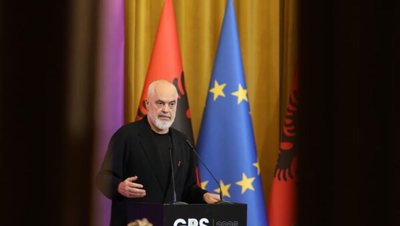
There have been and will be political and diplomatic blunders, but when the blunders reflect a fundamental ignorance, which is served as diplomatic elegance, this staggering fact poses great dilemmas. The Minister of Foreign Affairs of Albania, Elisa Spiropali, during her visit to North Macedonia, has badly confused the unmistakable with the discourse of “reciprocity”, equating the Albanians of North Macedonia with a numerically very small Macedonian minority in Albania.
Ms. Spiropali, before coming to North Macedonia, should have been minimally prepared for the demographic, political and cultural reality of the Albanians of North Macedonia, because every word in the mouth of a foreign minister takes on weight and reflection in a certain context. Although it is not the first time of distorted political criticism of the Albanians of North Macedonia, however, such a high-level visit has in no case dared to escalate into a discourse and concept of extreme ignorance, which really reveals an extraordinary carelessness, but also a lack of sense to consult people who know the reality in North Macedonia well.
Ms. Spiropali visited North Macedonia, and she did well to visit, but in all the charm and delicacy of this diplomatic visit, she should have internalized other dimensions about the Albanians of Macedonia, which are related to the historical and democratic, political and cultural trajectory of the Albanians of North Macedonia. The discourse of "reciprocity" shows a fundamental lack of recognition of the realities here, which have already been written and rewritten thousands of times by local intellectuals.
Ms. Spiropali, when you visit North Macedonia, you are above all visiting an Albanian geography, a political and cultural history, an authentic historical demography and not some topos of diplomatic courtesy, which can test clichéd rhetorical skills. An “equalizing” discourse of reciprocity of national minorities and communities is simply a great historical and cultural mistake. Regardless of what concept you associate this diplomatic “delicacy” with, Albanians in North Macedonia beyond political formulations remain a people with an authentic historical trajectory and a demographic extension that can in no case be classified as a “minority”.
How others define us is always their business, but when you define yourself as a minority, without having any idea what the available realities are and how they are constantly interpreted by reduced minds, this means that you are in a beautiful fairy tale of the "Alice in Wonderland" type, no matter how much you try to wrap it in diplomatic cellophane.
It remains very important that Ms. Spiropali, within time, reflects and re-dimensions her entire concept on the Albanians of North Macedonia and, in any case, before diplomatic visits, consults with people who know the circumstances, who can provide her with valuable, true information that permeates an indisputable reality of the Albanians of North Macedonia.