


By Hasan Bello
In world history and literature, Ali Pasha Tepelena comes second only to Skanderbeg for the large number of books that have been written about this figure.
He is the model of how a simple individual, through Machiavellian methods, rises to the highest levels of government.
According to records, he left behind a treasure that is still being searched for today by various explorers in the caves of Greece and Albania; a quantity of 900 fiefs and 15 ships of various sizes.
⸻
With the rise to power of Sultan Mahmud II in the Ottoman Empire, the policy of centralization and elimination of local feudal lords began, who had become an obstacle to the Ottoman government, flirting with France, England, and Russia.
Ismail Pasha was sent against Ali Pasha with an army of 20,000. The people who were close to him were informed that if they went over to the side of the state, nothing would happen to them; they would even be rewarded with money and posts, otherwise their property would be confiscated. As a result, many loyalists left him. As a result of military actions, the territories under the rule of Ali Pasha quickly fell into the hands of the Ottoman army.
When he saw that he was losing and that the people were abandoning him, Ali Pasha retreated to the castle of Ioannina with a large number of soldiers, ammunition, food and cannons. Ismail Pasha besieged the castle, but was unable to capture it for a long time. He then informed Ali Pasha's sons that the firman did not include them and, if they surrendered, renouncing their support for their father, there would be no consequences.
Ali Pasha's sons, Veli, Ahmet Muhtar and Salih Pasha, surrendered.
Veli Pasha was sent to Kytahja, while Muhtar and Salih Pasha were sent to Ankara with their children.
Since Ismail Pasha was unsuccessful in the siege of the castle, Hurshid Pasha was put in charge. He offered money to the beylers near Ali Pasha and attracted them to his side. Significantly weakened, Ali Pasha was left with only the castle near the lake. He was asked to surrender. But he replied that he would do so only if a firman decreeing his pardon was sent to him. Hurshid Pasha gave him guarantees, promising that the firman was being prepared. This prompted Ali Pasha to retreat to the monastery near the lake to await the decision.
Since he did not accept the offer, a decree was secretly prepared for his execution. The decree was sent to Ali Pasha by Mehmet Pasha with about thirty soldiers. On February 14, 1822, they attempted to enter his room to carry out the decision. Ali Pasha resisted with weapons and was killed in the ensuing fight. His head was sent to Istanbul on February 24.
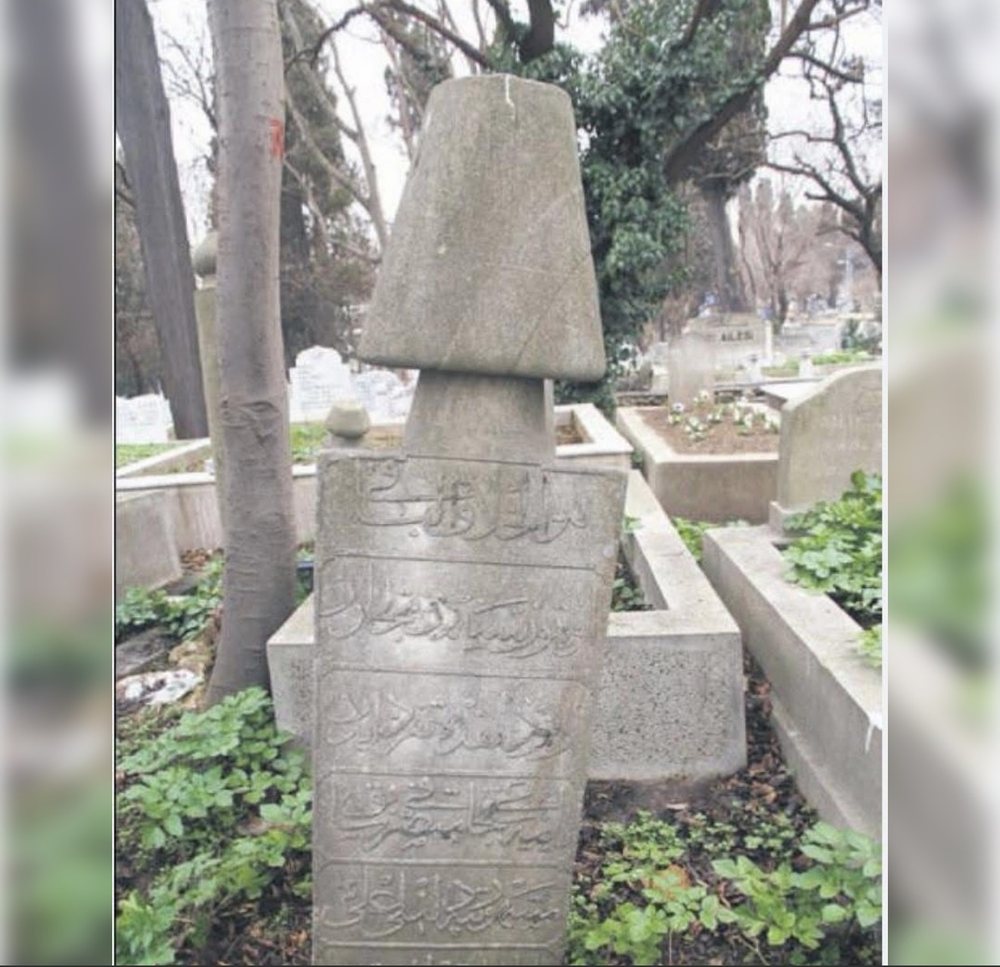
After a week of public display, Ali Pasha's head was purchased by his childhood friend, Dervish Pasha. It was buried next to the severed heads of his sons Veli, Muhtar, Salih, and nephew Mehmet Pasha, in the cemetery outside Silivrikapë.
Ali Pasha's execution was met with great joy. The fact that the siege of Ioannina lasted a year and a half shows how prepared and powerful he was. The soldiers who participated in the siege were given money from Ali Pasha's estate to cover their expenses. After the uprising, the property of his family and supporters was confiscated; officials were sent from Istanbul for their immediate registration, and ledgers were prepared in which hundreds of fiefs and thousands of immovable properties were recorded.
The disappearance of Ali Pasha's power and authority paved the way for the Greek uprising in the Morea, for the creation of the Greek state, and for changes in the Ottoman Empire's possessions.
⸻
On Ali Pasha's epitaph, which is located in the Silivrikapë neighborhood of Istanbul, it is written:
"He is the eternal Creator (the eternal God).
For more than thirty years he stood out in Arnavudllëk (Albania).
The Mytasarrif of the Sanxhak of Ioannina,
known as Ali Pasha Tepelena. Here rests his severed head."
While Ali Pasha's body is today found in the castle of Ioannina.