



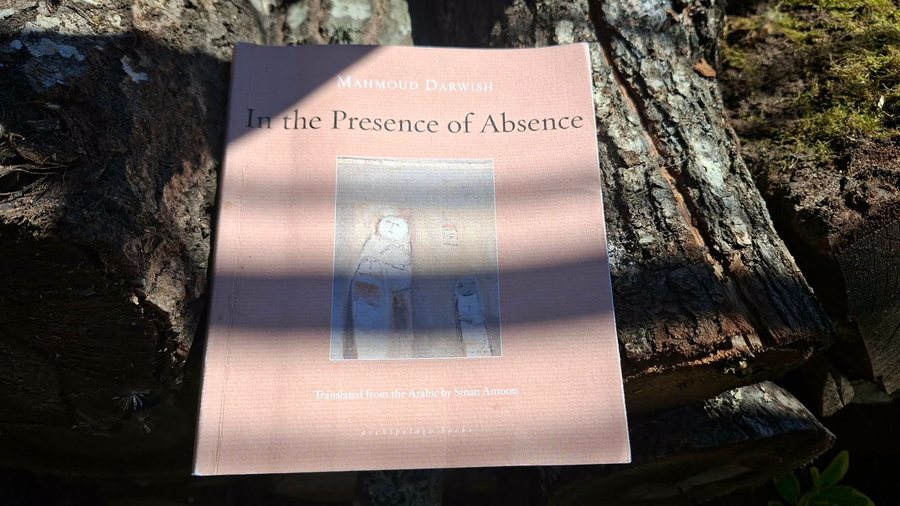
“But words breathe… Words are waves… You become words and words become you.”
— Mahmoud Darwish, In the Presence of Absence
The book “In the Presence of Absence” may seem like a book far removed from the world of workplace communication, as it speaks of exile, memory, mortality, and the strange survival of what is gone. However, like many profound books, it teaches us beyond the obvious subject matter. Mahmoud Daruishi discusses how absence itself becomes a form of presence.
The atmosphere in workplaces knows this all too well, as places where words often come before the truth.
We often think of words as mere tools of everyday life; we treat them as fleeting, because they come so easily from our mouths. It is tempting to think that what is said so quickly cannot have a long life. But some of the most enduring structures of human life are built of words. Some words do not disappear when their sound dies down; they take root, become embodied in the architecture of the workplace, survive the moment they were uttered, and continue their work long after the speaker has left.
The workplace may reorganize the team, proclaim new values, change identity, renovate spaces, and yet the old language still resides there.
Many people know what it means to meet a new colleague through words before meeting him as a person. His name comes wrapped in adjectives. His presence is preceded by caution, amusement, suspicion, admiration, contempt. It is not the person that is met, but the narrative that accompanies him. Sometimes that narrative is positive. Often not. In both cases, the person who enters the office later must confront that invisible version of himself that has already been constructed in his absence, from words. What begins as interpretation, repetition transforms into fact.
And when the person who said those words leaves? There's something deeply disturbing about the way words continue to resonate. Someone's departure doesn't restart an office culture. People often remain present through the words they normalized and the labels they introduced. The former manager may no longer be present in the office, but the fear they taught others may continue to organize the team's behavior. The charismatic cynic may be gone, but her style of disdain continues to echo in the voices of younger people. The professional who used words to defend values continues to remain a suspended presence in absence.
In this sense, the workplace is shaped not so much by policy documents, but by the words that circulate, by side conversations, by glances that confirm what doesn't need to be said out loud, by those strange sentences that everyone seems to know, even though no one knows who wrote them.
This is one of the quieter lessons Daruishi offers. Presence is not always physical, and absence is not always emptiness. Even in the workplace, what is no longer seen can continue to influence decisions, relationships, and emotional climates. Words can do harm by appearing to be intrusive or by sounding informed. Words can rob someone of a sense of belonging while appearing to maintain perfect professional courtesy. Reputations can be silently distorted through a series of elegant sentences, spoken by people who would never consider themselves cruel.
Therefore, being careful with words is not a matter of formal ethics or politeness, but a matter of conscience. Over time, we become the atmosphere created by the words we utter and the words we accept to harbor within ourselves. Every rumor accepted without examining it changes something in the listener. Every borrowed judgment leaves a mark. Every thoughtless description asks someone else to live inside it.
Daruishi understood that words breathe, because they don't stay where we put them. They move between people, systems, and can return years later, in a different voice, bringing consequences far greater than the moment that created them.
Words rarely stay where we put them. They travel and take on a life of their own.