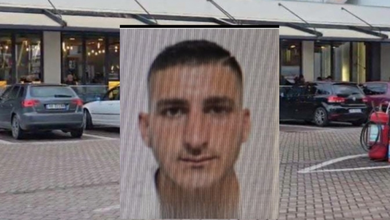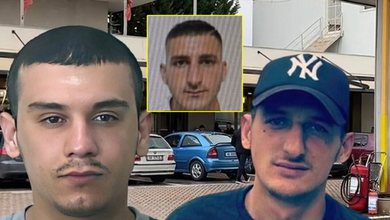




Mexican media outlet RIO DOCE has reported on the US sanctioning of a network of casinos in Mexico linked to the Hysa family, of Albanian origin, accused of laundering money for the Sinaloa Cartel. From 2017 to 2024, ten casinos, including Midas and Mirage, facilitated the laundering of more than $2 million for the cartel, using small transactions and multiple accounts to evade bank controls. US and Mexican authorities have frozen accounts, suspended casino operations and filed criminal charges, while the Hysa family continues to be under surveillance for international financial networks linked to organized crime.
Full text of RIO DOCE
The United States Treasury Department emphasizes that these businesses located in Kuliakán, Mazatlán, Los Mochis, and Guamúchil are part of a network of companies belonging to the Hysa family, of Albanian origin, which has been identified as being linked to criminal groups since 2021.
Between 2017 and 2024, ten casinos, including the Mirage in Kuliakán and three branches of the Midas casino in Mazatlán, Los Mochis and Guasave, operated by the Hysa family, facilitated the laundering of more than $2 million for the Sinaloa Cartel, according to the U.S. Treasury Department's FinCEN.
These businesses, including Midas in Agua Prieta, Sonora and Rosarito, Baja California; Palermo in Nogales and Skampa in Ensenada, Baja California and Villahermosa, Tabasco, are controlled and supervised by senior executives of Midas Casino in Mazatlán, according to the U.S. From 2021 to 2023, they made monthly payments to the Sinaloa Cartel through cash deposits into various bank accounts in Mexico.
“For years, gambling businesses, including their executives, have been sending payments to senior cartel members to avoid detection. FinCEN estimates that executives of these businesses received detailed instructions from the Sinaloa Cartel on how to evade anti-money laundering controls,” the agency stated.
Casino managers were required to make one or two transactions to bank accounts selected by a highly influential member of the Sinaloa Cartel, and allow the money to be physically picked up at Midas in Mazatlán.
To avoid detection, the cartel required that two deposits be made to each account, no more than 90,000 pesos each ($4,354), on non-consecutive days, so as not to trigger the banks' alerts.
FinCEN calls this a sophisticated operation, designed to avoid any documentable connection between gambling businesses and the Sinaloa Cartel.
In one case, an influential cartel member provided over 30 company bank accounts in Mexico to be used for cash deposits.
According to FinCEN, these payments entered the Mexican financial system with minimal or no documentation, which poses a risk to the integrity of the US financial system, which is closely linked to Mexican banks.
Sanctions and consequences
"The volume, duration and repetitive nature of this activity indicate that these businesses are a significant and consistent source of funds and facilitators of money laundering for the Sinaloa Cartel."
In 2024 alone, US-Mexico trade reached $935 billion, and some of the money laundered by casinos ended up in Mexican banks with direct links to US banks.
The Sinaloa Cartel remains one of the largest drug trafficking organizations in the world, transporting large quantities of fentanyl and heroin to the United States.
The document dated November 13 prohibits US banks from maintaining correspondent accounts with foreign banks linked to sanctioned casinos.
The sanction was announced a day after Omar García Harfuch stated that 13 physical and virtual casinos in several states of Mexico had made unjustified cash transactions and international transfers.
There were account freezes, activity suspensions, criminal charges, and website blocking.
The government did not publish the names of the casinos, but businessman Ricardo Salinas Pliego confirmed that two of the virtual casinos were owned by his companies.
The Treasury Department stated that, in cooperation with OFAC and FinCEN, the activities of companies associated with an organized crime group with ties to the Sinaloa Cartel, as well as foreign entities that operated money laundering networks in Mexico, the US and Europe, were suspended.
OFAC designated members Luftar, Arben, Ramiz, Fatos and Fabjon Hysa, as well as Eselda Baku and Mexican Gilberto López López, along with 19 companies, as the Hysa Organized Crime Group. The UIF identified five more, leading to 31 blocked individuals.
The analysis showed that 24 companies and 7 individuals operated international financial structures and networks to transfer and hide illicit funds, through multi-million dollar movements and flows of over 1 billion pesos between Mexico, the US, Canada, Belize, Panama, Romania, Poland and Albania.
The UIF filed charges for money laundering and the use of shell companies to justify false income.
The Midas of Mazatlán and the Hysa family
According to the US, the Midas casino in the Alameda neighborhood of Mazatlán, as well as the nine other sanctioned casinos, are operated by the Hysa family, primarily through the company Entretenimiento Palermo SA de CV, founded on February 13, 2006 in Sonora and relocated to Mazatlán in 2024.
The founding partners were Miguel Ángel Valdez Estrada and Arben Hysa. Later, Luftar Hysa and Marcelo Falce García joined, and in 2021 Gilberto López López became a commissioner.
Gilberto López López, from Culiacán, is also a shareholder in El Arte de Cocinas y Beber SA de CV and Cucina del Porto SA de CV, both founded in 2023, as well as Operadora Alejil SA de CV, founded in 2014 in Nuevo León.
Three of the companies involved are part of a group of 19 sanctioned by the US, which are said to be operated by the Hysa family, whose members live in Mexico, Canada and Albania.
This is not the first time the Hysa family has been accused of links to organized crime. El Universal reported in 2022 that an investigation against them for money laundering through casinos and restaurants had been opened two years earlier.
Following the announcement of the sanctions, the Midas casinos in Guamúchil, Mazatlán and Los Mochis were suspended. Meanwhile, the Mirage in Culiacán has been out of operation for at least three years.