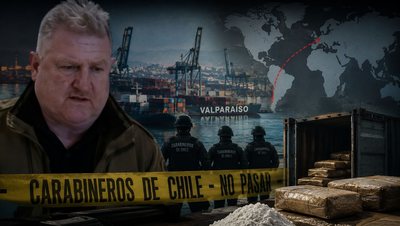




An investigation by the renowned French newspaper "Le Monde" reveals how Senegal has become a new key link in what has been called "Highway 10", the new cocaine route used by Balkan criminal networks to transport drugs from Latin America to Europe. According to the report, the port of Dakar and the presence of Albanian coordinators there illustrate the strengthening of these organizations in West Africa.
In the documentary by “Le Monde”, Senegal occupies a strategic position in the new network created by the Balkan mafia. “The port of Dakar has connections with European countries, including Spain, Belgium and France,” the investigation says. This maritime connection makes Senegal an ideal logistical platform for drug traffickers.
The investigation reveals that at least a third of the cocaine consumed in Europe now transits through West Africa via “Highway 10”, a maritime route that follows the 10th parallel north. For criminal organizations, the advantage is clear: “In European ports, a container arriving from Senegal would be less suspicious than one arriving from Brazil”, explains “Le Monde”.
According to the French newspaper, the analysis of encrypted messages on the Sky ECC app by French police revealed more than 1 billion exchanges between traffickers. Among these messages, one is particularly telling regarding Senegal: “Brother, up there in Senegal, we have good connections.”
This statement, according to Le Monde, illustrates the corruption that facilitates cocaine trafficking in Senegalese ports. “These powerful criminal networks easily manage to get, let's say, what they want from some of our authorities,” testifies a source quoted in the investigation.
The investigation reveals a sophisticated system set up by the Balkan mafia in Senegalese territory. “Albanians in Senegal are constantly monitoring the country’s political and judicial activities. They are also monitoring the activities of police officers who are on patrol,” Le Monde reveals.
This constant surveillance allows traffickers to “adapt to the situation, to traffic or smuggle drugs,” the investigation states. These field coordinators, few in number but highly informed, constitute an essential link in the criminal network.
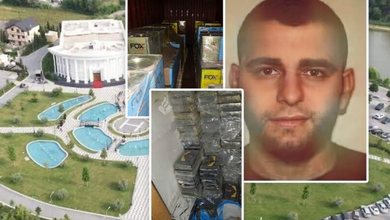
Le Monde's investigation dates back to June 2020, when 1 ton of pure cocaine was discovered in a shipment of cocoa at the port of Antwerp, Belgium. The drugs originated in Sierra Leone, a country bordering Senegal, and had been transiting along the same West African route.
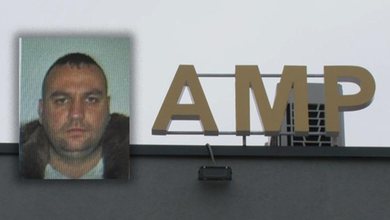
This seizure led investigators to the name of Radosh Vicker, the leader of the Montenegrin “Cavac” clan, for whom an international arrest warrant had been issued. The decrypted messages revealed the methods used: hiding the drugs in containers of ordinary goods (cocoa, bananas, pineapples, cement), corruption of the supply chain and remote coordination from the Balkans.
According to Le Monde, West Africa offers several advantages to drug traffickers: "states with weak, sometimes corrupt institutions" and insufficient port controls. "Only 2% of containers are inspected" in this country, the investigation specifies, while more than 11 million containers transit through West African ports every year.
Experts quoted by Le Monde believe that “in the near future, the African route will become the main route to Europe for drug traffickers.” This increase in importance is explained by the explosion of cocaine production in Latin America since the 2010s and the strengthening of controls on the direct route to Europe.
Senegal, with the port of Dakar connected to major European capitals and the proven presence of criminal networks on its territory, thus appears as a central link in this transnational criminal system orchestrated by the Balkan mafia in alliance with the Italian 'Ndrangheta and the Brazilian PCC.