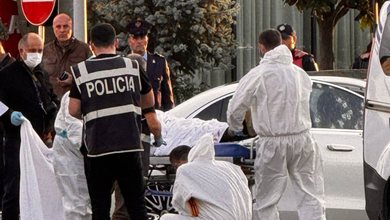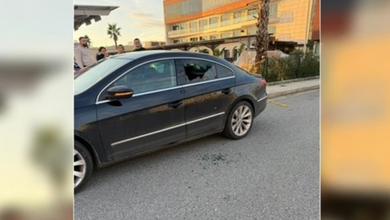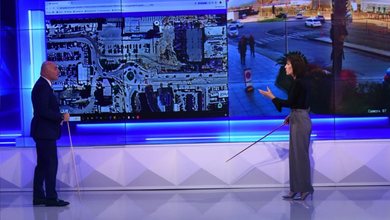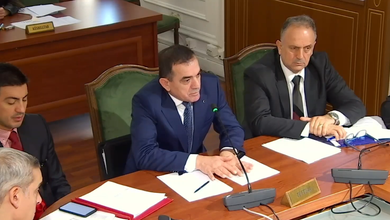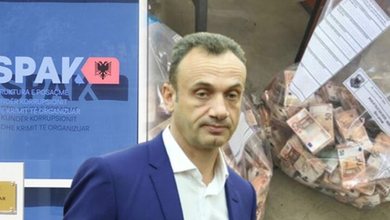



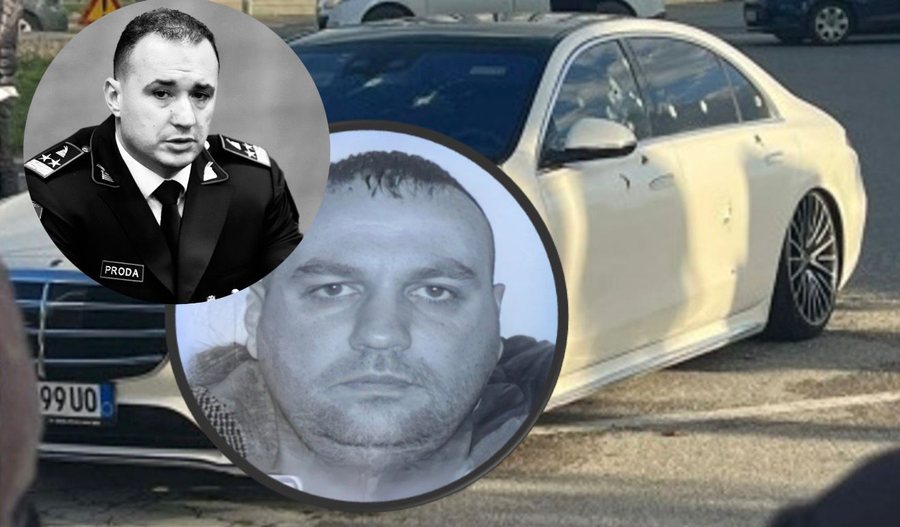
New details have come to light implicating the Director General of the State Police, Ilir Proda, in the scheme that led to the introduction of Muçi Shaljani into the Police Supervision Agency (AMP) with false documents. The serious incident two days ago in Rinas, where Gilmando Dani was executed and Shaljani was injured, is revealing not only a mafia assassination, but an entire chain of connections within the police structures.
According to sources in the investigation, the person responsible for Shaljani's entry into the AMP is Bruno Cara, arrested last night by the Police Supervision Agency itself. Cara is suspected of having, through forged documents, provided Muçi Shaljani with a clean record certificate, so that the latter could be appointed an agent of the AMP - an institution tasked with investigating corruption and involvement in crime by police officers themselves.
But the case takes on another dimension when a direct family connection comes into play: Bruno Cara is the cousin of businessman Ylli Cara, known as a close friend of Ilir Proda, the director general of the State Police. This relationship is not only not unknown, but is considered by investigators as the link that enabled Shaljani's penetration into an institution that is supposed to guarantee integrity within the blue uniforms.
The case has brought attention back to the phenomenon of heated ties between police structures and the underworld – a reality that has become commonplace in the State Police for years. In many cases, gangs or individuals associated with them appear as extensions of the police, while segments of the police function as extensions of criminal networks.
At the time of the assassination, Muçi Shaljani – known as “Sheqeri” – was accompanying Gilmando Dani, a well-known name in the underworld, who was executed on the spot. The very fact that an AMP agent, introduced with forged documents, was found alongside such a criminal figure in a planned assassination has raised alarms about the capture and compromise of institutions that were supposed to be the guardians of the law.
Investigations are ongoing, but the panorama so far shows a clear scheme: forgery of documents, family ties, influence over top police leaders, and penetration of elements of the criminal world into the institutions that are supposed to control them.
While awaiting new developments, the Rinas incident is reinforcing the belief that the crisis of trust in the State Police is not simply a problem of an individual, but of an entire structure degraded by its ties to crime.