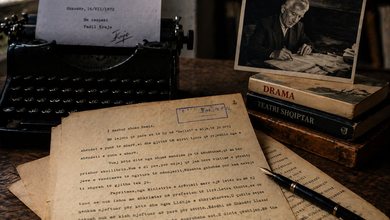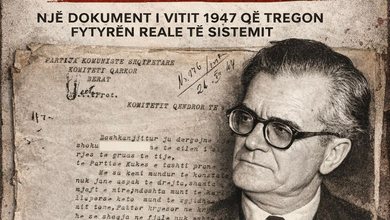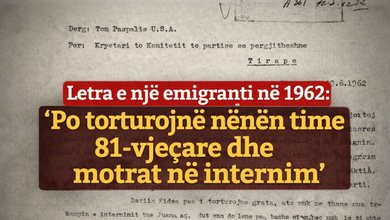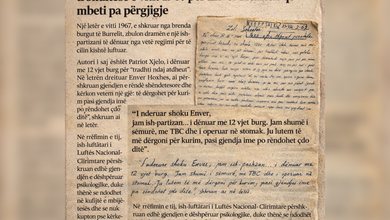



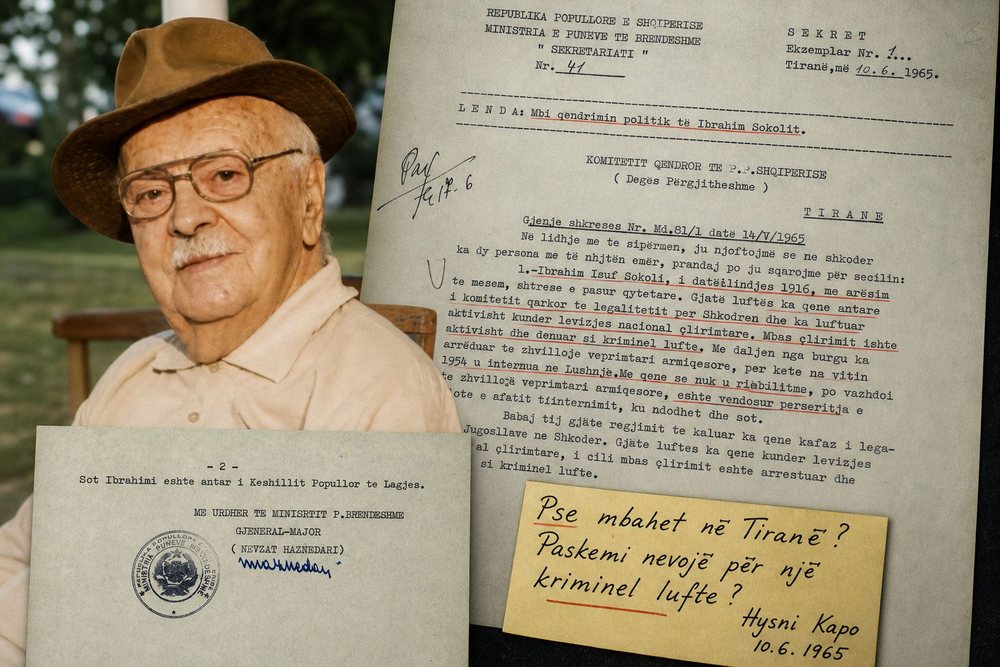
There are documents that speak more about the time than the people they mention. One such is the 1965 material from the Ministry of Internal Affairs, compiled after a letter addressed to Enver Hoxha.
A Yugoslav citizen demanded the release of Ibrahim Sokoli. But as often happened in that regime, the answer does not stop at the individual. The entire family biography is revealed. Ibrahim Sokoli is described as interned in Lushnje since 1954, his father is mentioned, and then, in a single sentence, the name of Ramadan Sokoli also appears.
"After liberation, he was convicted as a war criminal. Today he is a composer and lives in Tirana," the document read by VNA reads.
Nothing more. Not a word about music, about scientific research, about his contribution as one of the most important figures of Albanian culture. In the logic of the regime, these had no weight compared to biography.
And this becomes even clearer at the end of the document, where Hysni Kapo asks a question that is not simply personal, but expresses the very mechanism of power:
"Why is he being held in Tirana for so long? Do we need a war criminal?"
This is not just a sentence. It is the way the regime worked: the individual was not valued for what was done, but for what was recorded in the file. An artist could live and create, but one old label was enough for everything to be called into question.
In this document, Ramadan Sokoli is not just a name on a list. He is a clear example of how even a man of great values, dedicated to art and culture, remained exposed to a system that did not forget or forgive.
Because at that time, biography was not a thing of the past. It was a permanent punishment. And a persecution that lasted for dozens of years and that caused victims in the entire family.