Energy sector bribery scheme jeopardizes Ukraine's war efforts and path to EU
Amid Ukraine's horrific struggle for survival, a second threat has emerged — one that comes from within and jeopardizes not only the country's war efforts, but also its international standing and the process of joining the European Union.
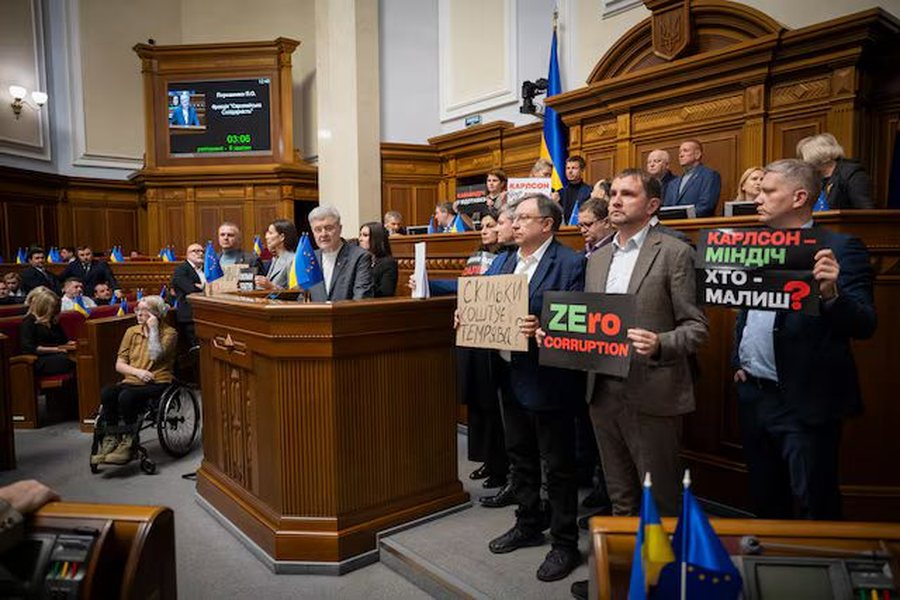
A $100 million corruption scandal at Energoatom, Ukraine’s state-owned nuclear operator, has exposed deep structural weaknesses in the Ukrainian government and institutions. Anti-corruption agencies have said that contractors seeking to win projects with the company — including work to protect nuclear facilities from Russian attacks — paid bribes of up to 15 percent to a criminal organization linked to advisers to the former energy minister and other senior government officials. The scandal also allegedly involves Tymur Mindich, a former aide to President Volodymyr Zelensky, bringing the affair closer to the top of power in Kiev.
As Russia strikes Ukraine's energy infrastructure, corrupt actors are embezzling funds meant to bolster the very sector under missile fire. In times of war, corruption is not just a failure of governance — it becomes a strategic threat.
The wasted resources weaken critical infrastructure, demoralize the military and civilian population, and damage Ukraine's credibility in the eyes of its allies. The West, already pouring billions in military and financial aid, will be watching closely to see how decisively Kiev deals with this corruption crisis.
Zelensky has fired two ministers since the scandal broke. It is a necessary step to maintain public trust, but far from sufficient to address the structural problems that fuel corruption. Ukraine has good anti-corruption laws and institutions, but their work is weakened by constant political interference.
After the 2014 revolution (fueled by widespread corruption) and the ouster of President Viktor Yanukovych, the country created new structures such as the National Anti-Corruption Bureau and the Special Anti-Corruption Prosecutor’s Office. These institutions were built to operate independently, after decades of political patronage protecting high-level corruption. But their independence remains vulnerable, especially when the urgency of the war is used as a justification for curtailing powers.
This summer, as Zelensky’s administration sought to curtail the powers of these institutions, Kiev witnessed its largest anti-corruption protests in years. Ukrainians sent a clear message: Corruption is not a secondary issue, not even in wartime. It erodes the state from within and undermines the democratic values that Ukrainian soldiers are defending on the front lines — and that Western allies are funding in the face of Russia.
The Trump administration and US lawmakers skeptical of aid to Ukraine will see the Energoatom scandal as evidence that the country is mismanaging war funds. While EU states, such as Hungary, that are reserved about Ukraine's membership, will use it as an argument that Kiev has not yet met the required standards.
The Western Balkans offer a stark warning: when political elites undermine anti-corruption and rule of law reforms, the EU accession process stalls for decades. If Ukraine does not act decisively, it risks losing international trust, much-needed aid, and its own European perspective — with dire consequences for the war and the country’s future.
The Energoatom scandal should serve as a turning point. It shows that corruption is linked to deep institutional weaknesses: unclear procurement procedures, politicized oversight of state-owned enterprises, and inadequate protection for investigators. The evidence reportedly includes over 1,000 hours of recordings, a sign that the problem is deep-rooted and not limited to a few isolated individuals.
Ukraine must act forcefully. Anti-corruption institutions must operate without political interference. State-owned enterprises — especially those in the energy sector — must become models of transparency, with the publication of major contracts, competitive bidding, and clarity in subcontracting chains.
Judicial capacity needs to be strengthened, particularly through the expansion of the High Anti-Corruption Court, so that high-profile wartime cases can be tried without delay. Western partners also have a role to play: assistance should be linked to concrete results — including successful trials, asset recovery, transparent audits, and protection of institutional independence. Independent oversight mechanisms, with the involvement of civil society and international experts, could monitor high-risk sectors, such as defense and energy.
These reforms are feasible and consistent with Ukraine's commitments to EU membership. They are necessary to maintain the trust of allies who support the country's resilience.
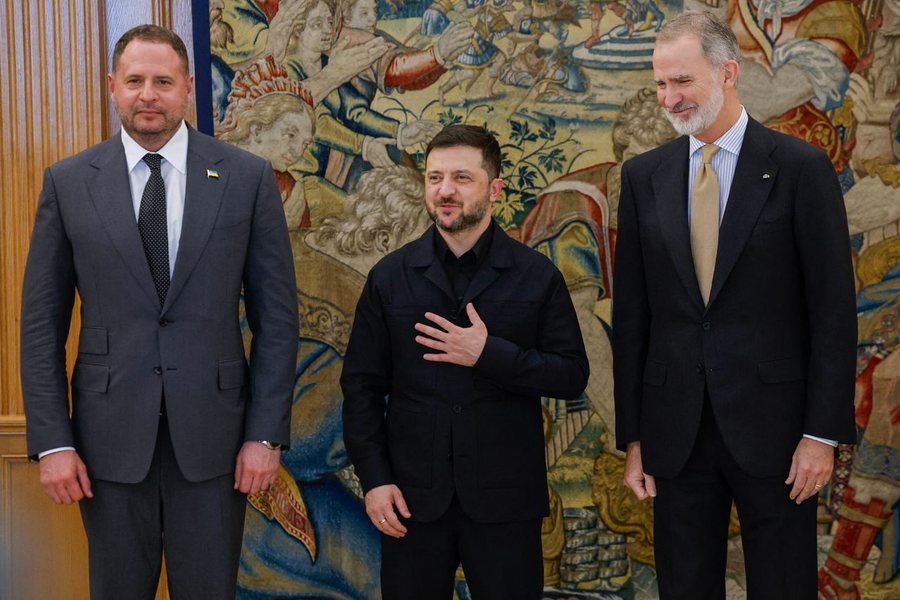
Zelensky has been a key morale figure in maintaining national morale in the face of Russian aggression. Now he faces a new responsibility: to show that the fight for Ukraine's future is not just a battle against Russian missiles, but also one against corruption.
Building stable, transparent, and rule-of-law institutions — even when it means confronting people close to the president — is not an option; it is a condition for Ukraine's survival. The Energoatom scandal is a stark warning: corruption is as dangerous as Russian missiles.
After a summer of efforts to weaken anti-corruption institutions, Zelensky cannot treat this affair as an ordinary incident. Ukraine cannot fight on two fronts. Winning the war against Russia requires not only courage on the battlefield, but also an unstoppable fight against corruption at home.
The Washington Post
Opinion by Andi Hoxhaj
Law professor and head of the LLM program in European Law at King's College London, author of “The EU Anti-Corruption Report”.