Albanian-language media outlets serving as Tehran's regime's channels portrayed the protesters as paid saboteurs and insisted that the killings were carried out by them. Experts say these disinformation channels have little impact but are persistent.
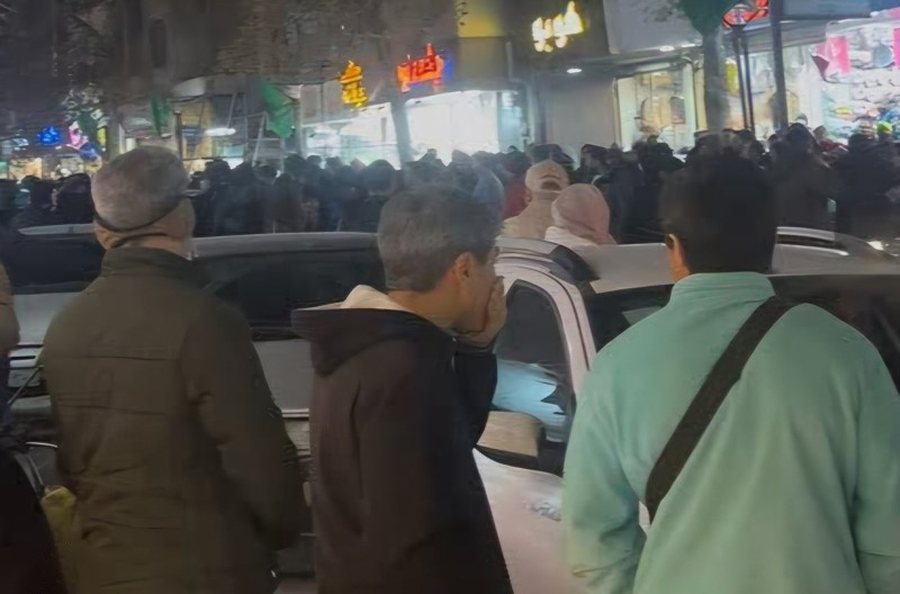
The images of dead bodies lined up on the sidewalks and streets of Tehran and other Iranian cities, after the regime there violently cracked down on protests that began in late December over high inflation, were more than shocking.
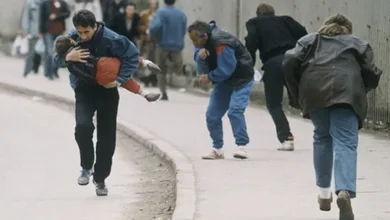
Videos that were transmitted with difficulty, overcoming the internet blockade imposed by the Iranian government, showed that the regime's security forces indiscriminately attacked protesters and left a trail of blood in their wake.
But channels used to disseminate Iran's positions in Albanian, such as Pars Today, which is part of the Iranian Radio Foreign Service (IRIB), and Gazeta Impakt, ignored these views.
A monitoring of publications by Tehran-linked websites shows that, on the one hand, they denied the citizens' dissatisfaction that led to the protests and, on the other hand, labeled protesters and opponents of the regime as puppets of the West, mainly the US and Israel.
Long articles, translated into Albanian, insist that the number of victims, which, according to human rights organizations previously proven to be reliable reporting, is between 20,000 and 30,000, was inflated by these organizations.
The regime's media insists that the organizations were funded by Western governments and that the victims were not around 3,100. Along the same lines, it is claimed that the killings were carried out mainly by paid protesters, who are alleged to have killed other protesters to incite chaos.
Other articles described the protests as organized by the US and Israel to destroy Iran, while the headlines in Albanian sounded like propaganda messages from the communist regime in Albania.
"The Iranian people are actively assisting intelligence in arresting the organizers of the riots in Tehran," the Impakt newspaper wrote on January 19.
This site has published over 40 articles of this nature since the protests began. Meanwhile, the state-run news agency 'Pars Today' in Albanian published more official statements from the Iranian government, the president and the supreme leader, which, like the articles in Gazeta Impakt, insist that the protests and the violence in the protests were organized by the US and external factors. In Pars Today, the victims of the protests are declared martyrs and the authorities there insist that they are not guilty of the deaths.
Blerjana Bino, director of the Center for Science and Innovation for Development, SCiDEV, said that these channels do not refer only to international media, but have created an ecosystem, which recycles narratives close to the official discourse in Iran. According to her, these are few online media in the Albanian language and related digital channels.
She says these platforms are limited in impact, but are constantly present.
"However, the reach and influence of these platforms remains limited compared to mainstream media, but their presence in the Albanian space is stable and visible, especially in the online environment," she said.
Manjola Hasa, director of the Media and Information Agency, MIA, told BIRN that the agency, which is also tasked with monitoring online reporting and conducting information verification, had not noticed any changes in the type and form of disinformation from Iran.
"In this context, responsible structures follow media reports and online space, verifying sources and facts in order to identify content that requires institutional attention," she said.
Hasa added that monitoring was periodic and that each case was assessed individually. However, he stressed that MIA did not go beyond monitoring to inform the Council of Ministers.
Externally incited violence
The most widespread narrative in Albanian-language media, which mainly recycles messages from the Tehran government, is that the violence came from abroad and was instigated by paid individuals.
Citing government sources, these media outlets insist that part of the protest were people who were paid up to $3,000 to kill another protester.
This narrative attempts to contradict hundreds of testimonies from the streets of the cities where the protests took place, which show that government forces have fired on groups of protesters.
Supporting the narrative that the killings were not part of the government's response to the protests, official channels like Pars Today declared the victims martyrs.
The agency also reproduces in Albanian official positions blaming the protests on a conspiracy against the Islamic Republic.
"In these cases, the protests are depicted not as expressions of social and political discontent, but mainly through frames that present them as instigated or instrumentalized by external actors, as part of foreign interventions, 'hybrid warfare' or destabilization efforts," Bino said.
According to her, this selective and biased coverage "shifts attention from human rights violations and the state response to the protests, towards narratives of security and conspiracy."
Channels that spread Iranian propaganda in Albanian also have a focus on the presence of the MEK (Mujahedin-e-Khalq) in Albania.
The latter are blamed in Albanian reports mainly for spreading propaganda against official Tehran, while in one case Gazeta Impakt reported that MEK members had been arrested in Iran as part of the people who incited the violence.
Also, part of the narrative distributed on these channels is Iranian military propaganda and news of war between the US and the Islamic Republic.
The latter mainly focus on threats from Iran to completely destroy the Israeli capital or on the country's combat readiness, including propaganda for new military products. The scheme also includes long articles that refer to media reports in the West as propaganda. /BIRN/