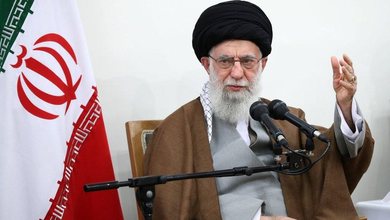
Iranian and American negotiators began indirect talks on Tehran's nuclear program on February 17, behind closed doors in Geneva, Switzerland.
Mediated by Oman, the talks aim to resolve disputes over the Islamic Republic's nuclear program, as the United States continues to build up forces in the Arabian Sea.
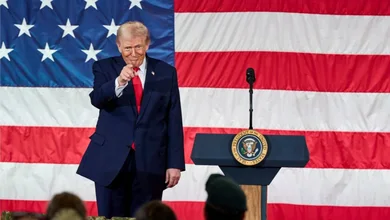
US President Donald Trump warned that failure to reach an agreement could lead to military strikes.
"I don't think they want the consequences of not making a deal," Trump told reporters on February 16.
"We could have had a deal instead of sending B-2s to destroy their nuclear capability. And we should have sent B-2s," Trump added, referring to the bombing of Iran's nuclear facilities in June 2025.
As the United States strengthens its military presence near Iran's borders, Islamic Revolutionary Guard Corps (IRGC) troops launched naval maneuvers in the Strait of Hormuz on February 16.
Iranian media reported that the aim is to test the operational capabilities of the IRGC Navy in the face of "potential security and military threats."
Trump said he would be involved in the Geneva talks "indirectly."
This is the second round of negotiations between Tehran and Washington this year, following talks held earlier this month in Muscat.
Iran said it is willing to submit to a strict inspection regime at its nuclear facilities in exchange for the lifting of US sanctions.
However, Tehran rejected the possibility of negotiations on issues such as its missile program and support for so-called 'proxy' groups in the region, even though the Trump administration insists they must be addressed.
The talks are taking place at the Omani consulate, with mediators exchanging messages between Iranian Foreign Minister Abbas Araqchi and US special envoy Steve Witkoff./ REL