Israeli Defense Minister Israel Katz said Israel will not move "one millimeter" from the "Yellow Line" in Gaza until Hamas disarms, despite the start of the second phase of US President Donald Trump's plan to end the war.
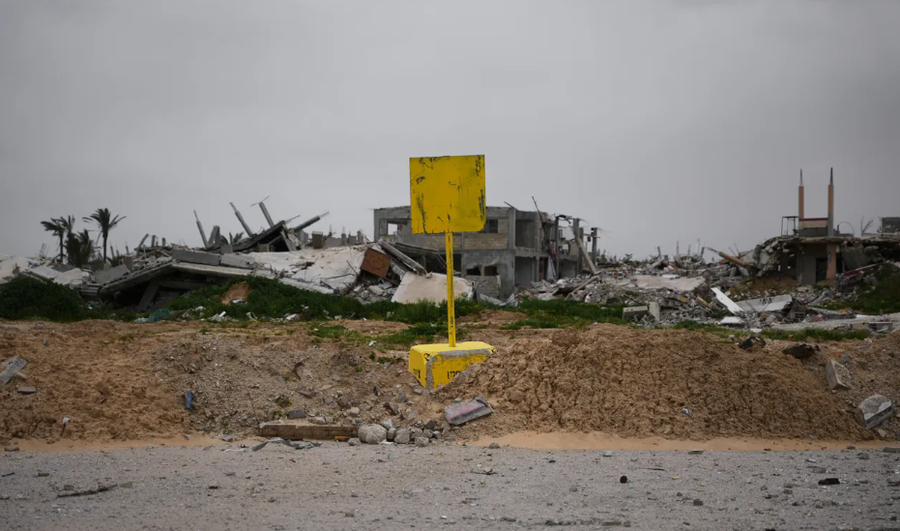
The "Yellow Line" refers to the line to which Israeli forces withdrew in eastern Gaza during the first phase of Trump's plan to end the war.
Under the second phase of the plan, which began last month, Israel is expected to gradually withdraw from that line.
"We will never allow Hamas to stand, neither with weapons nor with tunnels. The slogan is simple: until the last tunnel," Katz said at a conference organized by the Yedioth Ahronoth newspaper.
"We will not move from the Yellow Line even a millimeter until Hamas disarms, from weapons, from tunnels and other things," he asserted.
On Monday, Israeli Cabinet Secretary Yossi Fuchs said the government would give Hamas 60 days to disarm, threatening to resume the war if it did not comply.
Israel launched its genocidal war in Gaza on October 8, 2023, with the support of the United States. The war lasted two years and killed more than 72,000 Palestinians and injured over 171,000, most of them children and women, and destroyed about 90 percent of the civilian infrastructure.
The war ended with a ceasefire agreement that came into effect on October 10, 2025. However, Israel has continued airstrikes and destruction in various parts of Gaza in repeated violations of the agreement.
The disarmament of Hamas is part of the second phase of Trump's plan, which took effect in mid-January. The phase includes further Israeli withdrawal from Gaza, the start of reconstruction, the entry of additional humanitarian aid and the launch of an administrative committee to manage the territory.
Separately, Yedioth Ahronoth reported that Katz said Israel should expand domestic arms production to ensure it can defend itself independently, citing global competition for ammunition and occasional disagreements with allies during wartime.
Katz described the US as a "great ally" that supported Israel during what he called a "multi-front conflict," while acknowledging some disagreements that "had their impact."
He said the Defense Ministry has decided to launch a long-term initiative, temporarily called "Israel Shield," that would add 350 billion shekels (about $95 billion) to the defense budget over the next decade.
The plan is based on "strong belief in Israel's economic strength," Katz said. "There is no security without an economy and there is no economy without security," he added.