


After an entire career spent trying to understand the neurological underpinnings of autism, Uta Frith remains steadfast in a call that many consider controversial: to abandon the current way we understand autism and start all over again.
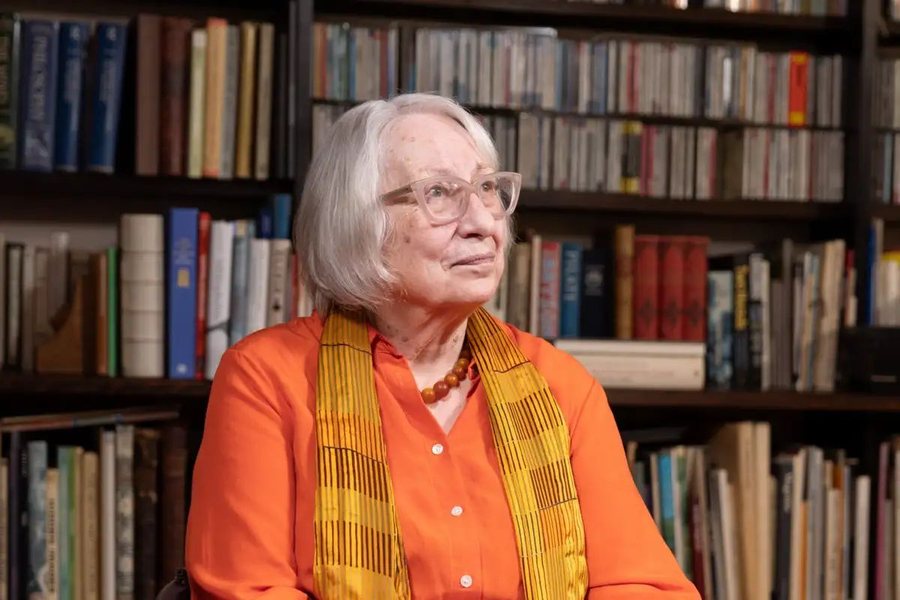
In her home in Harrow-on-the-Hill in London, among shelves filled with books, brain models and abstract art, the 85-year-old researcher reflects with rare candor on six decades of research.
“Very few things have stood the test of time,” she says. Frith recalls that when she first met children with severe autism in the late 1960s, they could be identified intuitively, but not scientifically. And, she says, that remains partly true today.
However, her impact on how science understands autism has been immense. Frith developed some of the most important theories about how the autistic mind might work differently from the neurotypical mind, and was among the first to use brain scanners in the 1990s to test these ideas.
In recent decades, autism diagnoses have increased significantly, especially in girls and women, largely because the definition of the condition has broadened and become more flexible. But Frith believes that many people on the milder end of the spectrum have little or nothing in common with those with profound forms of autism.
“There is absolutely no overlap,” she says. “That’s a sign that the spectrum is not working.”
According to her, the idea that autism is a single line, where everyone is ranked from “mildest” to “most severe,” may be a fundamental mistake. Instead, Frith thinks there may be several different types of autism, which have different biological and neurological mechanisms.
The debate is also gaining ground in the scientific community, as researchers try to understand whether the term "spectrum" has become too broad to still be scientifically useful.