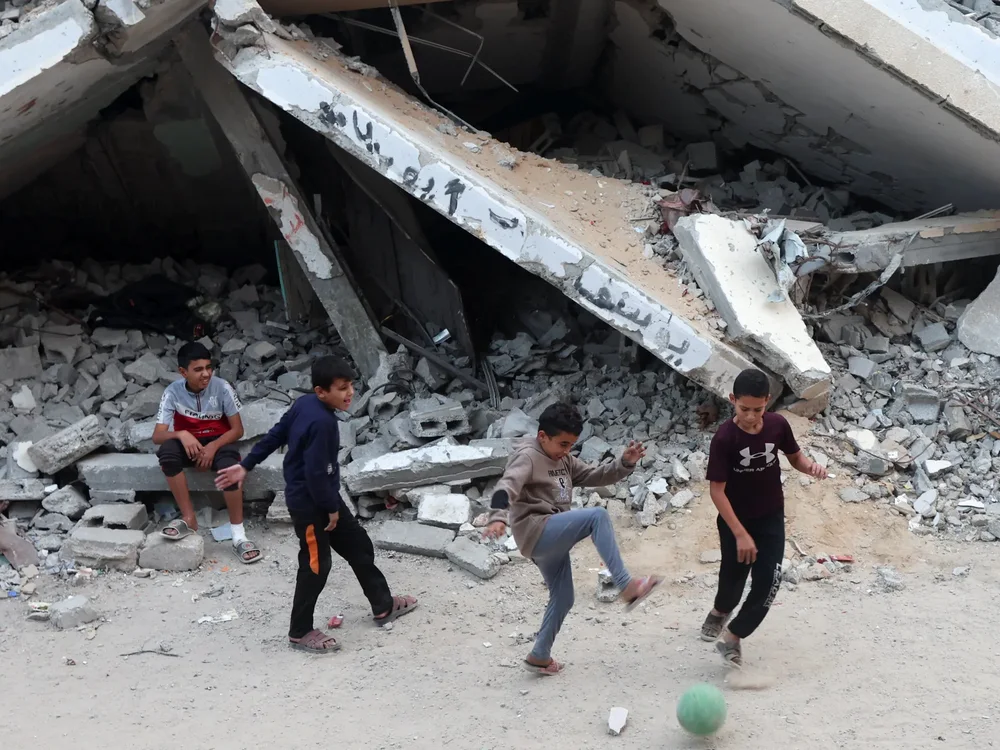
As Gaza sinks under the rain, the Trump plan is failing. Hamas has handed over the body of pilot Dror Or, and only two Israeli hostages remain in the Strip - General Ran Gueili and Thai Sontisek Rintalk - but talks to begin the so-called second phase have stalled and the risk of never getting there is real.
Representatives of Qatar, Turkey, Egypt and Hamas have met several times in Cairo in recent weeks, summits from which the Palestinians and mediators have emerged empty-handed and with little hope, even regarding negotiations that were considered a test of the consequences, those related to the fate of the militants trapped in the Rafah tunnels.
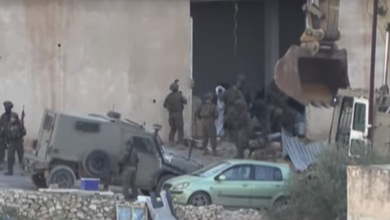
Israel wanted to offer them safe passage to a third country, but no country offered. The alternative was to surrender, end up in prison in the Negev, and return to Gaza only after pledging to abandon the armed struggle. The militants refused, and as a result, those emerging from the tunnels were shot dead by IDF snipers; at least ten have been killed so far.
The issue of militants trapped in Rafah
The Americans hoped to use the negotiations over the Rafah militants as a testing ground for the second phase, which includes the disarmament of Hamas, further Israeli withdrawal from the Strip, the arrival of an international stabilization force, and the transfer of power first to a technical committee and then, ultimately, to the Palestinian National Authority, but this did not succeed.
A Palestinian source in Cairo, who has been following the talks closely, explains that neither Hamas nor Israel want to exit Phase One: "It is convenient for both. Hamas, because it has no reason to lose courage and hopes to buy time to strengthen its control over Gaza and improve its negotiating position.
And Netanyahu, who wants to hold elections while there are still soldiers in Gaza, is interested in killing more Hamas leaders and pushing Palestinians to accept immigration, because reconstruction will not begin until Phase Two is completed." Egypt, which was due to hold a conference on reconstruction in mid-November, has postponed it to a later date.
Two options for disarming Hamas, no deal
Regarding the disarmament of Hamas, Israel's position remains far from that of the Arabs. The Americans would like the entire operation to be managed by the stabilization force, but are trying to recruit Muslim and Arab countries to build the international contingent.
Even Azerbaijan and Indonesia, which had expressed their willingness to participate, have been partially deterred by the number of soldiers they are willing to send. However, says an Egyptian source familiar with the ongoing discussions, "no country is willing to participate in a combat mission" against the Palestinian group.
The option presented in Cairo is for Hamas to hand over its weapons to the Palestinian Authority (PA) or an Arab state, perhaps Egypt, under the auspices of the Arab League. The Islamist movement has not yet responded to this offer, but there are also deep divisions among the Palestinians. Hamas would be willing to hand over the long-range heavy weapons that threaten Israel, but not the light weapons.
The PA is not ready, because a Hamas armed with pistols and Kalashnikovs would pose a problem for the administration of the Strip. Without a clear disarmament mechanism, Israel could decide to resume military operations.
Rabin's Plan B: A Gaza Divided in Two
Meanwhile, a kind of Plan B is taking shape between Kiryat Gat and Washington: the construction of a “mini-Gaza” in the Israeli-controlled area, roughly half the size of the enclave. This was confirmed to the New York Times by Aryeh Lightstone, a rabbi and entrepreneur who advises the US administration and is close to Kushner, Trump’s son-in-law, who first floated the idea of starting reconstruction from the yellow zone.
Lightstone manages the civil-military coordination center in southern Israel and is the executive director of the foundation created to promote the Abraham Accords.
The plan is to build housing for thousands of Palestinians. It's even called "Alternative Safe Communities." A group of American officials, former employees of Elon Musk's Doge, are working on it, staying at the Kempinski and Hilton hotels in Tel Aviv. "There's a practical question: how can we get people into safe housing as quickly as possible?" Lightstone told the New York Times. "This is the easiest way to do it."
An Israeli official also confirmed that the plan exists and that work has begun in Rafah to clear the rubble and begin construction of the first complex. The question remains: who will pay? The Gulf monarchies, which Trump hopes will finance the reconstruction, have made it clear that they will not invest a single dollar in a divided Gaza, with Palestinians facing a choice: relocate to the area under Israeli occupation to have a dignified life or emigrate./La Repubblica