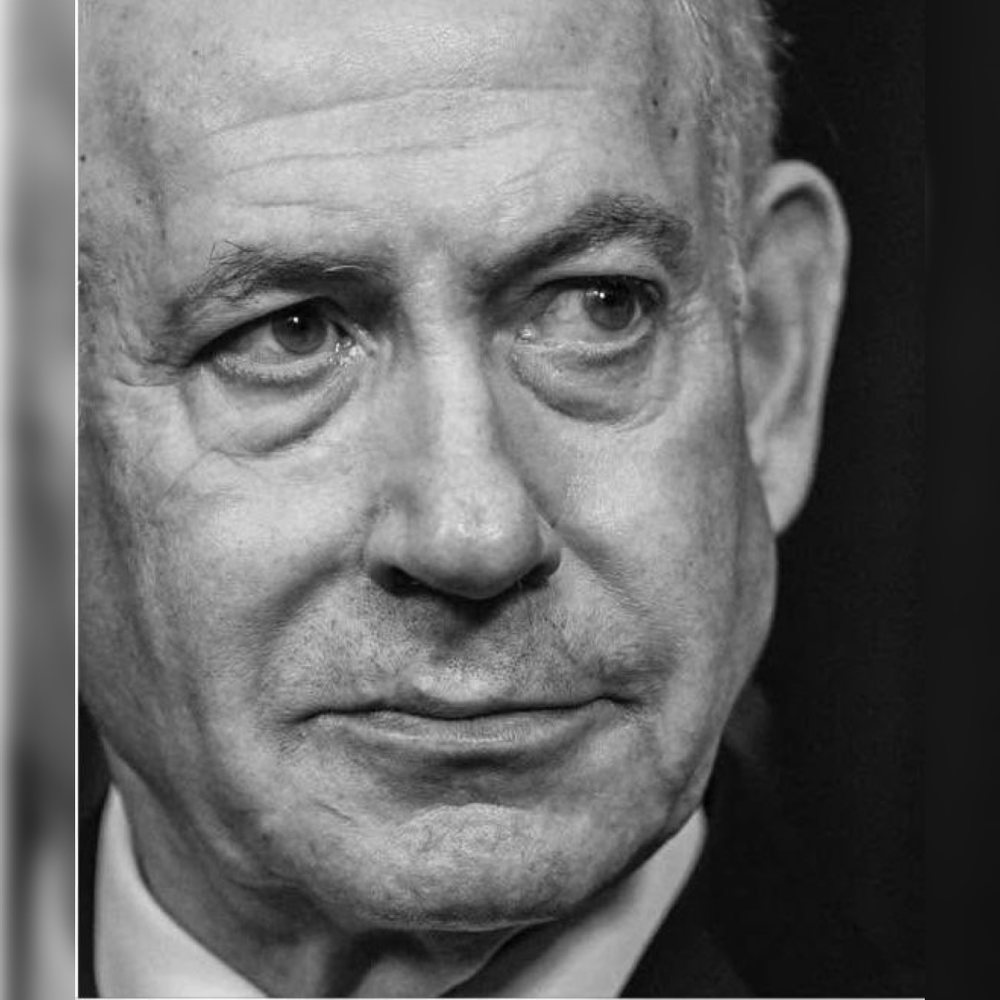
Benjamin Netanyahu has spent much of his political life trying to portray war with Iran not only as inevitable but also as overdue. So for the Israeli prime minister, the latest conflict was a victory from the moment it began. Not because every outcome is good for Israel, but because he can sell almost any possible outcome as proof that he was right all along: that Iran had to be confronted, that the use of force was inevitable, and that any delay would only have made the threat more dangerous.
Mr. Netanyahu doesn’t need a clean victory — he simply needs a consistent narrative. This isn’t just about distracting Israeli voters when they go to the polls this year. It’s also about instilling an Israeli national security doctrine that always places force over diplomacy. He needs Israelis to talk about Tehran and not about October 7, about existential enemies and not about political responsibility or about the unresolved catastrophe in Gaza — where, after nearly two and a half years of unchecked destruction, Hamas still remains — or about the crisis in Lebanon, where the renewed conflict with Hezbollah shows no sign of abating.
A war with Iran does not erase these failures, but rather pushes them into the background. It also shifts the political conversation to the emotional and political terrain where Mr. Netanyahu has always felt strongest: using fear with the claim that only he truly understands the magnitude of the threat Iran poses to Israel and with the (empty) promise that he can eliminate it by force.
For all these reasons, any post-war scenario is a victory for Mr. Netanyahu. If Iran surrenders under military pressure, he can say that force succeeded where diplomacy failed. If Iran refuses but emerges militarily weaker, he can say that Israel bought time by weakening the country’s nuclear and missile capabilities. If the Iranian government survives but emerges bloodied, isolated, and more embroiled in internal tensions, he can claim to have neutralized a relentless enemy. A prolonged period of chaos and bloodshed in Iran could appear in Jerusalem not as a tragedy that could have been avoided but as a problem to be managed from afar. Even a fortified Iranian regime could serve the narrative that the country must continue to confront.
Even as Iran appears to be strategizing for a protracted war — and with it a steady stream of Iranian missiles fired at Israel with no end in sight — Mr. Netanyahu is likely to argue that hiding in bunkers and keeping our children out of school is a necessary price. And, unlike in previous phases of this conflict, there is no one in power to tell him he is wrong.
In 2010 and 2011, when Mr. Netanyahu was considering striking Iran’s nuclear facilities, Israel’s security chief and top government advisers opposed it. They argued that the Israel Defense Forces were not prepared for such a strike and that it could undo the progress Israel had made in its covert campaign.
Fifteen years later, there are no dissenting voices in the Israeli military or government, because Mr. Netanyahu is surrounded by loyalists and ideological politicians. And, in Washington, there is a president ready to pull the trigger. So Mr. Netanyahu got what he wanted: a joint US-Israeli campaign led by a willing White House, which began with the spectacle of the assassination of Ayatollah Ali Khamenei.
The launch of the war against Iran last June helped lay the groundwork. The initial — and operationally impressive — success of Israeli intelligence and the military appeared to convince President Trump to join in and strike Iran’s main nuclear facilities with massive “bunker buster” bombs. Eight months later, it is clear that Mr. Netanyahu did not want Mr. Trump to take the first step and leave the job half-done.
In the months leading up to the February 28 strikes that launched the current war, Mr. Netanyahu held two meetings with the US president, and in February, Israel’s chief of staff flew covertly to Washington. At Mar-a-Lago, Mr. Netanyahu reportedly stressed the threat that Iran’s ballistic capabilities posed to both Israel and American assets in the Persian Gulf — capabilities that are now on display. After the protests in Iran in January, it seems clear that Mr. Netanyahu helped shift the focus for a new war, shifting the conversation from a nuclear deal to ballistic missiles and regime destabilization.
There is a temptation, especially in Washington, to imagine an orderly political end in Tehran: a leadership cut at the top, a compliant successor, and a disgraced state still standing. But the so-called Venezuela model is not a serious model for Iran. Iran is larger, and its regime is more entrenched and ideological.
The long-term costs to Israel are not insignificant. They touch on the heart of the question that has animated Israeli politics for decades: whether military dominance in the Middle East can truly translate into lasting security. An Israel that emerges from this war looking militarily unbeatable could emerge even more politically isolated. A dominant power doesn’t just deter; it also concentrates resentment.
The dangers of this discontent extend far beyond the Middle East. Even before the current war against Iran, which most Americans oppose, public opinion in the United States had shifted significantly toward Israel. A Gallup poll last month found that Americans now sympathize more with the Palestinians than with the Israelis, by 41 percent to 36 percent — a striking reversal from recent years. There is also a broader erosion of support for Israel and for American military aid to the Jewish state. If this war produces more civilian casualties in Iran or increases military casualties and financial costs to the United States, it is likely to further strain the relationship.
An atmosphere of anger and blame toward Israel also risks turning into conspiratorial and anti-Semitic narratives about Jewish and Israeli power. This concern has been further heightened by the American media’s focus on whether Israel pushed the United States into this war, as well as by comments by American officials suggesting that the American rationale for entering the war was related to Israel’s goals.
There is another risk that Israeli leaders are less willing to openly express, one that has to do with the long-term human consequences of war — for Iranians, of course, but also for Israelis. Israel’s National Security Council has already warned that terrorist elements linked to Tehran are trying to harm Israelis abroad, and Israeli authorities have increased security at embassies and places where Israelis and Jews gather. States could face strategic shocks; civilians could fall victim to the fallout of wars in train stations, synagogues, airports, and restaurants when terrorist cells or individual individuals choose easier targets for revenge. This phenomenon has already begun as a result of Israel’s actions in Gaza.
And yet, none of this is to say that Mr. Netanyahu and the Israeli state apparatus cannot claim success. On the contrary, that is precisely the problem. They have been maneuvered into a political position where, for the moment at least, declaring success no longer requires a lasting peace, or even a more secure future for Israel. It requires only that Israel continue what analysts call “mowing the lawn” — repeated actions to weaken the capabilities of its adversaries — and that no one in the Israeli establishment propose any alternative strategic vision.
Israel, having demonstrated overwhelming force, is once again confusing dominance with security and tactical escalation with a stable regional order — even as the region continues to burn.
Mairav Zonszein is a regular opinion writer for The New York Times. She is the senior Israel analyst at the International Crisis Group, a nonprofit think tank dedicated to conflict prevention. She lives in Tel Aviv.