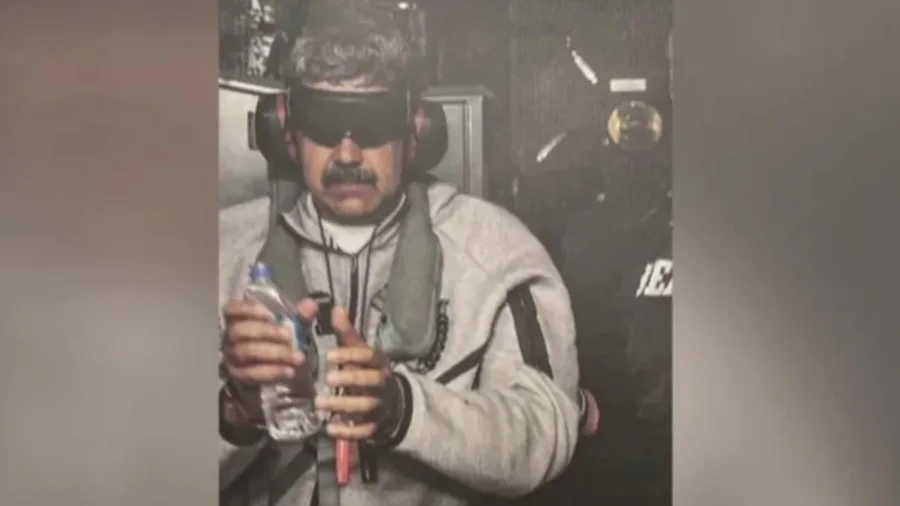
The details related to the raid that took place against Nicolás Maduro in Venezuela are still very unspecified and mysterious, but much information has been made public about this sophisticated and unprecedented operation.
According to reports, this mission was carried out after months of planning and intelligence gathering, including significant intelligence-gathering efforts inside Venezuela. Despite the fact that the US does not have a functioning embassy there, the CIA team was able to work in what is known as a “denied zone,” an operation that could not be covered by formal diplomacy.
A specific government source, close to Maduro's inner circle, has provided vital information about his whereabouts and movements. This has raised great speculation about the identity of the source, and great questions about his fate. However, information about this person still remains secret, implying that there may be a great risk to his security.
In addition to human intelligence, technology played a significant role in this operation. Developing an intelligence mosaic involved mapping the terrain and using satellite imagery. The mission also involved the use of 150 aircraft and helicopters flying close to the terrain to reach the compound where Maduro was located.
One of the most mysterious aspects of the operation was how the US managed to turn off the lights of Caracas, creating the darkness necessary to enable a successful attack. Speculation suggests that the US Cyber Command may have interfered with Venezuela's electronic networks to achieve this effect, although the exact details remain unspecified.
Also, the failure of air defenses, including technology supplied by China and Russia, has raised questions about the use of US military technology to aid in the operation. The US Space Command has been credited with creating a secure air route for special forces, allowing them to enter without being intercepted by Venezuelan defense systems.
This operation has been seen as an example of the use of advanced intelligence and technology to achieve an extraordinary mission, and it raises many questions about how military and intelligence operations might develop in the future, including the covert technologies that might be used.