Doctors in the Gaza Strip say cancer-related deaths have tripled since the start of Israel's war on Gaza, while patients are barred from traveling outside the territory for treatment and supplies of vital medicines remain blocked.
For Hani Naim, the wait is no longer for a cure, but for permission to save his life. He has been living with cancer for six years and had been approved for treatment abroad. But like thousands of others, he remains trapped in Gaza, prevented from leaving by increasingly strict Israeli restrictions. “I used to get treatment in the West Bank and Jerusalem,” he told Al Jazeera. “Today I have no access to any treatment. I need radiotherapy and it no longer exists in Gaza.”
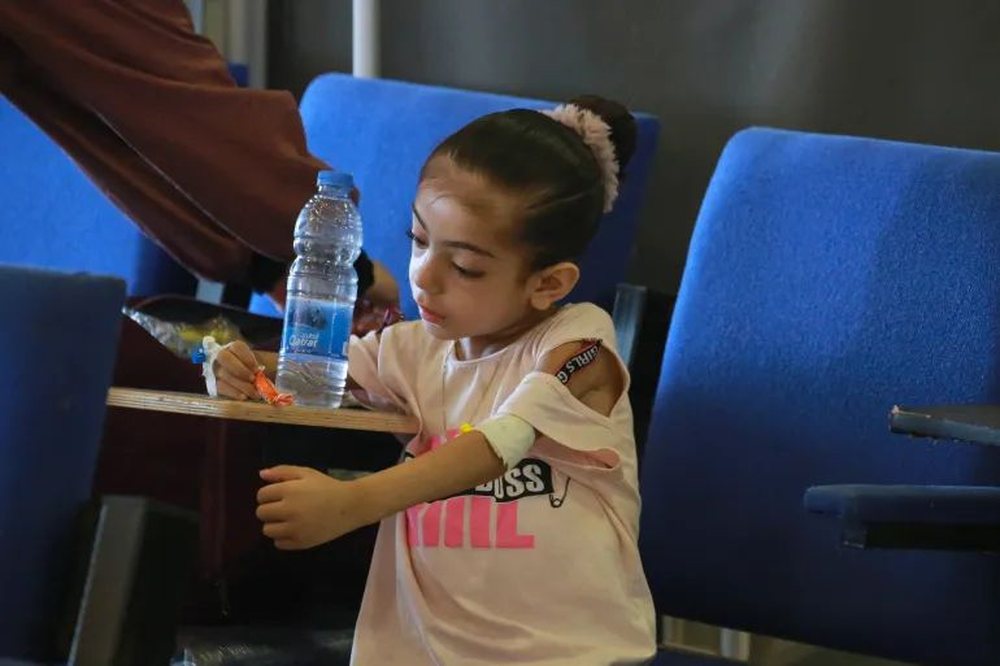
Naim is one of about 11,000 cancer patients currently trapped in the enclave, where the health system has almost completely collapsed. According to doctors, since October 2023, when the Israeli war in Gaza began, the number of cancer deaths has tripled. Without chemotherapy, without radiotherapy and without a way out, a cancer diagnosis has become an immediate death sentence for many.
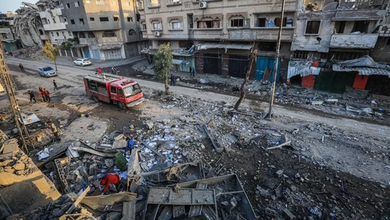
At the center of this crisis is the Turkish-Palestinian Friendship Hospital, once the only institution offering specialized oncology care in the Gaza Strip. Today, it has been reduced to an empty shell. “It resembles a ghost hospital after being turned into a military zone during the war,” reported journalist Tareq Abu Azzoum. “Israeli forces blew it up, leaving the patients to survive as best they could.”
With the destruction of the main facility, doctors have been forced to work in makeshift clinics, without equipment and without medicines. In an interview with Al Jazeera Mubasher, the medical director of the Gaza Cancer Center, Mohammed Abu Nada, described the situation as a state of complete despair.
Despite recent ceasefire agreements that were supposed to allow humanitarian aid into Gaza, essential medical supplies remain blocked. Abu Nada dismissed claims that aid is flowing freely, explaining that while some commercial goods have crossed the border, life-saving medicines have not entered at all.
“They brought chocolates, nuts and chips… but treatments for chronic diseases, cancer treatments and diagnostic equipment have not come in at all,” he said. “This is just propaganda. We have turned to the World Health Organization to at least provide us with treatment, if we are not allowed to leave. But, on the contrary, even the few reserves we had have run out.”
According to Abu Nada, about 60 to 70 percent of cancer treatment protocols are completely unavailable. Since chemotherapy requires a precise sequence of drugs, the absence of even one component renders the entire treatment ineffective.
Palliative care is also collapsing. Painkillers, vital for patients in advanced stages of cancer, are already being rationed. “We try to prioritize,” Abu Nada explained. “Those with advanced cancer get something, while those who are still in more stable stages… get nothing.”
The human consequences of this lack are dramatic. Abu Nada said that in the Khan Younis area alone, two to three cancer patients die every day. “The disease spreads through the body like wildfire,” he said. “We have taken steps backward, as if we had gone back 50 years in cancer treatment.”
Currently, 3,250 patients have official referrals for treatment outside Gaza, but cannot cross the border due to the closure of the Rafah crossing and Israeli bans on medical evacuations.
For the remaining health workers, the psychological toll is immense. “Some specialists have left Gaza,” Abu Nada said. “But even for those who remain, what value is a doctor without tools?”
“In the end,” he added, “the doctor has no choice but to sit and cry next to the patient, who has been denied treatment and denied the right to leave.”