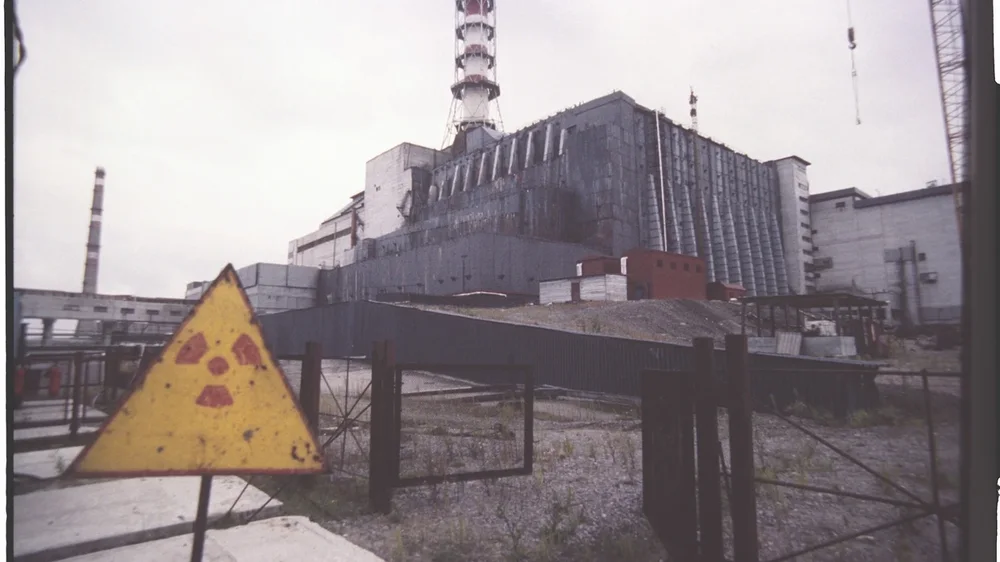
In the early hours of April 26, 1986, what should have been a routine test at the Chernobyl nuclear power plant quickly escalated into the world's largest nuclear accident.
A combination of fatal flaws in the reactor's design and human error led to a catastrophic explosion, releasing massive amounts of radiation.
The true number of victims of this disaster will never be known, but around 350,000 people were displaced in the years that followed, while around 600,000 men put their lives at risk to take part in the operation.
It is known that the EU and Ukraine have cooperated on nuclear safety since the establishment of the Ukrainian state in 1991.
Since then, the EU has funded more than €1 billion in nuclear safety activities in Ukraine.
A highlight of this support is the €423 million contribution to the New Safe Confinement, a massive arch structure placed over the destroyed Unit 4 at Chernobyl, to prevent radioactive leaks.
After a Russian drone attack in February 2025, this structure was severely damaged and the European Commission has allocated another 37 million euros to restore the structure to full functionality by 2030.
Also, in Chernobyl there is the Industrial Complex for Solid Radial Waste Management (ICSRM), a project funded mainly by the EU.
It assists in the safe handling, conditioning and storage of solid radioactive waste currently stored on site.
The European Instrument for International Nuclear Safety Cooperation (INSC) 2021-2027 is the EU's external assistance programme for nuclear safety.
It supports the promotion of a nuclear safety culture, the safe management of radioactive waste, and the implementation of effective and efficient nuclear safeguards.
How we manage nuclear security and prepare for the future must be guided by the lessons we learn from the past. The EU continues to work in a coordinated manner at global level to ensure this happens.