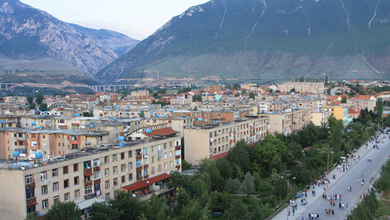




Albania is closing another year under the shadow of a deepening demographic crisis, which is clearly reflected in the global birth rate ranking.
According to data from Our World in Data, with only 27,433 births predicted in 2025, the country ranks 147th in the world, still better positioned than most Western Balkan countries.
In the region, the picture remains equally challenging, albeit with notable variations: Greece, despite having been facing an aging population for years, recorded 68,148 births and ranks 120th; Serbia, with 58,142 births, climbs to 128th, while Croatia, with 30,995 births, ranks 143rd, just ahead of Albania.
Further down, North Macedonia with 16,313 births ranks 158th, and Kosovo, once a regional exception for the highest birth rates, now ranks 154th with just 19,558 births. At the bottom of the region stands Montenegro, in 171st place, with just 6,969 births, reflecting a significant decline in birth rates in a country with a small population but which exhibits the same negative dynamics as its neighbors.
On the world stage, the picture is completely different and shows a shift in the demographic center towards Asia and Africa. India is expected to lead with 23.1 million births in 2025, representing 17% of global births, more than double that of China and many times more than the whole of Europe, which will reach only 6.3 million births.
Nigeria will register about 7.6 million births, more than all of Europe combined, while countries with large populations such as Pakistan (6.9 million), the Democratic Republic of Congo (4.5 million), Indonesia (4.4 million) and Ethiopia (4.1 million) reinforce the trend of demographic shift towards the global south. In contrast, China, once the epicenter of world births, is now predicted to have “only” 8.7 million births, with an average fertility rate of about one child per woman.
These changes clearly show that while Europe and the Balkans face a continuing decline in fertility, countries such as India, Nigeria and the countries of Sub-Saharan Africa are becoming the new engines of global population growth. Albania and the region are part of a broader trend: middle- and high-income societies are aging rapidly, while countries with young populations continue to lead demographic growth. In this new reality, the gap between the dynamics of births in Europe and those on other continents is expected to deepen even further in the coming decades./ekofin.al/