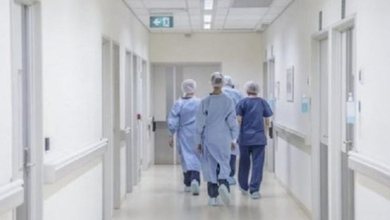




A recent audit by the Supreme State Audit Office sheds light on the real state of psychosocial services in pre-university education, highlighting a strong contrast between staff growth and deep territorial and structural inequalities in students' access to this essential service.
According to the audit findings, in the 2023–2024 school year, the number of psychosocial service employees reached 824, an increase of 558 employees compared to the 2014–2015 school year. The most significant increase was recorded during the last five-year period 2019–2024, during which the support staff in schools expanded significantly. However, this numerical progress has not been accompanied by an equal distribution across the territory.
In some local pre-university education offices, such as Finiq–Dropull, psychosocial services are completely absent, while in other areas such as Selenicë and Tepelenë–Memaliaj, a single employee covers 18 and 14 schools respectively. In ZVAP Bulqizë and Dibër, one employee covers up to 3.2 schools, significantly exceeding the national average of 1.7 schools per employee.
The audit also highlights that, during the 2023–2024 school year, about a quarter of schools nationwide did not have any psychosocial services at all. As a result, about 92,991 students did not receive the necessary psychosocial support. This phenomenon is significantly more widespread in rural areas compared to urban areas, where there is a higher availability of professionals in the field, a more developed infrastructure and more favorable conditions for the exercise of psychosocial practices.
Another prominent issue is related to the support of students with disabilities. Pre-university educational institutions do not provide full and adequate psychosocial coverage for this category, despite the requirements set out in Order No. 313, dated 20.10.2020, as amended, which provides for the addition of one additional employee for every 10 students with disabilities. In practice, this standard has not been respected.
The audit found that 50 ZVAPs with over 10 students with disabilities do not employ any additional psychosocial service staff according to this order. As a result, due to a lack of human resources, support for these students remains partial and is often provided by assistant teachers or teaching staff.
Nationally, approximately 4,686 students with disabilities do not receive any form of structured psychosocial support, creating a direct discrepancy with the legal framework and undermining the inclusive approach in the education system.
Serious problems are also evident in the infrastructural aspect. Data from regional directorates and local education offices show that a significant part of the cabinets that appear as functional for psycho-social services are not dedicated exclusively for this purpose. The premises are often shared with school doctors, security officers or administrative staff, negatively affecting the quality of service, the guarantee of confidentiality and the creation of a calm and suitable environment for professional intervention.
The lack of standardization of spaces is present throughout the country, with significant differences between regions. While DRAP Fier and DRAP Tirana report relatively high percentages of dedicated spaces, 89% and 74% respectively, other regions such as Lezha and Korça face significant shortages in both quantity and quality, significantly limiting access and effectiveness of psychosocial services.
The audit also analyzes the recruitment process, finding that during the years 2021–2023, the procedures followed for the employment of psychologists and social workers have not ensured the coverage of vacant positions. During this period, 92 vacant positions were identified that were not filled through regular competition, leaving around 15,000 students nationwide without service.
According to the regulatory framework, permanent positions require a school psychologist profile and a master's degree, while temporary contracts also allow a bachelor's degree in psychology or social work. This division creates double standards and undermines the sustainability of the service. While the high criteria aim to guarantee quality, they have had a negative impact on rural areas, where the number of candidates is limited and the positions are less attractive, deepening territorial inequalities in service provision./ekofin.al