


Economic experts warn that domestic production, due to weaknesses, comes at high costs and has a decline in demand, and as a result, will not be able to amortize the price increase coming from international markets.
Alban Zusi, an economic expert, says that domestic production risks facing a double blow: from the rising cost of imported products and from the protectionist policies that European countries are undertaking for their production.
In the absence of support measures for the domestic sector, according to Alban Zusi, the increase in the costs of energy, fuel and agricultural inputs is expected to be directly reflected in the prices of food products and the competitiveness of Albanian producers.
" Our blow will be twofold. First, the blow from rising prices in foreign markets and the blow from the protectionist policies that Europe will undertake, while our government is not doing such a thing."
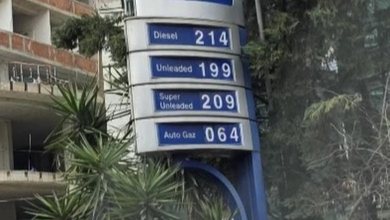
We will have higher costs for energy, fuels and gas due to their increased cost in foreign markets, as well as the increase in the price of iron.
This increase will be reflected in food prices, as production will continue to show its weaknesses, because it is already weakened. If we leave it without support in this situation, while Europe is considering extracting oil reserves and reducing gas taxation, our production will be exposed twice: once to price increases and once to a lack of competitiveness, due to subsidies that European countries are providing.
Added to this is the high depreciation of the Euro. More food goods will enter from imports, but the benefits from the price increase will be received by the middle link of the trading chain, supermarkets, wholesale outlets, etc. They will receive increasingly cheaper products, will abandon domestic products and will not reflect the reduction in retail prices, despite a European currency that has been weakened for a long time.
And this is not a guess, it is a fact. The Euro has depreciated by 30–40%, and despite this, there has been no drop in prices for food products, due to the reasons I mentioned above. Meanwhile, imported goods remain more attractive due to higher profits,” says Mr. Zusi.
Economic expert Arben Malaj emphasizes that one of the main obstacles for domestic production in its attempt to amortize price increases is the cyclical period of production.
"If we talk about goods and services, this is a complicated process, as the depreciation of imported inflation is difficult, both from rising prices and from rising transportation costs. This happens, firstly, because the main products have their own production cycles. Secondly, and most importantly, we have a very high trade deficit."
What measures should be taken?
Economic experts unanimously emphasize that Albania is still the only country without a genuine anti-crisis package. Arben Malaj analyzes that almost all countries use three main pillars in their anti-crisis packages: monetary policies, fiscal policies and administrative measures.
As in previous crises, such as the one in 2022, due to the outbreak of the war in Ukraine, the government relied almost exclusively on administrative measures.
Mr. Malaj says that these measures often create space for corruption and ultimately harm end consumers, instead of sustainably addressing the causes of the crisis.
"Domestic production measures are not taken when the shock occurs. They must be permanent, through harmonization between monetary, fiscal and administrative policies, to reduce trade deficits in goods and services, by increasing budgetary support for the modernization of the manufacturing and agro-processing sectors, as well as through countercyclical measures against imported inflation crises."
If you look at international examples, anti-crisis packages are not based on market monitoring teams, but on mitigating and supporting measures. Any shock-absorbing package starts with social packages for vulnerable groups; in our case, the income of the poor that is used only for urgent food needs accounts for about 60% of the total.
The first step should be well-targeted support, not for everyone, but for the middle class and social strata that deserve immediate solid support. Secondly, the proposal to tax more companies that benefit from abusive price increases is necessary, but these revenues should not go to the "big bag" of the budget where up to 1.5 billion euros are misused per year, nor to public investments where incompetence and corruption increase costs by about 36%.
Expert Alban Zusi emphasizes that fiscal measures are very necessary, including temporary tax cuts.
"So far, the government has not had any consultative process with interest groups in order to analyze the effects and take measures. In this situation, as is happening in other European countries, fiscal measures and tax reductions must be intervened. If the government used to collect 20 lek in taxes from a product, and now 25 lek are being collected, this difference created by the price increase must be removed.
A fixed tariff for this period should also be introduced for fuels, including oil and gas, in order to help domestic industries that use gas as fuel and those that use oil for transportation. For example, the metal and wood industries use gas as fuel, while many other industries and livestock use fuels.
Measures must be taken to facilitate manufacturing industries from going bankrupt in this period of crisis and to serve as a support and shock absorber for prices.
Where the state is receiving undeservedly higher taxes, more than the price of oil has increased in foreign markets, it should switch to a fixed rate. That is, taxes should no longer be 60% of the price, but be fixed.
Secondly, there should be immediate meetings with stakeholders to ask them what the concrete problems are and how they can be helped.
Third, input prices have increased by 10% to 30% (urea, DAP, etc.).
"In these conditions, the domestic input production industry should be encouraged. The state should establish regulatory measures for these industries, in order to provide agriculture with inputs at lower prices."
Meanwhile, to keep fuel and energy prices under control and reduce import dependence, Mr. Dogjani proposes a package of 13 measures, first emphasizing the importance of the state maintaining a physical oil reserve of 180 thousand tons, diversifying supply and developing renewable energies./monitor.al