


A field investigation by experts from the International Commission on Missing Persons has collected data on at least six mass graves used by the communist regime for political opponents. Their exhumation and identification remains at the discretion of the government, the ICMP says.
In 2018, Hamza Kazazi knocked on the doors of the International Commission on Missing Persons, ICMP, hoping that the organization's arrival in Albania would advance his decades-long efforts to find the remains of his father, Jup Kazazi – one of the leaders of the anti-communist Postriba uprising in 1946.
According to archival documents from the time, Jup Kazazi killed himself after a shootout in Shkodra with the People's Protection Brigade, an organ of the communist regime's Ministry of Defense. His body was displayed in public to sow terror, but was never returned to his family and it is unknown where he is buried.
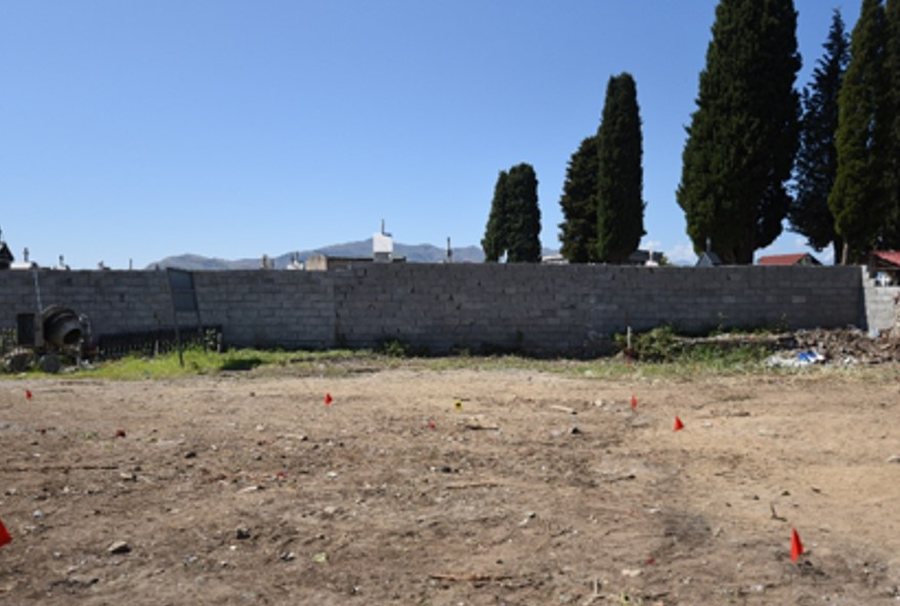
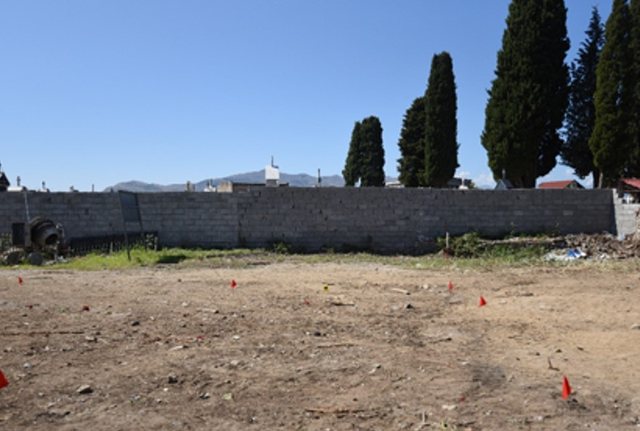
Kazazi believed that his father's body was located at the site known as the "Wall of Blood," near the Rrmaj cemetery in Shkodra, where opponents of the communist regime were shot and then buried namelessly. In the early 1990s, he privately excavated the area, where he found a human skull, a priest's velado, and a cross, objects which he handed over to the church and discontinued the search for his father.
Kazazi's data and the coordinates for the site were confirmed as accurate in 2025 by a group of ICMP archaeologists. According to their investigation, the meadow near the 'Wall of Blood' has changes in the color and texture of the soil and that there are indications of 'human remains' deep within it.
The anthropological, archaeological and forensic investigation, conducted by ICMP at the request of the Records Authority, was carried out at 6 different locations and concluded that in five of them there is a high probability of 'human remains', which coincides with the archival data and evidence collected.
In addition to the location near the Rrmaj cemetery, ICMP also found evidence of graves in Shpal i Mirdita, in two different locations, in an existing church cemetery and in a meadow, where it is believed that 4 of those executed in the 1973 revolt at the Spaç forced labor camp were buried in a common grave.
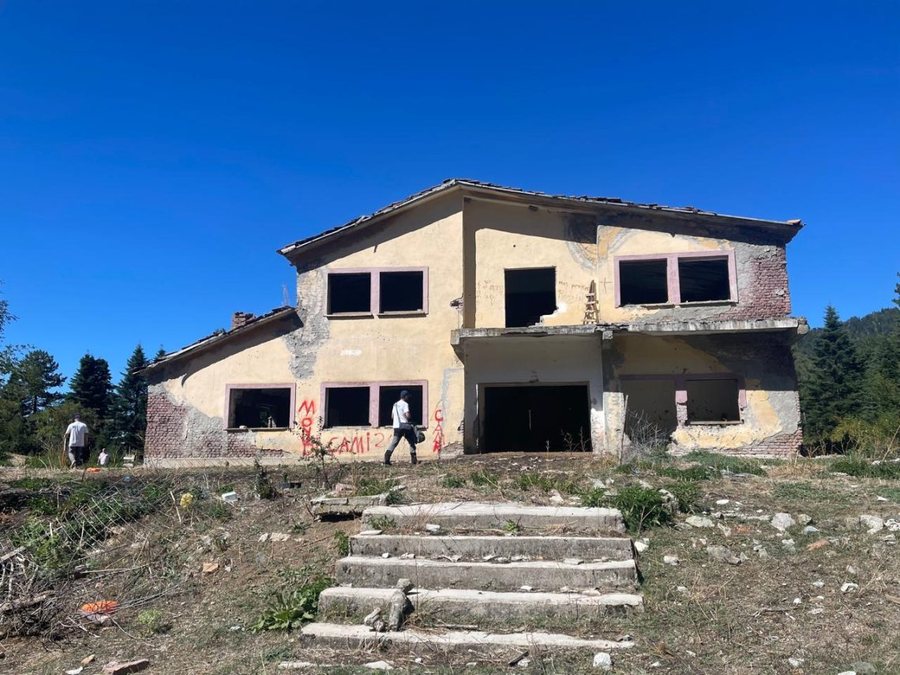
The investigation also concluded that there were changes in the soil structure in the form of a multiple cemetery at Shën Vasil in Saranda, a site used as an internment camp during communism, as well as at Shelegu-Gërmenj where a single grave is suspected that coincides with the evidence for its location. In one case at Mallkeq in Selenica, the data do not determine with high probability the possibility of 'human remains' in the area where the investigation was conducted and suggest further investigation.
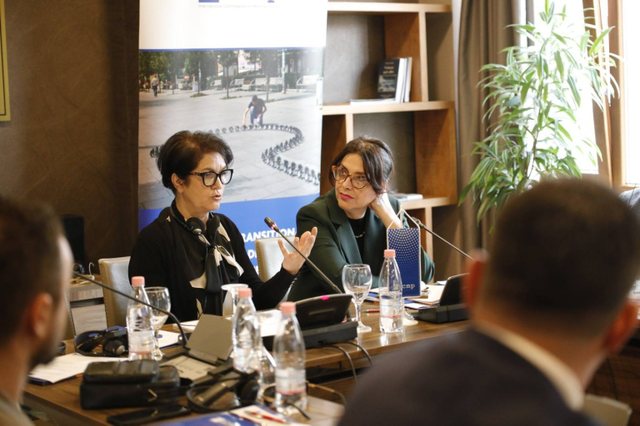
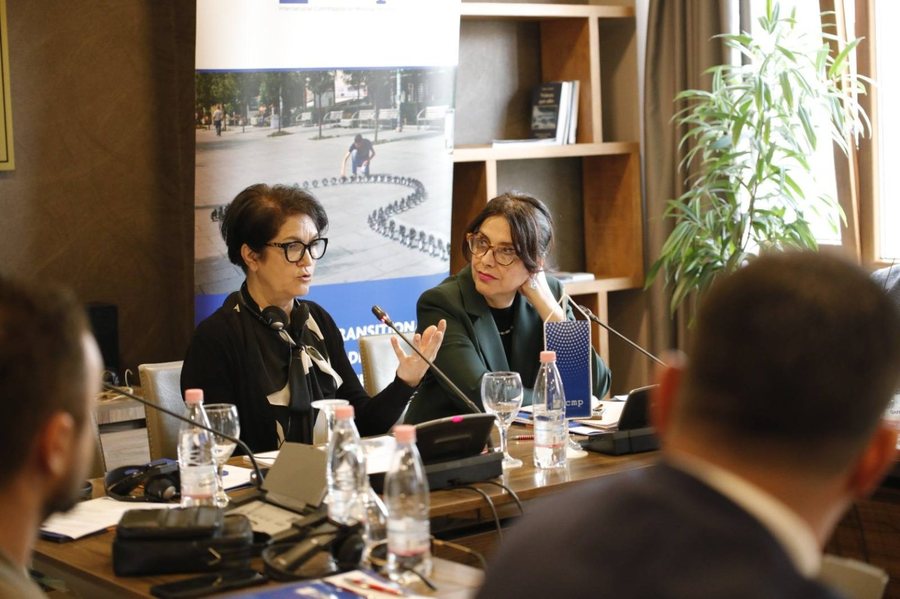
ICMP presented the findings of the investigation in Tirana on March 31, at a roundtable organized with AIDSSH at the conclusion of a European Union-supported project on transitional justice and dealing with the past.
In all of these examined locations, ICMP finds that "morphological changes in the soil structure made by man as a result of excavations have been found."
Based on these findings, ICMP recommends that Albanian institutions begin the process of excavations to locate and identify missing persons – a process that has been held hostage for decades due to institutional clashes and lack of political will.
Albanian authorities estimate that around 6,000 Albanians died from torture or extrajudicial executions or were shot while trying to cross the border between 1944 and 1991, when Albania was ruled by a brutal Stalinist dictatorship. Since the fall of communism, relatives of the disappeared have sought to recover their remains but have received little help from the state.
AIDSSH Chairwoman Gentiana Sula said that this was a moment that should be used to take concrete steps to clarify the fate of these people, asking the Prosecutor's Office to consider the ICMP's findings as strong evidence for further investigation.
"Today we have 17 burial sites under investigation, 6 of them evaluated using scientific methods. The investigations are in the finalization phase and the next step is clear: forwarding the materials to the prosecutor's office," Sula declared.
Taking the final steps to exhume and identify the human remains remains up to Albania's political will, says Samira Krehic, head of ICMP's Western Balkans Program. The organization proposes setting up a coordination structure to begin the long-awaited exhumation and identification process.
“There are functional models in the world that have proven their efficiency, and we have proposed such a model to Albania. In this sense, the decision lies with the Prime Minister’s Office or the Albanian government itself to determine whether to take on this role,” Krehic told BIRN.
The ICMP representative appealed to the Albanian government to take concrete steps, considering the finding of the remains of those who disappeared under communism a fundamental obligation of the state, also within the framework of the European integration process.
According to Krehic, the process of finding and identifying the missing is a very important aspect of building a historical narrative based on facts, so that it is not deformed and influenced by myths or political motives.
"..this is a fundamental obligation of any state that, after failing to protect its citizens or after atrocities have occurred, must protect the survivors and preserve the memory of the lost," Krehic concluded. /BIRN/