


 As soon as you leave the village of Lalëz behind and head towards the center of the Ishmi unit, the traveler encounters a new, recently built neighborhood.
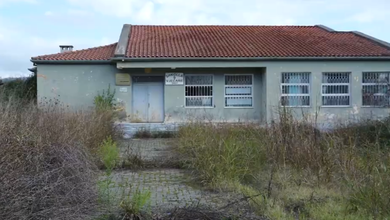
The 49 single-story apartments with the same architecture and equidistant from each other were built after the devastating earthquake of November 26, 2019.
Only one family currently lives in the small town, that of Agim Muharrem, a retired literature teacher, along with his son's small family.
“The house I used to live in was not rebuilt after the earthquake and, in the poor conditions we were in, I couldn’t wait any longer,” Agim Muharremi told BIRN.
The new and uninhabited neighborhood still has no electricity and no sewage, but families with severely damaged homes in the various villages in the area are hesitant to populate it.
Agimi says that the apartment he is living in is well-built, while the other ones near it have started to show damp spots, "like all uninhabited houses," he adds.
Kadri Gjyli, who headed the administrative unit of Ishmi throughout the reconstruction period, told BIRN that the new neighborhood in Lalëz was built with funding from an Albanian-American association.
"The tender will be organized soon and the winning firm will implement everything that is currently missing, from the sewage system and electricity, to the construction of the health center," said Gjyli.
He explained that, along with the residents expected to populate the newly built neighborhood in Lalëz, 22 other families from Ishmi will be settled in the buildings built in Porto Romano of Durrës, and several others in Manëz. Gjyli emphasizes that good work has also been done in the reconstruction of schools and health centers.
"Two schools in the villages are functioning normally, while the same is expected for the high school in the center."
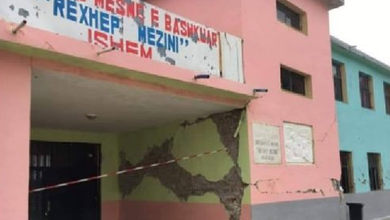
The earthquake of November 26, 2019 severely hit 9 villages in the administrative unit of Ishmi, very close to the epicenter of the earthquake.
The reconstruction program envisaged the construction of 330 new houses throughout the territory of the unit.
Most were built in the courtyards of old houses, while difficulties were encountered in apartments far from the streets, or in those 3-4-story buildings that needed to be reinforced, explained former administrator Gjyli.
“270 families have settled in the new houses, furnishing them at their own expense or that of charitable associations,” the head of the “Ishmi” association, Isuf Shehu, told BIRN.
Former Macedonian families who have long since moved to Durrës or Tirana contributed in the first days after the earthquake.
"Members of the 'Ishmi' association, many of whom are residents of the area, collaborated with the local government and humanitarian foundations," Isufi continued.
According to him, the Ishmaqs who have migrated to different countries around the world were a great support for their families.
"Half of the expenses for the interior work of the new house were covered by my son, who lives in France," said Qaniu, who lives in Biza.
Genc Shehi, a lecturer at one of the country's universities, went to Ishëm for the first time a few days after the earthquake.
A missionary not only spiritual, Genci continues to go to the villages located 30 km north of the city of Durrës.
“These days we went to remove a container that for five consecutive years served as a home for a family in Gjuricaj,” Genci told BIRN, explaining that the container will now help a family with problems in Xhafzotaj.
"God gives with one hand, and with the other takes away," he added, recalling the difficult days of survival for former Macedonian families immediately after the earthquake.
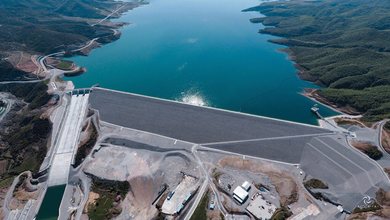
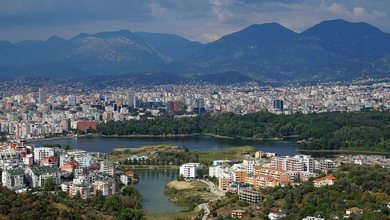
Agim's family, the only one sheltering in Lalzi's apartments, has another concern.
"Not only me, but also my fellow villagers are concerned," he specifies. "The land of the new neighborhood in Lalëz is clay and in the future it could slide, ending up with all the houses down in the lake," the former teacher concludes./Reporter.al