


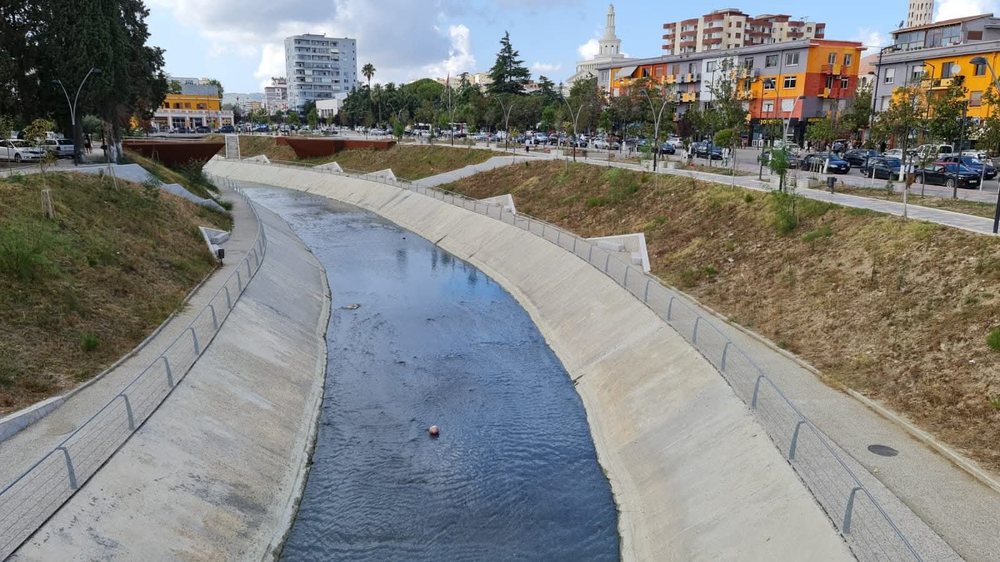
In many cities, interventions in urban rivers are presented as “cleanup,” “revitalization,” or “flood protection” projects. However, hydrological reality and international experience show that channeling rivers with concrete is not a long-term solution.
A river is not just a pipe through which water flows. It is a living system, with a bed, banks, vegetation, and soil that absorbs water. In natural conditions, when it rains heavily, the river expands into the surrounding areas, where the water is absorbed and temporarily stored.
When this system is replaced with concrete, the flow accelerates and floods move lower, but with greater intensity.
A concreted river functions as a drainage channel: water slides rapidly towards urban areas, creating higher flood peaks.
The problem becomes even greater when sewage is combined with asphalting, construction near the banks, and the disappearance of greenery. The entire city turns into a hard surface, where water is not absorbed.
Advanced cities are removing concrete from rivers and creating parks that flood according to the "sponge city" concept.
Modern solutions include natural banks, green areas, and water-absorbing surfaces, which reduce flood peaks and increase urban safety.
Concreting rivers is not a long-term solution. Cities must coexist with water through nature and sustainable solutions.
From Zydi Tekja