


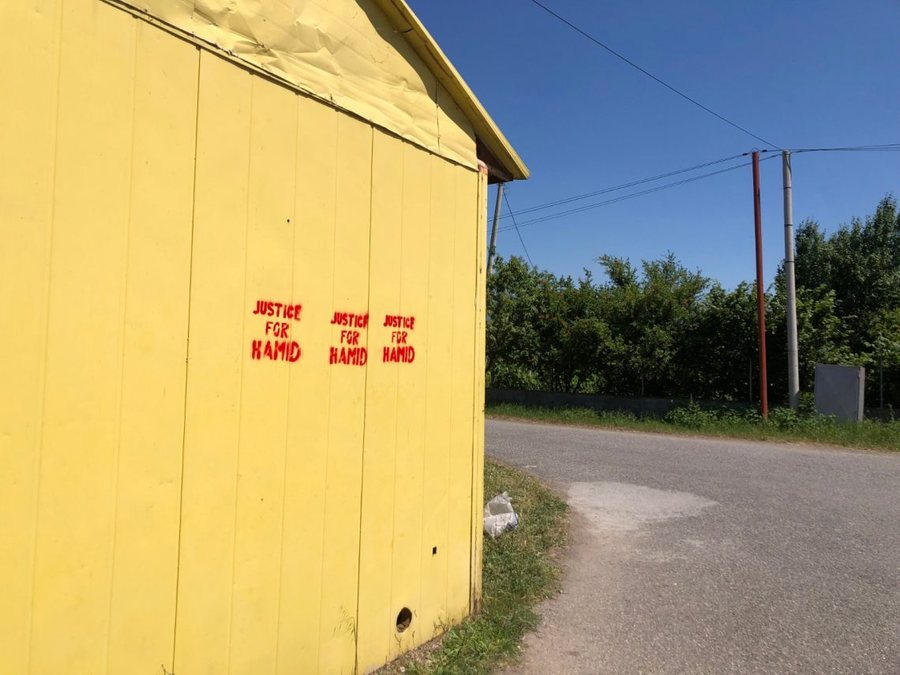
Presented as a “magic bullet” for immigration, the Italy-Albania agreement revived the old idea of offshore camps, which is finding support in many countries in the West. The case of Hamid Badoui, who committed suicide in Turin after an experience in Gjadra, and other examples of abuse, show the human cost behind the theory, while critics warn of a world that is forgetting and neglecting international human rights standards.
A familiar face on the outskirts of Turin, Hamid Badoui seemed an unlikely candidate to become the tragic face of Italy's most ambitious experiment in stopping migrants outside its borders.
A vagrant and former fruit vendor of Moroccan origin – who had lived in Italy for about 15 years – he had spent most of his life in and out of prison for minor crimes related to drug addiction. By early 2025, he was trying to get clean from his addiction and get his life back on track.
But instead, Hamidi was sent to the migrant center in Albania, the flagship project of Italian Prime Minister Giorgia Meloni.
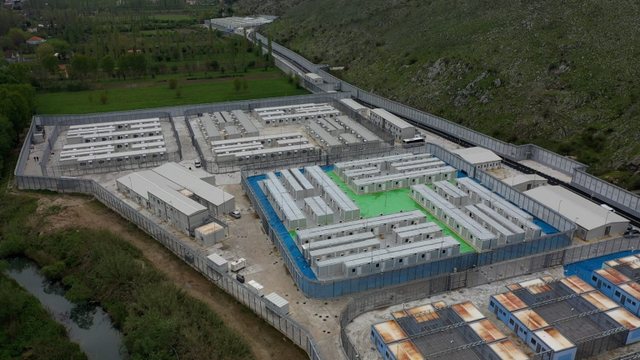
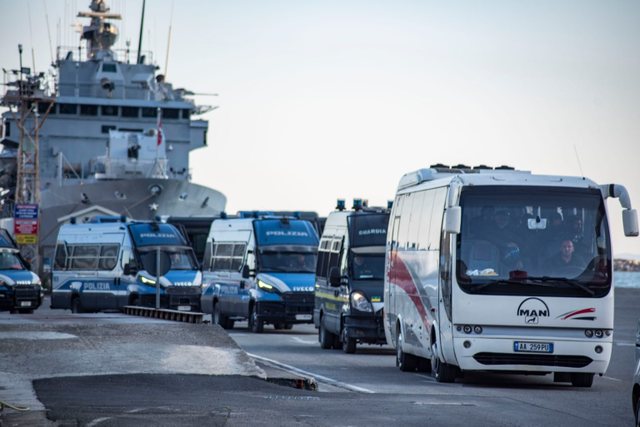
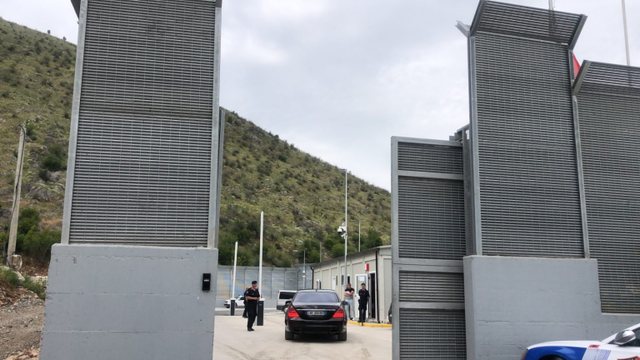
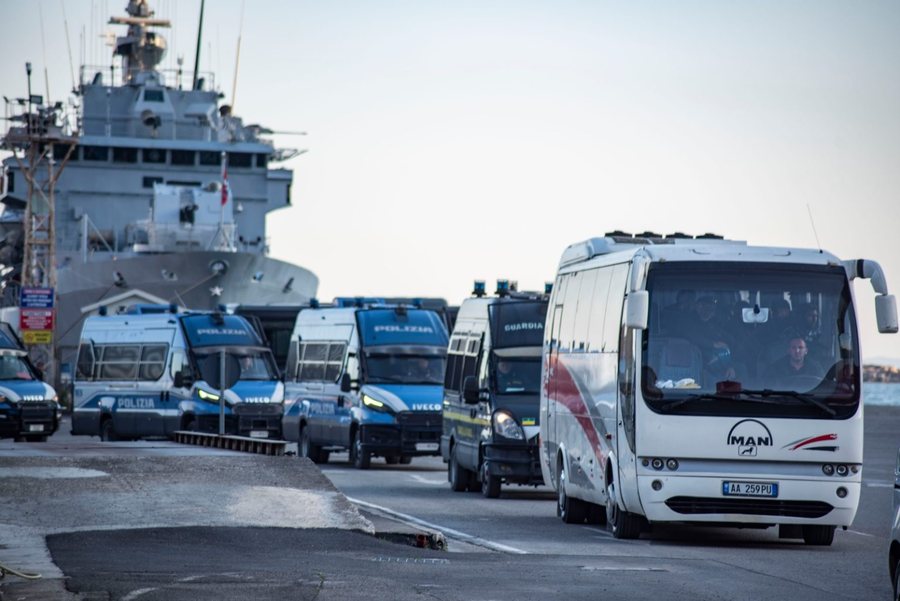
He had recently been detained at a repatriation center in southern Italy. One night in April, guards woke him up, tied his hands, and escorted him to a bus. Hours later, he was put on a military ship bound for Gjadrin, a remote Albanian village where Italy has built a fortified camp designed to hold people with deportation orders.
The 41-year-old was terrified. Struggling with a cocaine addiction and convinced he would be sent back to Morocco, he pleaded during the brief phone calls he was allowed to make from Gjadri, under the watchful eye of guards, for someone to help secure his release. Hamidi was released a few weeks later, but was rearrested just two days after his return to Italy.
At 6:31 a.m. on May 19, he was found dead in his cell at Turin's Lorusso e Cutugno prison. He had hanged himself using his shoelaces.
“My mind can’t accept this,” his sister, Zahira Badoui, said in a series of messages to BIRN. “It seemed like a dream. I kept thinking: I’ll wake up tomorrow, it was just a nightmare.”
Zahira, 32, a naturalized Italian citizen who lives in the same neighborhood of Turin as her brother, is convinced that Hamid's traumatic experience in Gjadra drove him to suicide.
“He was terrified,” she said. “He told me prison was better than being there.”
For many who knew Hamid, his death illustrates the cruelty and psychological burden of immigration centers abroad, where individuals are detained in third countries, far from their families.
As other EU countries try to copy “return centers,” proving that a once marginal idea has now become central to Europe, questions arise about how Europe got to this point – and how far it is willing to go.
A life in limbo

Born in the Moroccan town of Oued Zem, Hamid left his homeland for Spain at the age of 15, where he secured a Spanish residence permit and a diploma as a waiter. He later moved to Italy, working occasionally as a chef, before falling prey to addiction.
“He was always extremely polite in prison,” Luca Motta, Hamid’s former lawyer, told BIRN, adding that his client had spent five of the last seven years of his life behind bars.
While he was out of prison, he was often seen sleeping under a bridge to avoid disturbing his family. His mother split her time between Turin and Morocco. Zahira watched helplessly as his addiction worsened.
He regularly showed up for meals at a day center run by the charity Gruppo Abele, where drug users could get sterile syringes and the homeless received shower vouchers.
“He was always very generous,” said Ioana Ciureanu, who runs the Gruppo Abele distribution center. “He would tell us: ‘He’s young, help him, he has a fever, he’s not feeling well’… If we needed to mediate with people who were a little more difficult, he was always there.”
After his arrest in the fall of 2024, Hamid seemed determined to change, checking himself into a drug addiction clinic ahead of his expected release in January 2025.
However, instead of being released, he was immediately transferred to a repatriation center (CPR) in the southern Italian city of Brindisi, after his residence permit had expired. On April 9, he was transferred to Albania.
Inside Gjadri
Hamid’s medical reports, which have been shared with BIRN, show that he suffered from “headaches,” “severe abdominal pain,” and “insomnia.” One report describes him as “depressed” and “aggressive,” while another notes that he had not eaten for five days.
“He complains of marked discomfort in the Gjadri center,” an Albanian psychologist at the camp wrote on April 15, 2025. “Monitoring of his condition is recommended.”
Cecilia Strada, an Italian MEP, told BIRN that she had met Hamid during an inspection of the center on April 27.
“He was in a very difficult psychological state,” she said. “It was very touching.”
Strada recalled his fear of being sent back to Morocco. “He said, ‘Look, I got a degree in Turin, I studied… I made mistakes in my life, but I’m a good person – I’m capable – and they’re sending me back to my country.’”
Motta, his lawyer, said he had received “two or three” phone calls from him while in Albania, all conducted under surveillance.
“A phrase he repeated to me almost obsessively was: ‘Prison is better than staying here,’” Motta said. “He begged me to do everything I could to get him out of there.”
The case was referred to Anna Moretti, an immigration lawyer based in Milan, who argued that Hamid should never have been sent to Albania due to his fragile health and family ties in Italy.
On May 13, a court in Rome suspended his detention and ordered his immediate release. Three days later, he was back in Turin.
Two days after his return, he called the police after his new SIM card, which he had just bought, was stolen, the Italian newspaper La Stampa reported. Frustrated when officers did not help him, he kicked the police car and was immediately arrested.
Footage filmed on a cellphone and shared by Italian media shows half a dozen police cars and a crowd of people gathering. As officers force him into a vehicle, bystanders can be heard shouting loudly that the police were “killing” him.
“I had told him to behave and stay calm until I got back from college,” recalls Zahira, an intern in a health assistant course. “That way I could have taken him home.”
The Melon Experiment
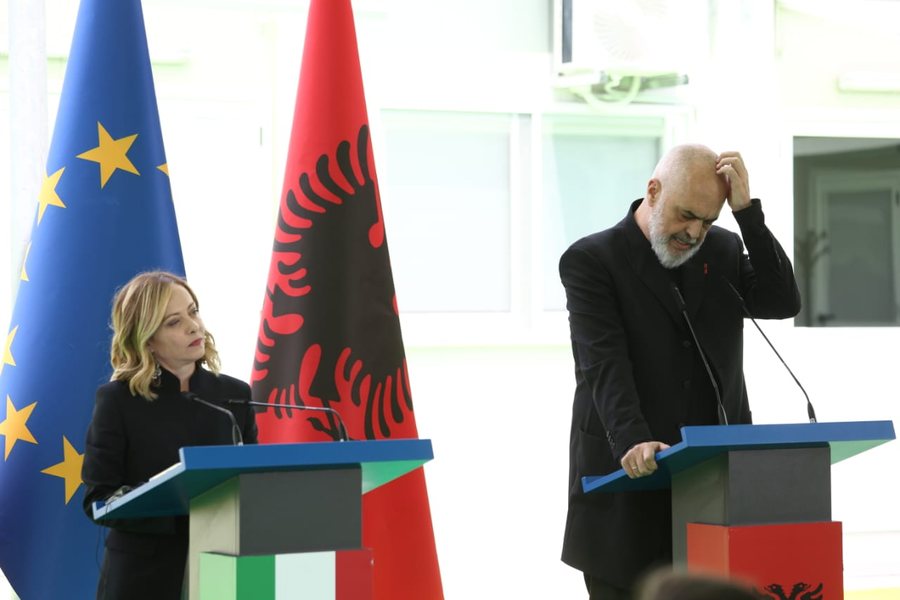
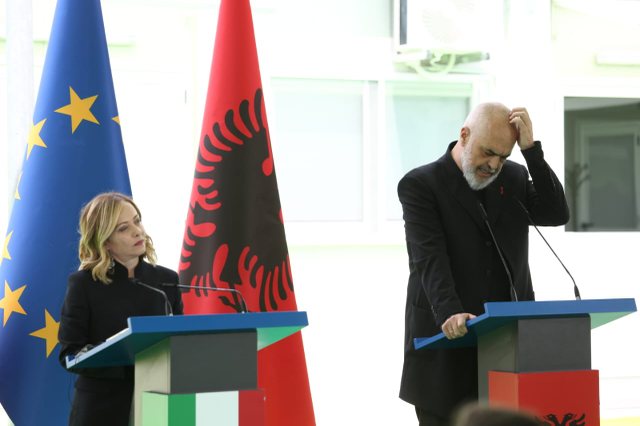
The Italy-Albania scheme was presented in 2023 by Meloni and her Albanian counterpart, Edi Rama. With a budget of 653 million euros over five years, it was presented as a powerful deterrent against illegal boat crossings.
The plan received praise from the EU's ruling elite, with European Commission President Ursula von der Leyen praising Italy's "outside the box" thinking and calling on other countries to learn from this example.
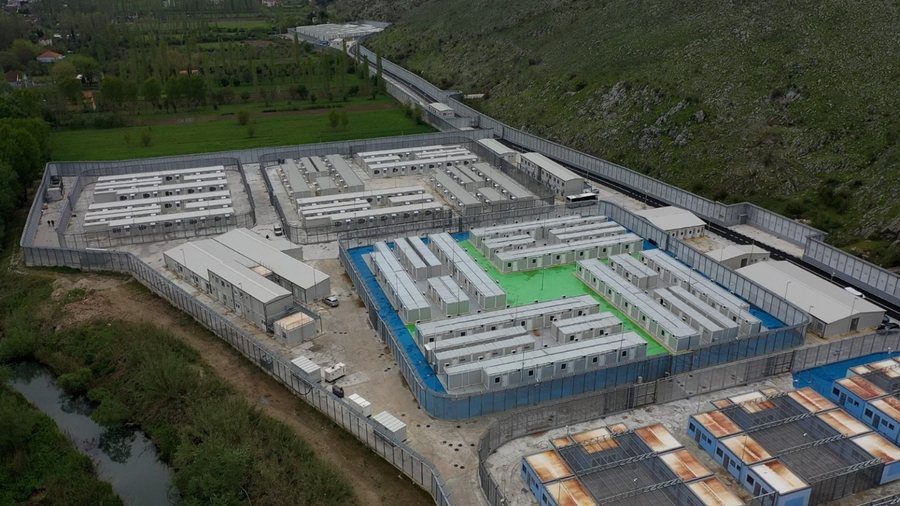
Under the scheme, Italy pledged to process up to 36,000 migrants each year in two facilities in Albania, in Shëngjin and Gjadra, originally conceived as an off-site centre where detainees’ asylum claims would be processed. Since then, the scheme has faced repeated legal challenges. In an attempt to save it, Gjadra was reprogrammed last year as a detention centre for people who had already received deportation orders in Italy.
Accusing the government of squandering public funds, opposition MPs in Italy have claimed that the five-year scheme is likely to cost 1 billion euros. A previous BIRN investigation found that the costs of building the centres alone had significantly exceeded the initial budgets.
Meloni's supporters insist the plan sends a strong message of zero tolerance for irregular migration. In a post on X last September, Interior Minister Matteo Piantedosi celebrated the fact that a human trafficker, born in 1992 and found guilty of transporting 59 migrants to Italy in a 15-meter boat, had been repatriated from Gjadri.
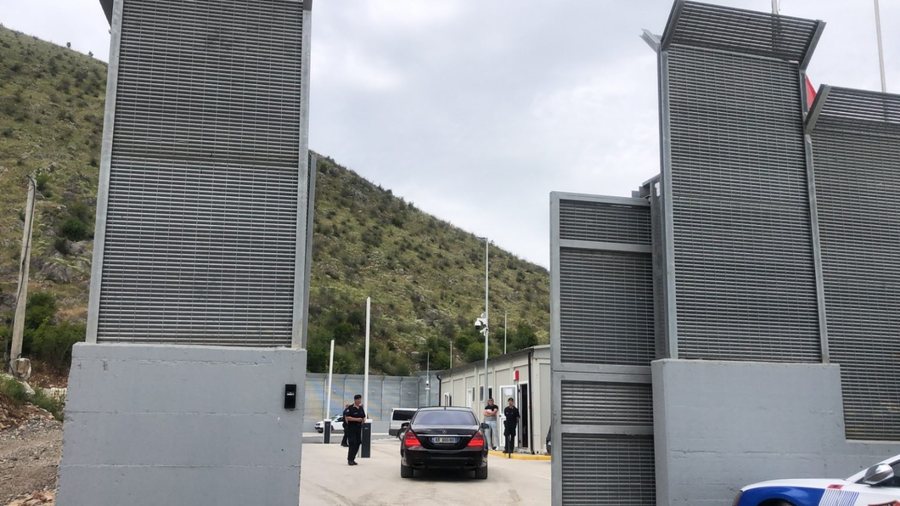
Erinda Ballanca, who was the People's Advocate of Albania until December 2025 and visited Gjadri on October 2, praised the conditions at the center, telling BIRN that it was “the best center I have ever seen in my life” and “many times better” than similar centers.
Strada, however, describes it as “violent” and “brutal” compared to CPRs in Italy. “The Gjadri is devastating,” she said. “It involves severing people from their reality, from the reality they know, including their families.”
Riccardo Magi, head of the Italian left-wing More Europe party, says that by October 2025, only 200 people had been transferred to Gjadra since the initiative began. Many of them are believed to have been held there for less than a month.
According to official protocol, people repatriated from Gjadri must first return to Italy before being transferred to their countries of origin. However, the Italian newspaper Altreconomia reported last year that five Egyptian nationals were deported directly from the Albanian center on May 9, citing police documents.
Europe follows suit
Despite the obstacles, other European powers have shown determination to follow Italy's example.
In December, the Council of Europe finally approved changes to its legal framework that allow EU countries to set up repatriation centers, known as “return centers,” in third countries.
The Dutch government had announced in September that it had agreed to cooperate with Uganda on the return of rejected asylum seekers through a transit point in this country.
Greece's Migration Minister, Thanos Plevris, revealed in November that Germany was leading efforts to set up a "return center" in Africa, similar to the Italy-Albania model, along with other EU countries.
But those familiar with the Italy-Albania scheme have questioned whether off-site centers will ever be an effective deterrent, suggesting that migrants are often unaware of their existence.
“People who come from Eritrea or Afghanistan have absolutely no idea about the laws,” Agron Shehaj, leader of the small center-right party Mundësia, with two deputies in the Albanian Parliament, told BIRN.
Shehaj emigrated to Italy at the age of 14 on a ship in 1991, before becoming a successful entrepreneur and politician.
“When we left Vlora, we didn’t know what to expect.” He recalls anecdotally that during his journey to Italy, authorities used helicopters to tell migrants to turn back. “They were shouting through megaphones: ‘Go back, go back!’” Shehaj said. But the migrants didn’t speak Italian and thought the helicopter had come to pick them up.
"Camps are just a way for governments to say: 'we're doing something,'" he said.
An old idea reborn
The practice of detaining immigrants in camps abroad has existed for at least eighty years, David FitzGerald, a professor at the University of California, San Diego, told BIRN. In 1945, as the British tried to limit Jewish emigration after World War II, the British Navy intercepted thousands of immigrants trying to reach Palestine by boat and sent them to internment camps in places like Cyprus.
More systematic processing of asylum claims abroad emerged in the early 1990s, particularly in the US. In 1991, following the Haitian refugee crisis following the overthrow of President Jean Bertrand Aristide, the US placed migrants arriving by boat at Guantanamo Bay, a US-controlled territory in southeastern Cuba that later became known for holding camps for suspected terrorists.
At the camp's peak, up to 21,000 Haitians and 30,000 Cubans were held there.
Other countries have since learned from these experiences, allowing what FitzGerald called “the spread of knowledge and techniques around the world.”
Australia set up overseas detention centres on Nauru, a small Pacific island, and on Manus Island, the fifth largest island in Papua New Guinea. The opening of these centres by the right-wing government of Prime Minister John Howard in 2001 was met with fierce debate, and the facilities have opened and closed several times since then.
Although, unlike the US at Guantanamo, Australia paid host governments for the use of the territory, the schemes are closely linked.
"They were clearly taking their cue from the Americans," FitzGerald said of the Australian government.
The pattern has recently returned, with the Trump administration in May ending temporary legal status for half a million people – from Cuba, Haiti, Nicaragua and Venezuela – and seeking potential destinations for their resettlement outside the territory.
In June, Bloomberg reported that the administration had asked Serbia and other Balkan countries to accept them. Kosovo announced in December that it had begun accepting individuals from the U.S. who had received deportation orders.
From protection to externalization
EU member states initially approached offshore processing more cautiously, aware that such experiments ran counter to the broad framework of human rights they had built up over the past 75 years.
This framework, rooted in international treaties such as the 1951 UN Refugee Convention, sets out core obligations, including the principle of non-refoulement – the prohibition on returning anyone to a country where their life or freedom would be threatened.
However, in recent decades, growing conflicts and increasing political pressures have called these commitments into question.
The creation of the Schengen area in 1985, a system of 29 European countries that abolished internal border controls, helped develop the idea of a “Fortress Europe” that needed to be protected.
"Schengen promotes the idea that Europe should create much stronger external borders for all of Europe, as a counterweight to reducing internal borders," FitzGerald explained.
Denmark was an early advocate of this model, proposing a draft resolution in the UN General Assembly to establish “processing centers” in Eastern Europe and possibly Africa to contain refugees from the collapsing Soviet Union. The plan was resolutely rejected by other UN member states, who saw it as a failure of solidarity with the Global South.
However, the idea has periodically resurfaced, with Aad Kosto, the Dutch justice minister from the center-left Labor Party, proposing at a conference of European ministers in Athens in 1993 that asylum centers abroad would allow migrants to stay close to their families.
"There have been periods of ups and downs, but every time immigration becomes a bigger political issue in the news, someone revives this idea," FitzGerald said.
After the September 11 attacks, debates over immigration became increasingly intertwined with security concerns, as more boats began arriving in Lampedusa and Spain's Canary Islands.
“The whole kind of global war on terrorism went hand in hand with this,” said Miriam Ticktin, a professor of anthropology at the CUNY Graduate Center, who has written about asylum processing centers outside the territory of European countries.
In 2003, British Prime Minister Tony Blair put forward a more detailed plan. He proposed the creation of “transit centers” outside the EU, on migration routes, where asylum applications would be processed. The idea was supported by Denmark and Austria, strongly opposed by Sweden, and ultimately rejected by the European Council.
Similar ideas soon followed. In 2004, Otto Schily, Germany’s center-left interior minister, who had initially been critical of the British proposal, began lobbying for the creation of EU-funded “safe zones” in North Africa. Under the plan, migrants intercepted in the Mediterranean would be subject to preliminary screening and then sent either to the EU or to their countries of origin from there.
Schily argued that the centers would enable EU countries to turn away ships like the Cap Anamur, a ship operated by a German search and rescue NGO that in 2004 brought 37 migrants from Ghana and Nigeria to Italy despite a ban on docking.
Germany refused to allow these migrants to apply for asylum and threatened to take legal action against the NGO staff, sparking outrage in the country. Italy deported the migrants.
The European Commission initially distanced itself from Schily's proposal, with spokesman Pietro Petrucci telling reporters that the proposal had no legal basis.
Italia, megjithatë, dëboi fshehurazi mijëra emigrantë me fluturime charter drejt qendrave të ndalimit të ndërtuara nga Italia në Libi në vitet 2003 dhe 2004, pa verifikuar nëse ndonjëri prej tyre kishte të drejtë për azil, sipas gjetjeve të një dosjeje hetimore të BE-së në atë kohë.
Dosja hetimore gjithashtu zbuloi se Italia i kishte siguruar Libisë 1,000 qese për trupa të pajetë.
Një krizë emigracioni ndryshon qëndrimin e Evropës
Ekuilibri anoi në mënyrë vendimtare në favor të përpunimit të kërkesave për azil jashtë vendit gjatë krizës së emigracionit të vitit 2015, kur më shumë se 1.3 milionë persona mbërritën në Evropë – numri më i madh që nga Lufta e Dytë Botërore. Ata po iknin nga luftërat në Siri dhe Irak, nga pasiguria në Afganistan dhe nga vështirësitë ekonomike.
Shumica mbërritën me anije, kryesisht në Itali dhe Greqi, ose në rrugë tokësore përmes Ballkanit, duke nxitur kështu mbështetjen për partitë e ekstremit të djathtë dhe duke ekspozuar përçarjet brenda bllokut, pasi Hungaria dhe Austria mbyllën kufijtë e tyre.
Në vitin 2016, kryeministri hungarez Victor Orban, një mbrojtës i sovranitetit kombëtar, i cili e ka portretizuar emigracionin masiv si një kërcënim ekzistencial për identitetin kulturor të Hungarisë, kërkoi nga BE-ja të krijonte një “qytet të madh refugjatësh” në Libi për të përpunuar kërkesat për azil.
Vitin e ardhshëm, presidenti francez Emmanuel Macron, një mbështetës i zjarrtë i federalizmit evropian, i cili ka thënë se pranimi i emigrantëve është një “detyrim humanitar” dhe një “çështje dinjiteti”, propozoi krijimin e qendrave të përpunimit të kërkesave për azil në Afrikën e Veriut për t’i dekurajuar emigrantët të bënin kalime “të çmendura” me varka në Mesdhe.
“Më parë, njerëzve u vinte turp ose ndiheshin në siklet të thoshin se po magazinojmë njerëz dhe nuk po ndjekim konventat e OKB-së dhe konventat për refugjatët… dhe ende kishte një farë besimi në ligjet ndërkombëtare”, tha Ticktin.
“Mendoj se tani nuk ka më besim te humanizmi dhe nuk ka besim që të gjithë njerëzit kanë të drejta themelore”, vazhdoi ajo.
Ky qëndrim i ri u reflektua më qartë në Mbretërinë e Bashkuar. Në prill 2022, Boris Johnson, atëherë kryeministër, njoftoi skemën e Ruandës, duke thënë se nisma prej 720 milion £ do të “shpëtonte jetë të panumërta” dhe do të shkatërronte modelin e biznesit të “trafikantëve të qenieve njerëzore”.
Sipas marrëveshjes pesëvjeçare, emigrantët e paligjshëm dhe azilkërkuesit në Mbretërinë e Bashkuar do të transferoheshin në Ruandë për përpunim, ndërsa Mbretëria e Bashkuar do të pranonte një numër të pacaktuar “refugjatësh më të cenueshëm” që jetonin atje.
Megjithatë, propozimi u përball me vështirësi ligjore. Një fluturim i planifikuar për të transportuar shtatë pasagjerë më 14 qershor 2022 u anulua disa minuta para nisjes, pasi Gjykata Evropiane e të Drejtave të Njeriut nxori një masë të përkohshme duke deklaruar se një pasagjer, një azilkërkues irakian, përballej me një “rrezik real për dëme të pakthyeshme” nëse do të transportohej në Ruandë.
Gjykata e Apelit e Mbretërisë së Bashkuar dhe më pas Gjykata Supreme e shpallën planin të paligjshëm dhe marrëveshja u anulua përfundimisht. “U bë turpëruese për qeverinë britanike”, tha Ticktin.
Po atë vit në Itali, një shtim i ri i mbërritjeve të emigrantëve ndihmoi në ardhjen në pushtet të Giorgia Melonit, me një platformë të qartë kundër emigracionit. Duke paralajmëruar se Italia po bëhej “kampi i refugjatëve i Evropës”, ajo premtoi një “bllokadë detare” për të ndaluar mbërritjen e varkave me refugjatë.
Ndërsa prezantonte qendrat e saj për emigrantët bashkë me Edi Ramën vitin pasardhës, Meloni e paraqiti planin si një model për kontinentin. “E konsideroj këtë si një marrëveshje vërtet evropiane”, tha ajo, duke shtuar se kjo tregonte se “është e mundur të punojmë së bashku në menaxhimin e fluksit migrator”.
Kostoja njerëzore pas kësaj politike
Disa i kanë lavdëruar ato që ata i quajnë kushte mbi ato standarde brenda qendrave.
“Nga pikëpamja e të drejtave të njeriut, isha e shqetësuar para se të shkoja, por ajo që pashë brenda ishte shumë ndryshe nga ajo që pretendohet”, tha Ballanca, ish-Avokatja e Popullit e Shqipërisë.
Gjatë një vizite më 2 tetor, ende në detyrë, Ballanca tha se kishte biseduar individualisht me 17 të ndaluar, disa prej të cilëve sipas saj i thanë: “Këtu jemi si në parajsë.” Ajo shtoi se të ndaluarit kishin televizorë, shtretër të përshtatshëm dhe tualete në dhomat e tyre.
Të tjera raste, megjithatë, tregojnë një histori më të errët me ndarje të papritura, dështime procedurale dhe mosrespektim të dukshëm të rregullave italiane.
*Karimi, një shtetas algjerian dhe baba i dy fëmijëve, i cili kishte jetuar në Itali për 19 vjet, u transferua në një qendër italiane ndalimi pas përfundimit të një dënimi të shkurtër me burg shkurtin e kaluar.
Ndërsa mbahej në CPR-në në Gradisca d’Isonzo në verilindje të Italisë, ai mbante kontakt të rregullt me telefon me fëmijët e tij, tani 3 dhe 6 vjeç, të cilët janë të dy shtetas italianë.
“Ata i telefononin shpesh dhe bënin edhe telefonata me video”, tha për BIRN Gennaro Santoro, avokati që e përfaqësoi Karimin gjatë kohës së tij në kamp.
Më 10 prill, Karimi u transferua papritur me anije në Gjadër, me duar të lidhura. Atij nuk iu dha asnjë shpjegim me shkrim për transferimin dhe autoritetet italiane nuk arritën ta jepnin një të tillë pavarësisht kërkesave të avokatëve të tij.
Një dokument i brendshëm i ndarë me BIRN tregon se USMAF, autoriteti shëndetësor italian përgjegjës për shqyrtimin e emigrantëve para transferimit në Shqipëri, kërkon që të gjithë të ndaluarit që dërgohen në Gjadër të marrin një “certifikatë përshtatshmërie për jetesë në një komunitet të kufizuar” 48 deri 72 orë para nisjes.
Pas transferimit, kontakti i tij me familjen dhe avokatët e tij u kufizua ndjeshëm, duke u kufizuar në vetëm një telefonatë dalëse në ditë.
Pak kohë pas zhvendosjes, eurodeputetja italiane Strada u kontaktua më 14 prill nga ish-partnerja e Karimit, *Sabina. “Ai u transferua atje pa asnjë mundësi për të kontaktuar një avokat ose për të na informuar”, shkroi ajo, sipas një emaili të parë nga BIRN. Sabina e përshkroi lëvizjen si “jo njerëzore dhe tepër të padrejtë”.
Rastësisht, Strada e kishte takuar Karimin gjatë një inspektimi të kampit një ditë më parë. “Ai ishte shumë i shqetësuar”, tha ajo. “Na tha: ‘Gorizia është një parajsë krahasuar me këtë vend. Këtu është çmendinë’.”
Strada tha se i ndaluari ishte “i tmerruar nga perspektiva e kthimit në Algjeri” dhe shqetësohej për gjendjen shpirtërore të të tjerëve në kamp. “Ka njerëz që bërtasin, njerëz që lëndojnë veten”, kujtoi Strada t’i ketë thënë ai.
Një gjykatës më vonë urdhëroi lirimin e menjëhershëm të Karimit, duke cituar të drejtën e tij për jetë familjare sipas Konventës Evropiane për të Drejtat e Njeriut. Që atëherë ai është rikthyer në Itali, ku pret vendimin për lejen e qëndrimit dhe ka kërkuar zyrtarisht kompensim nga ministria e Brendshme për ndalimin e paligjshëm.
“Vende të tmerrshme” që nuk ndalojnë migracionin
Jo të gjithë të ndaluarit kanë arritur të lirohen. Vitin e kaluar, Ahmedi*, një 23-vjeçar algjerian që kishte marrë një urdhër dëbimi në Itali, ku jetonte, u transferua në disa CPR të ndryshme nga janari deri në mes të majit. Më pas ai u dërgua në Gjadër, sipas një padie për dëmshpërblim të parë nga BIRN.
Ditën pas mbërritjes së tij, Medihospes, kompania që mbikëqyr shërbimet në qendër, i dërgoi Santoro-s, avokatit të tij të caktuar, të dhënat mjekësore të pjesshme të Ahmedit.
Ato zbuluan “vulnerabilitete serioze psikologjike”, përfshirë histori pagjumësie dhe ankthi, dhe treguan se ai po trajtohej me medikamente që zakonisht jepen për skizofreni dhe çrregullim bipolar, thuhet në padi.
“Ky është një person që nuk duhej të ishte dërguar kurrë në Shqipëri”, tha Santoro për BIRN.
Në një telefonatë, Ahmed i tha Santoro-s se kishte gëlltitur xham nga një dritare e thyer si gjest proteste. Policia, sipas tij, e kishte këshilluar të mos kërkonte mbrojtje ndërkombëtare.
Santoro raportoi menjëherë rastin te GNPL, autoriteti kombëtar italian për monitorimin dhe mbrojtjen e të drejtave të individëve, dhe u planifikua një rivlerësim për përshtatshmërinë e Ahmedit për t’u mbajtur i ndaluar. Dhjetë ditë më vonë, më 29 maj, pas shumë hetimesh, Medihospes konfirmoi se Ahmedi ishte konsideruar i papërshtatshëm për t’u ndaluar dhe vendosur në Gjadër.
Italian police then informed Santoro that Ahmed had been repatriated to Algeria the day before, without waiting for the result of the re-evaluation. Santoro said that since that moment he had lost all contact with his client.
Critics claim that Albanian centers have needlessly destroyed lives, often punishing people for the simple lack of valid documents.
"This unworthy model of treating immigrants, for which Albania will set a precedent, undoubtedly risks becoming a practice in terms of dealing with the issue of immigrants," said Redi Muçi, an Albanian MP from the left-wing Lëvizja Bashkë party.
Hamid Badoui, the Moroccan who committed suicide after returning to Italy from Albania, had planned to regularize his legal status once his mental health stabilized.
“For him, taking care of the legal situation was not a priority at that moment,” said Ciureanu, the daycare center worker in Turin who had supported Hamid. “What mattered was that he took care of himself.”
For some observers, the effectiveness of migrant centers abroad remains questionable. “They are terrible places,” Ticktin said, “but that won’t stop people from coming.”
"They will go where they need to go to survive."/BIRN/