



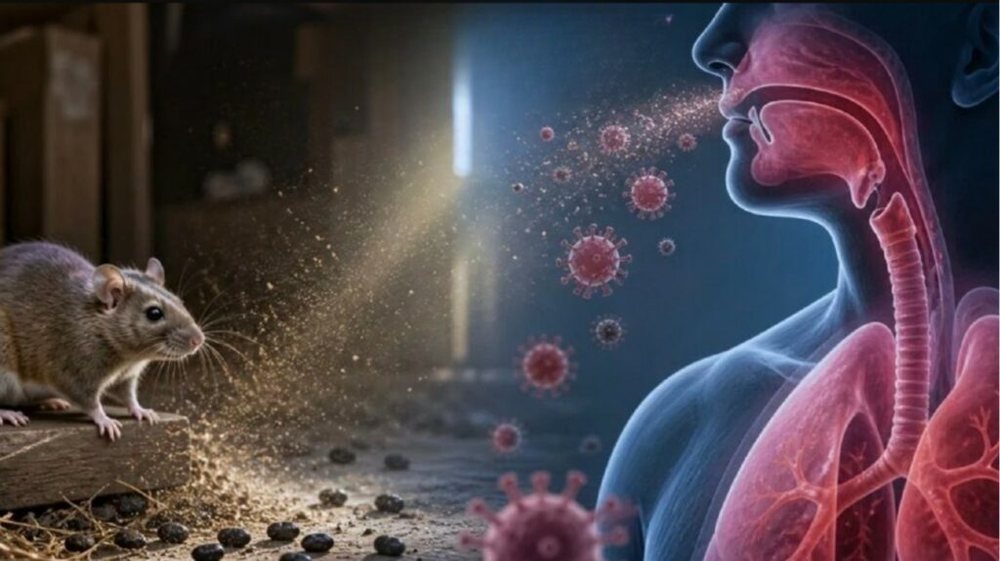
Hantaviruses are zoonotic viruses that naturally infect rodents and are occasionally transmitted to humans. Infection in humans can cause severe and often fatal illness, although symptoms and severity vary by virus type and geographic region.
In the Americas, infection can lead to hantavirus cardiac pulmonary syndrome (HCPS), a rapid and severe condition that affects the lungs and heart. In Europe and Asia, hantaviruses cause hemorrhagic fever with renal syndrome (HFRS), which primarily affects the kidneys and blood vessels.
There is no specific treatment that cures the disease, but early supportive medical care is essential for survival. It focuses on close monitoring and treatment of respiratory, cardiac, and renal complications. Prevention is based primarily on avoiding contact with infected rodents.
Hantaviruses belong to the family Hantaviridae, within the order Bunyavirales. Each virus is usually associated with a specific species of rodent, where it survives without causing disease in the animal.
Only a few species cause disease in humans:
- In the Americas, including the Andes virus, rare human-to-human transmission may also occur, mainly in Argentina and Chile.
-In Europe and Asia, human-to-human transmission has not been documented.
Spread and burden of disease
Hantaviruses are relatively rare globally, but have high mortality rates:
Every year, between 10,000 and over 100,000 infections occur worldwide, mainly in Asia and Europe.
In China and South Korea: thousands of HFRS cases every year
In Europe: several thousand cases, mainly in the north and center
In America: several hundred HCPS cases per year
USA: less than 1 thousand total cases reported
Although rarer in America, HCPS has a high mortality rate (20%-40%), making it a serious health problem.
Humans are infected primarily through contact with rodent urine, feces, and saliva .
Less commonly, through rodent bites.
The risk increases during activities such as cleaning indoor spaces, farming, and staying in environments with rodents.
Human-to-human transmission is very rare and has only been documented for the Andes virus.
Symptoms usually appear 1-8 weeks after exposure and include fever, headache, muscle aches, nausea, and vomiting.
HCPS can quickly progress to difficulty breathing, fluid in the lungs, and shock .
HFRS can lead to low blood pressure, clotting disorders, kidney failure
Early diagnosis is difficult because the symptoms resemble the flu, COVID-19, etc. Therefore, the patient's history (contact with rodents, travel, environmental exposure) is important.
Confirmation is done through antibody tests (IgM/IgG), RT-PCR for the detection of viral RNA .
The samples are treated as a biohazard and require strict safety measures.
There is no vaccine or specific antiviral. Treatment is supportive: intensive medical care, treatment of lung, heart and kidney complications .
Early treatment significantly increases the chances of survival.
Prevention is based on reducing contact with rodents:
– good cleaning and hygiene
– closing rodent entrances to buildings
– safe food storage
– avoiding dry cleaning of rodent droppings
– wetting of contaminated areas before cleaning
The risk of transmission in hospitals is low if the following measures are followed:
- use of protective equipment
- isolation of suspected cases
- protective measures during procedures that create aerosols
Early detection and adherence to protocols are essential for protecting healthcare personnel.