


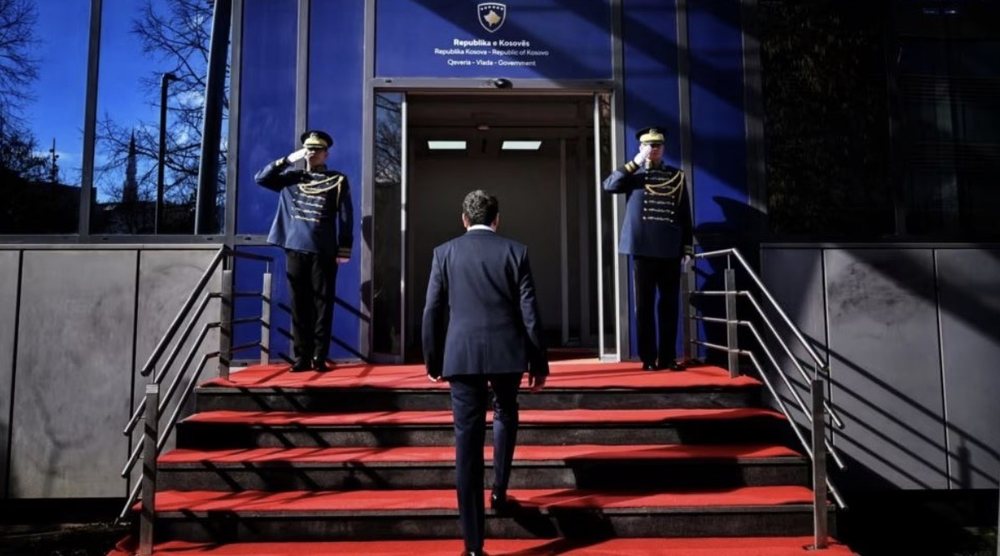
Albin Kurti won the trust of voters with a strong discourse on Kosovo's sovereignty and equality as a state.
But he begins his new term as prime minister at a time of fragile transatlantic relations and new geopolitical challenges. Observers say it is essential for Kurti to restore the trust of allies and avoid surprise moves – otherwise, the risks are serious.
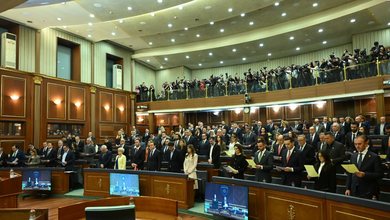
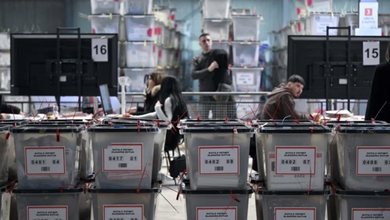
Kurti's Vetëvendosje movement won the December 28 elections convincingly, taking over 51% of the vote and breaking its own record. After months of political deadlock, as the February 2025 elections did not yield the same success, Kurti was re-elected prime minister on February 11 and pledged that his new mandate would focus on concrete results and effective governance for citizens.
"The mandate we are seeking is a mandate of work, justice and dignity for everyone. A mandate of security and prosperity for all," Kurti said the night his government was voted in.
During the presentation of the new cabinet, Kurti took stock of the past mandate, highlighting achievements in the economy, security, and democracy, and presented future priorities in education, social welfare, and energy.
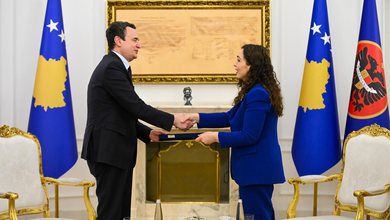
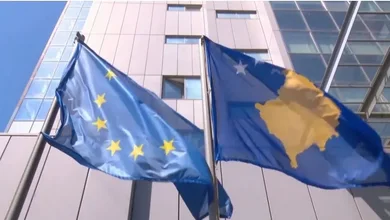
In foreign policy, he underlined that he will work with anyone on the basis of mutual respect, that alliances with the EU, the US and NATO remain unwavering, and that he will pursue normalization with Serbia through constructive and creative dialogue.
"As we have done in the past four years, normalization is a matter of regulating relations between two states, that is, as a bilateral and external relationship, and not intervention or meddling in internal affairs," Kurti said.
Kurti served as prime minister for several weeks in 2020, but that government collapsed after disagreements among coalition partners over the management of the COVID-19 pandemic.
And his full mandate, which followed later, was deeply characterized by the determination to extend the authority of Kosovo institutions to the north of the country – an area inhabited by a Serb majority – where for years the decisions of official Pristina have not been implemented.
Despite opposition and protests, his government managed to replace Serbian car license plates with Kosovo license plates, abolish the Serbian dinar, and close most of Serbia's parallel institutions, which had been operating since the post-war period and employed thousands of people.
These decisions – essential to his vision of a sovereign Kosovo – significantly strained relations with allies. The EU and the US described them as uncoordinated steps, with consequences for the Serbian community.
The clashes between them were also accompanied by warnings from Washington about a deterioration in the partnership and punitive measures against Kosovo – although, according to Kurti, they were simply disagreements between friends.
The United States Embassy in Kosovo said it hopes to work with the new Government to advance shared priorities, including: regional peace, stability, and mutual economic prosperity, while the EU's foreign policy chief, Kaja Kallas, said that a new momentum has been created to advance relations between the EU and Kosovo and the dialogue between Pristina and Belgrade.
Some observers believe that dialogue with Serbia should be the top priority of Kurti's foreign agenda, as Kosovo's opening and its progress towards European integration depend on it.
Abit Hoxha, a lecturer and researcher at Agder University in Norway, says that sovereignty does not only mean the ability to maintain borders, but also the ability to make decisions in the best interest of the country. According to him, the dialogue should not be seen as a process that favors Serbia, but as a strategic tool to strengthen Kosovo's international position.
"Unilateral implementation of the agreements would place Kosovo in an advantageous position, both in relation to the EU, but also with Serbia. Kosovo, so far, has followed what Serbia has done: non-implementation of the agreements," Hoxha tells Radio Free Europe's Expose program.
The two countries have not held a high-level meeting since September 2023. The continuation of the dialogue was blocked after the attack in Banjska, after Kurti linked it to the surrender of the suspected perpetrator, Milan Radoićić – an action that Serbia did not take.
Some observers believe that dialogue with Serbia should be the top priority of Kurti's foreign agenda, as Kosovo's opening and its progress towards European integration depend on it.
Abit Hoxha, a lecturer and researcher at Agder University in Norway, says that sovereignty does not only mean the ability to maintain borders, but also the ability to make decisions in the best interest of the country. According to him, the dialogue should not be seen as a process that favors Serbia, but as a strategic tool to strengthen Kosovo's international position.
"Unilateral implementation of the agreements would place Kosovo in an advantageous position, both in relation to the EU, but also with Serbia. Kosovo, so far, has followed what Serbia has done: non-implementation of the agreements," Hoxha tells Radio Free Europe's Expose program.
The two countries have not held a high-level meeting since September 2023. The continuation of the dialogue was blocked after the attack in Banjska, after Kurti linked it to the surrender of the suspected perpetrator, Milan Radoićić – an action that Serbia did not take.
Lulzim Peci, from the Kosovo Institute for Policy Research and Development, says that implementing Kosovo's obligations in the dialogue is not about Serbia, but about gaining the trust of the international community. Only in this way, he says, can Kosovo pave the way towards membership in the Council of Europe and then towards EU candidacy – issues that are decided by EU countries themselves, not Belgrade.
"We should know that with Serbia, experience shows that you can reach agreements and start implementing them, but you should not expect them to implement all the points as agreed, because Serbia has the negotiating style of Russia in relation to Kosovo. So, you think you have reached an agreement and suddenly you find yourself in the middle of the ocean," Peci tells Exposena.
Peci underlines that, in this context, the first steps should be to send the draft statute of the Association of Serb-majority Municipalities for review to the Constitutional Court of Kosovo and to regulate the status of the Serbian Orthodox Church – issues that are internal, but with a direct impact on international relations, according to him.
"Kosovo now needs to avoid taking action behind the backs of its allies, especially on issues in the north and the Serbian community. Rebuilding trust with the West will take time, as its stance after losing confidence in the Kosovo Government will be tested in the coming months," says Peci.
Raportet transatlantike janë në një pikë të ulët, të tensionuara nga një varg çështjesh – nga pasiguria mbi mbështetjen për Ukrainën dhe situata në Gazë, tek interesat amerikane për Grenlandën.
Ndaj, Kurt Bassuener, nga Këshilli për Politikën e Demokratizimit në Berlin, sugjeron që Kosova t’i menaxhojë me kujdes marrëdhëniet me SHBA-në dhe të forcojë pozicionin e saj në Evropë, duke synuar njohjen nga pesë vendet që nuk e kanë njohur ende dhe duke u paraqitur si një aset për një BE më të unifikuar dhe të qëndrueshme.
“Duhet t’i shohë Kosova interesat e saj afatgjata, në funksion të garantimit të pavarësisë së saj dhe aftësisë për të qenë shtet demokratik dhe vetëqeverisës. Dhe tani… do të thosha se kjo është më e mundshme përmes Evropës – edhe pse është e dhimbshme ta pranojmë – sesa përmes Shteteve të Bashkuara, nën menaxhimin aktual”, thotë Bassuener për Exposenë.
Ai shton se Kosova duhet të jetë e hapur ndaj partnerëve të rinj që mund të forcojnë pavarësinë dhe sigurinë e saj, por duke ruajtur gjithmonë përputhshmërinë me aspiratat evropiane.
Hoxha, në anën tjetër, insiston që Kosova të jetë më proaktive me SHBA-në, duke iniciuar vetë çështje në interes të saj.
“Nuk duhet Kosova të refuzojë qëndrime që vijnë nga Shtëpia e Bardhë në interesin e Kosovës. Ajo duhet të shohë më përtej. Kemi pasur një seri ndërhyrjesh nga Departamenti amerikan i Shtetit gjatë mandatit të kaluar, të cilat janë refuzuar në mënyrë kategorike dhe kanë shkaktuar përçarje mes dy vendeve”, thotë Hoxha.
E, derisa politikanët diskutojnë për strategji dhe marrëdhënie ndërkombëtare, për prioritete e vendime, qytetarët e zakonshëm e ndjekin jetën me shqetësime krejt tjera: nga pensionet dhe sigurimet shëndetësore deri te shërbimet e përditshme që ndikojnë në xhepin e tyre. Ata duan që politika e Qeverisë së re Kurti të përkthehet në përmirësime konkrete, por shpresa, për fat të keq, është më e hollë se dëshira.
“Kemi shumë gjëra që duhen rregulluar, por mendoj se një prej prioriteteve do të duhej të ishte sigurimi shëndetësor, çështja e pensioneve, të aktivizohet edhe Trepça, t’u jepen mundësi të rinjve të qëndrojnë këtu, e jo ta shohin largimin si rrugëdalje”, thotë Albulena Billalli nga Prishtina.
“Punësimi më së pari, të krijohen më shumë vende pune për kuadro të reja, sepse kemi ngecje në aspektin e punësimit”, thotë Shqipe Klinaku.
Jeremije Aksentijeviq nga Mitrovica e Veriut thotë se Qeveria e re duhet të kujdeset më shumë për popullsinë e moshuar, e cila “mezi ia del deri në fund të muajit”.
“Ne të gjithë i kemi dokumentet e Kosovës, letërnjoftimet, pasaportat, te gjitha…”, shprehet ai.
Në skenarin më optimist, mandati i Qeverisë Kurti 3 zgjat deri në vitin 2030, kur disa vende fqinje mund të jenë anëtarësuar në BE – së paku sipas sinjaleve të Brukselit për Shqipërinë dhe Malin e Zi.
Kosova mbetet e vetmja në Ballkanin Perëndimor pa status kandidati për BE, edhe pse Kurti e përshkruan vendin si “më demokratikun në rajon”, me pasaportën “më të fortë se kurrë”.
For experts like Lulzim Peci, this is not enough – they warn that without close coordination with international partners, Kosovo risks remaining isolated – a dangerous consequence in an unstable international scene.