


Serbia and North Macedonia have been included with concrete funding in the European network of artificial intelligence infrastructure and will benefit from direct funding from the European Union for the construction of national AI centers and integration into the European supercomputer ecosystem.
Albania, which has recently promoted itself as one of the few countries in the world to have a minister of artificial intelligence, named Diella, has not received funding in this phase of the programs, according to the map and list published by the European Commission, although it has been part of the European supercomputer network since June of last year.
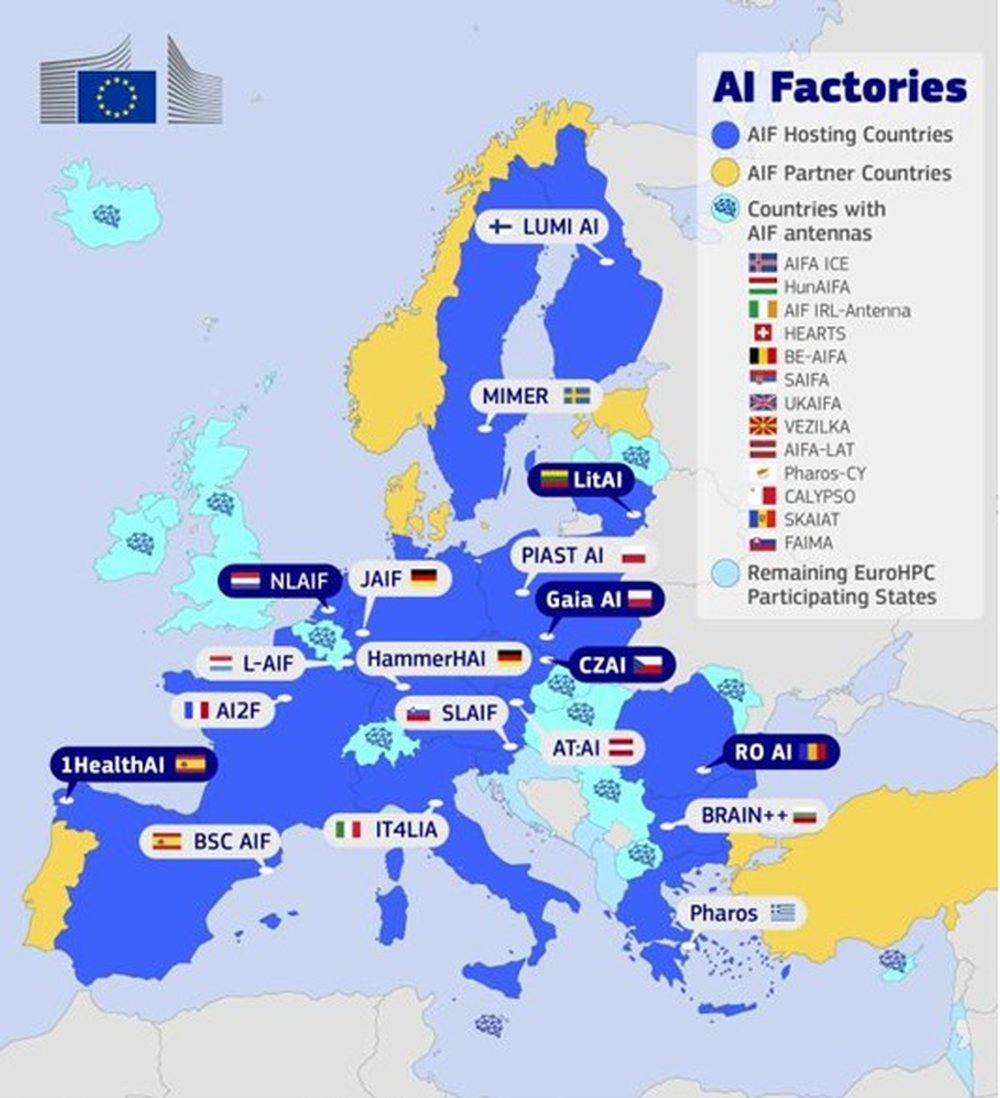
Serbia and North Macedonia are included in the two "Ai Factory Antennas" projects (regional gateway to European artificial intelligence infrastructure).
Serbia will benefit from around 3.8 million euros in funding from the European Union for the SAIFA (Serbian Artificial Intelligence Factory Antenna) project, a national platform for the development and testing of artificial intelligence.
The project aims to create a national hub that will give public institutions, universities, start-ups and industry access to computing resources, AI tools, databases and technical expertise.
SAIFA will operate as part of the European network of AI Factories and will connect with the PHAROS centers in Greece and IT4LIA in Italy, enabling the testing and development of AI solutions on a European scale. The project aims to support the development of artificial intelligence in sectors such as health, energy, environment and language.
North Macedonia has launched the "Vezilka" project, the national artificial intelligence center, with a total value of around 6 million euros, co-funded by the European Union through Horizon Europe and the EuroHPC initiative, together with the government and local partners.
The center aims to connect universities, the state and industry to the European artificial intelligence network and will function as a node connected to the Pharos AI Factory in Greece, giving public institutions, companies and start-ups access to European supercomputers and databases.
According to the country's authorities, the project aims to integrate North Macedonia into the European network of AI centers and create new opportunities for scientific research, innovation, and development of the technology industry.
In both cases, the projects aim to create access for start-ups, SMEs and scientific research to resources that are usually only available to large technology companies.
At the European level, these projects are part of the broader AI Factories initiative, a European Union program to build industrial artificial intelligence infrastructure. Their aim is to bring together supercomputers, data centers, universities and industry to create complete AI development ecosystems and increase the global competitiveness of the European economy.
In parallel, the European Union has also created the concept of AI Factory Antennas, which are national or regional hubs that serve as connecting points to AI Factories. These structures give countries that do not have their own supercomputers access to European AI capacities, databases and technical expertise, enabling the development of innovation and industrial applications. At the European level, AI Factory antennas are funded under the Horizon Europe and EuroHPC programmes, where the EU contribution for an antenna can reach up to around €5 million, depending on the project and national co-financing.
The European AI Factories project
The EU's AI Factories program is part of a broader strategy to create a European artificial intelligence ecosystem, focusing on infrastructure: supercomputers, data centers, computing power, and access for startups and SMEs.
In the period 2021-2027, total investments in supercomputers and AI Factories are expected to reach around 10 billion euros through EuroHPC and related programs alone.
At the same time, the EU has also announced much bigger plans for AI in general. The InvestAI initiative aims to mobilise up to €200 billion in public and private investment in AI, including a fund of around €20 billion for AI “gigafactories” – very large model training centres with hundreds of thousands of GPUs each. These centres are designed as strategic infrastructure — a kind of “new energy” for the digital economy, giving Europe the opportunity to compete with the US and China in developing large AI models.
On a more specific level, the AI Factories and Antennas network in Europe has committed over €2.6 billion to this first network of AI factories and antennas alone, around €55 million of direct EU investment for Antennas, plus co-financing from participating countries. The aim is for every country to have access to supercomputing power even if they do not physically have an AI Factory.
In June 2025, Albania officially became the 36th country to join the EuroHPC Joint Undertaking, the most powerful supercomputer network in Europe./Monitor