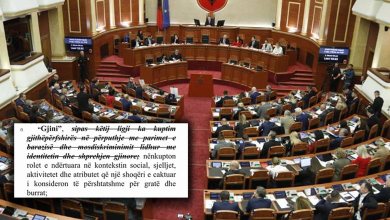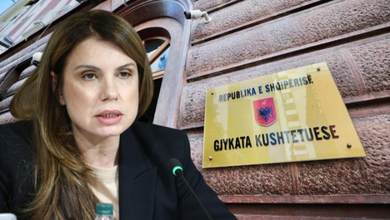




For weeks, it had been clear in Parliament that the clash between the majority and the opposition had reached a point where the channels of political communication were closing one by one. Today, that clash officially reached the door of the Constitutional Court.
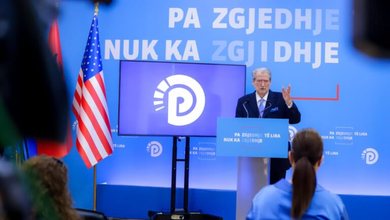
38 opposition MPs submitted a joint request, asking the Constitutional Court to intervene where, according to them, the socialist majority has used its votes to block a right that the Constitution calls inalienable: the establishment of investigative commissions.
Essentially, the request has two goals. First, to force the Assembly to open two investigations that the majority rejected without question: the "McGonigal" file, which requires verification of the actions of Albanian officials in relation to the former FBI agent, and the investigation into the use of state resources in the May 11, 2025 elections. Second, to declare the Assembly's decisions that closed the doors to these initiatives unconstitutional.
In the request, opposition MPs describe a reality that, according to them, has become a daily practice: motions are not accepted, interpellations are not held, hearings are not allowed, and every opposition request for parliamentary control ends up in the trash with the majority's cards.
They speak of an Assembly that is sliding towards a one-party logic, where the presence of the opposition is simply a necessary decoration, not a functional actor of control over the government. More than a political complaint, their request takes this debate to the terrain of constitutional guarantees, addressing the only body that can determine whether or not the majority has exceeded the red lines.
In the submitted document, the main argument is clear: the minority's right to establish an investigative commission does not depend on the will of the majority. It is not negotiated, it is not conditioned, and it cannot be overturned by a political vote.
The Constitutional Court must now decide not only on the fate of the two committees, but also on the great boundary that separates parliamentary control from abuse of the majority. Meanwhile, the clash between the two political camps is expected to intensify, while the Assembly remains paralyzed in the functions that, according to the opposition, it can no longer exercise.