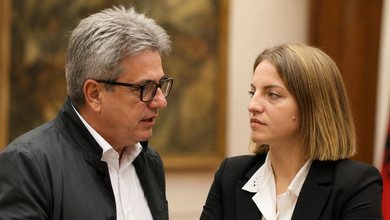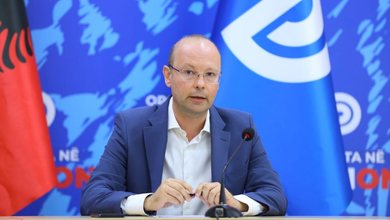



The Parliamentary Group of the Socialist Party has submitted to the Assembly a draft law for several additions and amendments to Law No. 113/2020 "On Citizenship". The proposed amendments aim to reform the current rules for acquiring citizenship through marriage, creating significant facilitations for both resident and non-resident couples. The document bears the signatures of two majority MPs, Taulant Balla and Igli Hasani.
Proposed legal changes (Full quote)
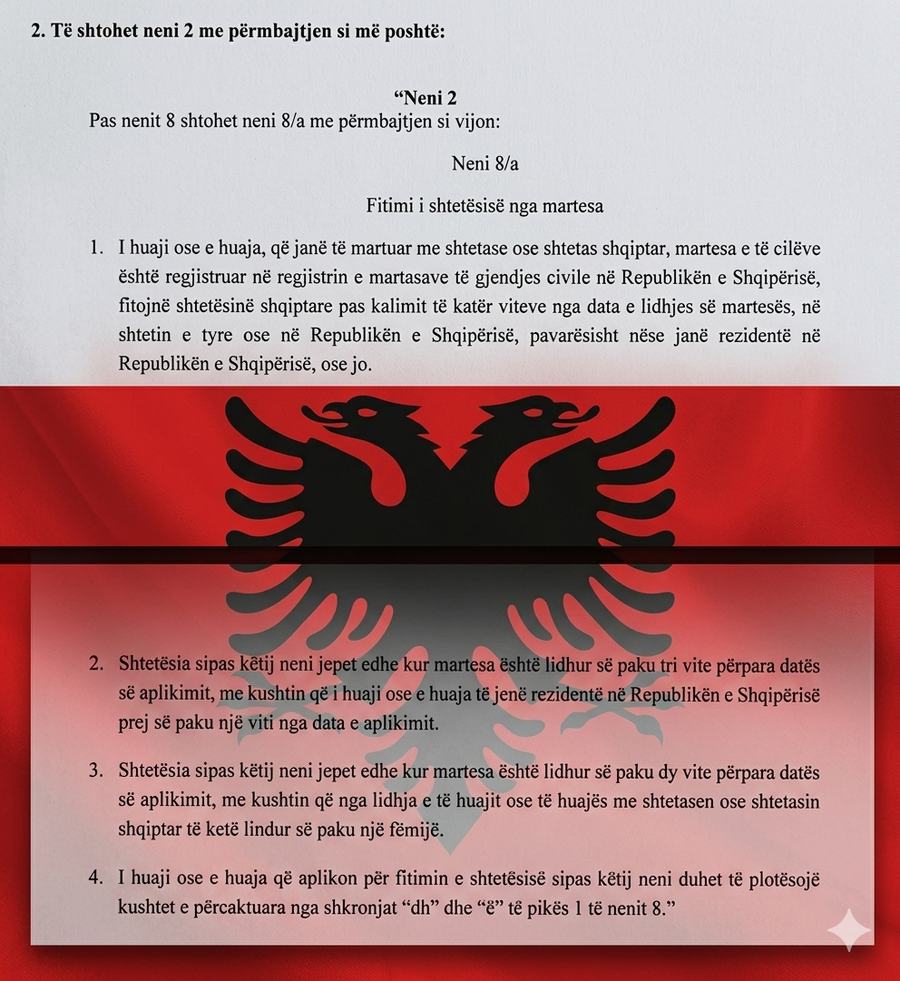
According to the official document, the amendments provide for the repeal of point 3 of article 8 of the current law and the addition of a new article, 8/a, with this full content:
"Article 8/a"
Acquisition of citizenship through marriage
1. A foreigner who is married to an Albanian citizen, whose marriage is registered in the civil status marriage register in the Republic of Albania, acquires Albanian citizenship after four years from the date of marriage, in their country or in the Republic of Albania, regardless of whether they are residents in the Republic of Albania or not.
2. Citizenship under this article is granted even when the marriage was concluded at least three years prior to the date of application, provided that the foreigner has been resident in the Republic of Albania for at least one year from the date of application.
3. Citizenship under this article is granted even when the marriage was concluded at least two years prior to the date of application, on the condition that at least one child has been born from the relationship between the foreigner and the Albanian citizen.
4. The foreigner who applies for citizenship under this article must meet the conditions set forth in the letters "dh" and "ë" of point 1 of article 8."
Explanatory report: Why is the law changing?
In the explanatory report accompanying this proposal, the deputies argue that the initiative arose as a reflection of the concerns raised at the Diaspora Summit, which took place in Tirana on April 13–15, 2026. During this summit, the issue of obtaining citizenship by spouses of Albanian citizens was considered a very sensitive topic.
According to the report, current legal barriers are considered unjustifiable and create a discriminatory environment for non-resident couples.
"This issue arose out of concern that the legal provisions in force create unjustifiable barriers to acquiring citizenship through marriage, as well as the concern that non-resident couples are placed in discriminatory positions in relation to resident couples, despite the fact that citizenship should be a derivative of marriage and not residency."
Summit participants and other stakeholders have described the current legal gap as "discriminatory and anti-democratic", stressing that it conflicts with European standards for family protection and equality. Establishing marriage as an autonomous path to citizenship aims to bring Albanian legislation closer to Western models.
Comparison with European practices
The report draws attention to how this procedure works in various European Union countries, which have served as a guiding model for this amendment:
Italy: The spouse of an Italian citizen can apply for citizenship after 2 years of residency (or 1 year if the couple has children).
Spain: Citizenship can be requested after only 1 year of residency.
France: 4 years of marriage required (or 3 years if the person has lived in France).
Portugal: Citizenship is obtained after 3 years of marriage.
Germany and Greece: There are simplified procedures and facilitated paths with shorter residence times for spouses of their citizens.
The proposing MPs conclude by emphasizing that this new model better harmonizes relations between resident and non-resident couples, giving due weight to important life circumstances, such as the birth of children from marriage. The initiative is expected to be reviewed by parliamentary committees before being voted on in plenary session.