


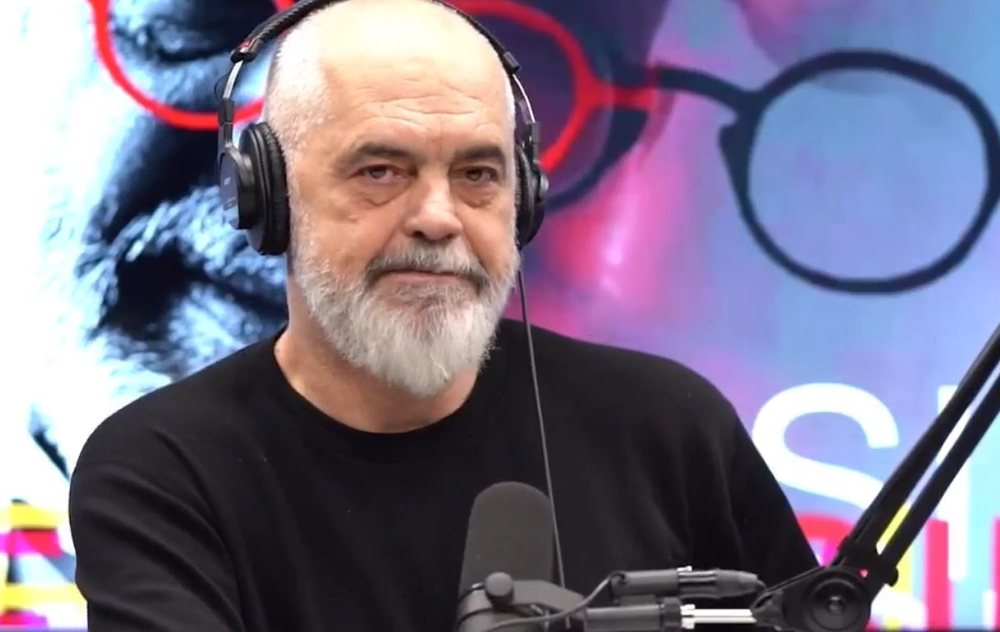
In the next episode of the podcast "Flasim", Prime Minister Edi Rama returned to the floods that have been keeping entire areas of the country under water for days, but not to dwell on sewage, uncritical construction or concrete responsibilities. He chose a more comfortable framework: the global climate.
According to Rama, what is happening in Albania is neither surprising nor special. A cold air mass from the north collided with a warm wave from the Mediterranean and brought intense rainfall, a scenario that – as he said – has produced “apocalyptic” views as far away as Istanbul. The message was clear: we are not alone, this is how the world is.
"Climate change is not just summer heat, but also erratic seasons, persistent weather, more fires and more floods," explained the prime minister, calling this reality the "new climate quadrant" and adding, with pride, that the state is better prepared today thanks to investments.
It is a way of speaking that immediately reminds one of Elisa Spiropali's famous phrase about other events: they happen everywhere in the world, they are also made into films. Not because it is about the same event, but because the mechanism is the same. When reality becomes heavy, it turns into a narrative; when responsibility approaches, it is shifted somewhere far away, to the climate, to the map, to the world.
In this version of history, the floods are not the result of years of concrete, drowned rivers and forgotten canals, but simply an inevitable episode of a global movie. The drama is real for the people pumping water out of their homes, but the official script remains the same: there are no culprits here, only the weather. And like any good movie, the ending is always left open.