


During the campaign for the May 11 parliamentary elections, the Central Election Commission paid around 1 million euros for media services, advertisements and announcements – items that are recognized as part of the electoral education process.
Treasury payment data shows that the CEC made 29 payments worth a total of 99.6 million lek in the period April 16 - July 14, 2025; a budget almost twice as high as that of the 2021 parliamentary elections when 51 million lek were spent on the same item.
About 15% of these payments, or 14.8 million lek, went to the design and advertising company, “PIK.” The rest of the budget, about 84.7 million lek, was divided between two large media groups and a list of 19 other national and news media outlets.
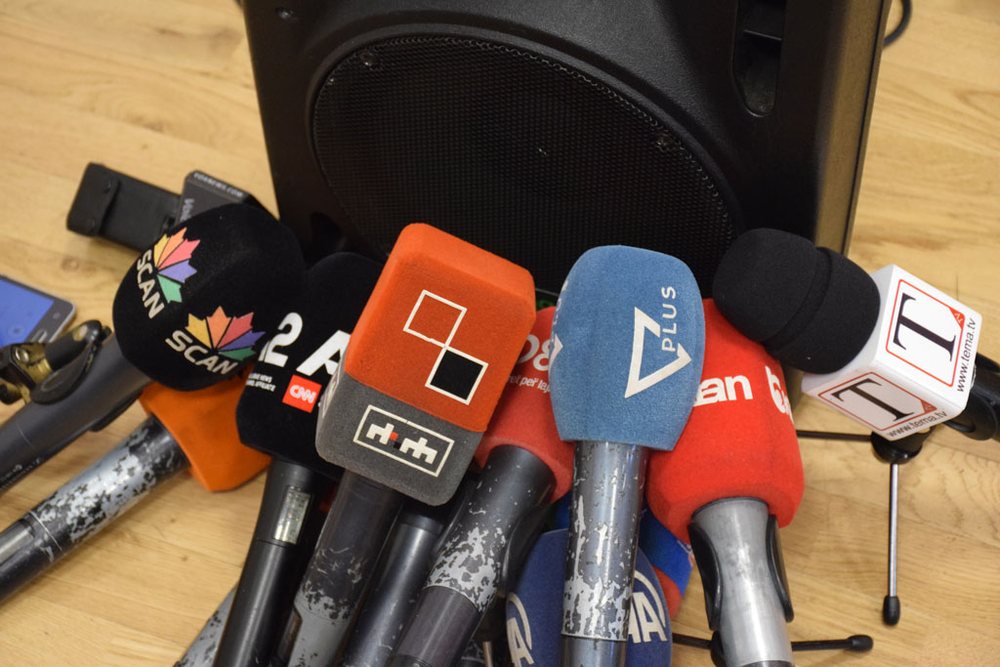
The Klan media group and its affiliated media outlets received 14.4 million lek from CEC advertising, or 17% of the money allocated to media companies. Top Media, including Top Channel, Top Albania radio, and Top News, received 13.7 million lek, or 16% of the total. Together, the two major media groups received over 33% of the total CEC spending on information during the elections.
Euro Balkans News (the company behind Euronews Albania), Media Vizion (which owns Vizion +) and MTSC (which owns Report TV) each received 9 million lek, while Focus Media News, which owns News 24 television, received 8.5 million lek.
The other three media outlets, ABC News, A2 CNN (through G2 Media) and ORA (Ora News + RTV Ora) each received 4.5 million lek. Syri TV, which was paid through the company “3 DS & AF Entertainment”, received 3.7 million lek and MCN (through the company Johaniteri) received 1.5 million lek.
The list closes with a group of lesser-known media outlets, including City News Albania with 800 thousand lekë, Panorama TV, Fax Media News, Club Muzikor and others, which have each received 500 thousand lekë for advertising from the CEC. The smallest payment is that for Ismet Drishti as a natural person.
Although spending on the CEC's educational campaign increased in the last elections, the number of media beneficiaries almost halved: from 43 subjects in the local elections two years ago to 21 unique beneficiaries during this campaign.
For media experts, the lack of an independent audience measurement system and the limitation of the number of beneficiaries has led to the penalization of small and local media.
“In this context, small and local media remain structurally penalized by this mode of distribution. For small and local media, operating with more limited financial and human capacities, this translates into fewer opportunities for on-the-ground election coverage and representation of local issues during the campaign,” said Blerjana Bino, director of the Center for Science and Innovation for Development, SCiDEV.
Bino also emphasized that the role of local media becomes even more important in conditions where the campaign is generally covered through ready-made materials and communication is controlled by political actors.
"They remain among the few actors that can provide reporting from the field, local context and real mediation between citizens and politics, contributing to more balanced information and closer to the public interest during the electoral process," emphasized Bino./Reporter.al