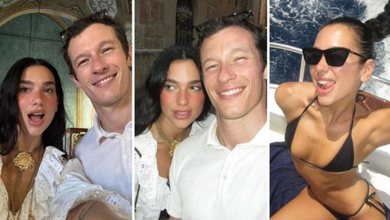



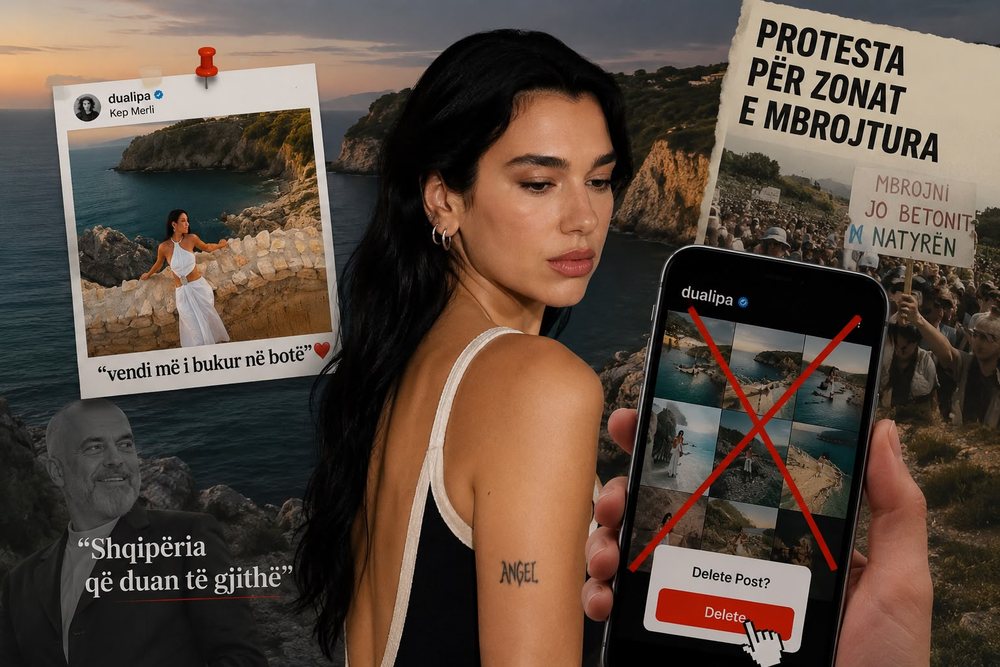
Until recently, Cape Merli held a special place on Dua Lipa's profile. The singer had shared with millions of followers pictures from her family vacation in southern Albania, calling the area "the most beautiful place in the world." Today, those posts are no longer on her Instagram profile, although they continue to circulate in Albanian media and in posts by her family members.
Maybe it's simply time for a "refresh" of the Instagram profile. It could be an aesthetic choice. It could have nothing to do with recent developments. But the timing of this "cleansing" is, at the very least, interesting.
Just a few days ago, Dua Lipa was invited to Lea Ypi's podcast, where she talked about protests against construction in protected areas in Albania. It didn't hurt that she brought them to attention. On the contrary, it is positive that an influential international figure is interested in what is happening in the country. This time, however, Dua chose to "sing a duet" with another former favorite of Edi Rama, Lea Ypi, who has long become one of the most critical voices against his governance model. But the newfound enthusiasm for nature protection also leaves behind some question marks.
Does Dua Lipa know that Cape Merli, the place where she spent her vacation and where her family built their villa, is itself a protected area? Does she know that today no one can enter there without the builder's permission? And does she know that the very development model for which protests are being raised today is the one that has also transformed the area where she has chosen to spend her vacation?
For years, Dua Lipa's images from Cape Merli have been used as the most beautiful postcard of Albanian tourism. Edi Rama has not missed a single opportunity to use her presence as evidence of the "Albania that everyone wants". Today, when the debate about the development of the coast has heated up, those photos are no longer on her profile.
No one denies Dua Lipa the right to own a villa or vacation wherever she wants. With the wealth she has, she could buy a villa almost anywhere in the world without thinking twice. But when you decide to enter the public debate, wealth is not enough to buy coherence.
Albania cannot be a luxury postcard when it serves to promote power and, a few years later, become a cause against the consequences of the same development model. If attitudes change, the public has the right to ask why. Because you cannot love Albania according to the appetite of politics. And dignity is not bought with wealth; it is measured by the stability of principles.