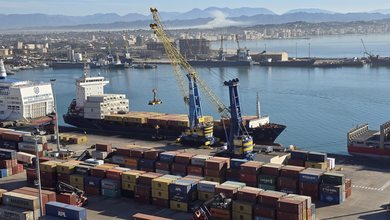



The European Anti-Fraud Office (OLAF) says it has supported Albanian authorities in detecting and stopping a suspected case of illegal export of hazardous industrial waste by the Kurum company from the Port of Durres to Thailand.
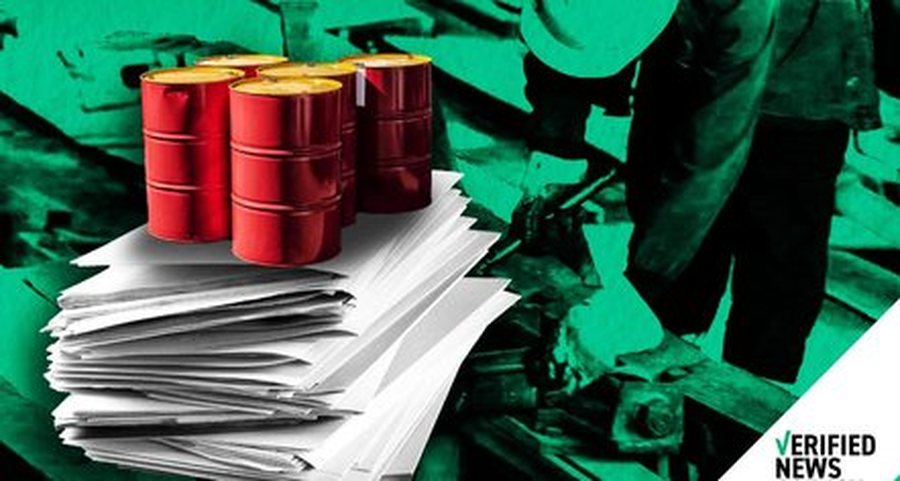
An official announcement states that the investigation began in 2024, after OLAF informed Albanian customs authorities about a shipment suspected of containing significant quantities of hazardous waste wrongly declared as iron oxide.
The export documentation described the cargo as ordinary industrial material, but laboratory analysis revealed that it was a toxic byproduct of steel production, which is classified as hazardous waste due to its high content of heavy metals.
OLAF also emphasizes that in cooperation with the Customs Investigation Directorate, it helped coordinate the operational actions that led to the seizure of the cargo and the prevention of its illegal disposal abroad.
The European institution organized and participated in several operational meetings with customs authorities and the Durrës Prosecutor's Office, facilitating the exchange of information that proved crucial for advancing the case.
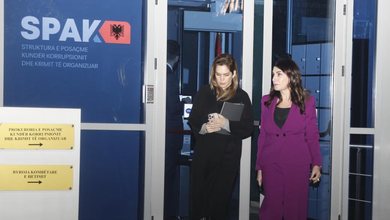
Inter-institutional cooperation resulted in the return of the cargo to its country of origin and supported national procedures that led to the issuance of 33 arrest warrants, including for customs officers and environmental agency officials. The case was also made public through a notice from the General Prosecutor's Office of Albania, OLAF said in a statement.
OLAF Director-General Petr Klement said: “This case shows how close cooperation between OLAF and partner authorities in the EU and beyond helps to protect the environment, safeguard public health and ensure that citizens are better protected from the serious risks posed by illegal waste trafficking. My sincere congratulations to the Albanian authorities for conducting and concluding such a complex investigation.”
"False declaration of hazardous waste remains one of the most widely used methods in this type of trafficking. Through false labeling as non-hazardous substances, operators aim to avoid export controls, environmental regulations and higher treatment costs within the European Union, shifting environmental and health risks to host countries," the announcement states.