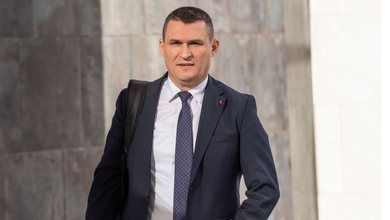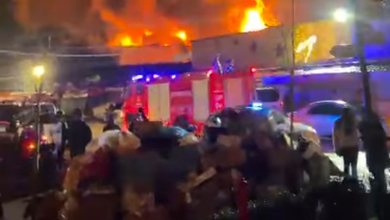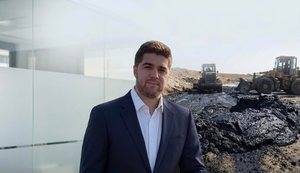



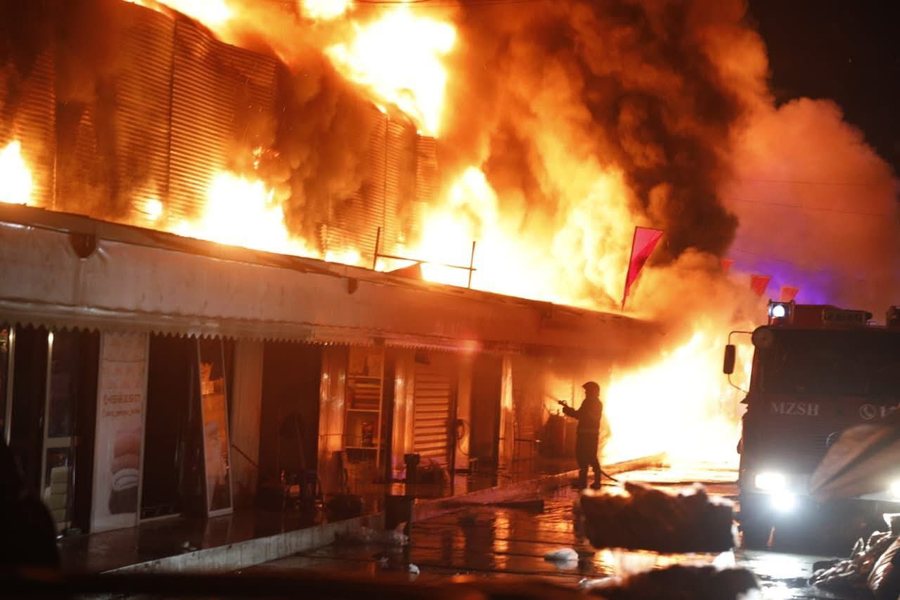
There is a very simple way to understand who is behind the burning of warehouses in the 5 May area, if the fire turns out to be intentional: just wait and see who will build there next. Those who will benefit from this fire are, most likely, also the perpetrators of the crime. This is how Ergys Mërtiri argues, linking this event to a phenomenon already known in Albania.
The epidemic of fires that break out precisely where they “do work” for builders is neither a coincidence nor an exception, but a common manifestation of a degraded reality. In the absence of institutional action, there remains at least a social reaction: the moral condemnation of those who destroy property, space, and life for private gain. According to Mërtir, society must stop considering those who commit injustice and oppress others as “strong” or “capable,” and at least morally exclude them, in order to preserve the collective conscience.
A significant precedent comes from Greece. When entire areas of greenery and forests burned in the hills of Athens, then-Prime Minister Karamanlis declared a strict moratorium: no building permits would be issued in any burned areas. The measure was clear and direct — fire would not be rewarded with concrete.
This approach can and should be discussed for Albania as well, not only for the case of the Medreseja market or 5 Maji, but for any suspicious fire that paves the way for urban development. The question that remains is both simple and political: does the Albanian prime minister have the courage to make such a decision and definitively cut the connection between the fire and the benefit from the construction?