

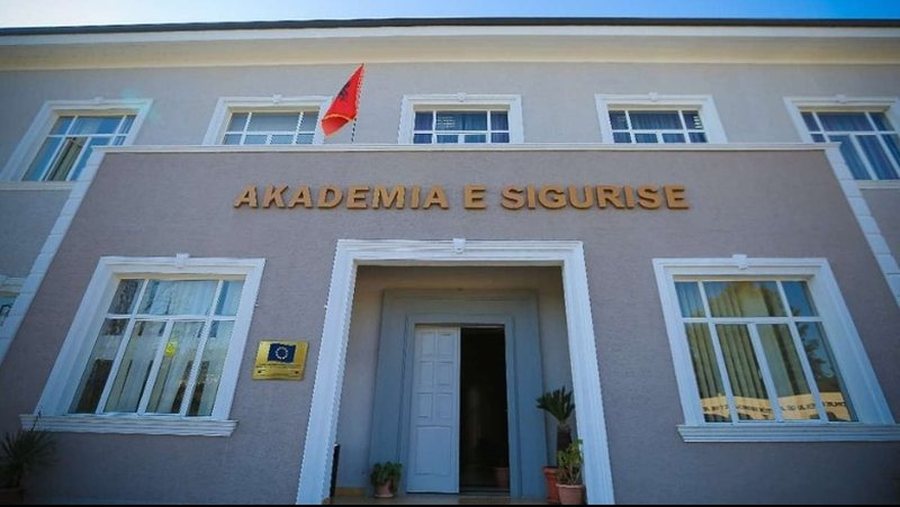
The National Food Authority reacted this Thursday regarding the suspected case of health problems of several trainees at the Sauk Safety Academy, noting that laboratory analyses have revealed a product that does not comply with food safety standards.
According to the official announcement of the AKU, nine samples were sampled, including raw materials and finished products. From the analyses conducted at the ISUV Reference Laboratory, eight of the samples resulted within the allowed norms, while one pasta sample, a finished product, resulted with an above-normal load of Escherichia coli and coagulase-positive Staphylococcus bacteria.
The problematic sample was taken in the kitchen within the premises of the Sauk Safety Academy.
Following these findings, the NFA has taken the measure of suspending activity until the legal requirements for cleaning and disinfection of work environments and equipment are met.
Meanwhile, during the traceability investigation, inspections were also extended to the "Skënderbej" Garrison near the Armed Forces, where food products were produced. According to the findings of health institutions and the final report of the epidemiological investigation, non-conforming hygiene indicators were identified both in the samples in storage and in some work equipment.
For this reason, the NFA has ordered the cessation of activity for the entity "SORI-AL" in the premises of the "Skënderbej" Garrison.
Also, an administrative measure of a fine of 1 million 500 thousand lek has been imposed on the subject for trading unsafe food and violating hygiene and sanitary conditions.
The NFA announced that the entity has also been tasked with carrying out procedures for the disposal of the blocked product, which resulted in non-compliance with food safety standards.
2.7 billion lek contract for the supply of the Security Academy
The company “Sori-al”, owned by Alma Tafani, Nikolin Jaka’s wife, won the tender in February 2025 for the food preparation and distribution service for the Security Academy. The contract, worth 2.7 billion lek and running until 2027, foresees the supply of three meals a day for students and trainees of the State Police.
According to the data, the company "Sori-al" continues to operate in several other highly sensitive public institutions, including the "Ali Mihali" Psychiatric Hospital in Vlora, the Berat Regional Hospital, Military Ward No. 5004 in Zall-Herr and Military Ward No. 5001 in Tirana.
This expansion into critical sectors such as health and defense raises the need for continuous monitoring and strict controls, in order to guarantee food safety standards and avoid any risk of recurrence of similar situations.
Public procurement and contracts won
"Sori-al" has become one of the largest beneficiaries of public funds for food. An analysis of the procedures shows that in many cases, the company has been declared the winner either in the complete absence of competition, or through the disqualification of other competitors. In the last two years alone, it has received 6 tenders from the Centralized Purchasing Operator, contracts which are currently active:
August 2024: Winner of the 1.1 billion lek tender for the Berat Regional Hospital.
October 2024: Winner of Lot 1 for Military Department No. 5001 (Tirana) worth 4 billion lek – won without any competitors in the competition.
November 2024: Secures "Minicontract 1" for the same department (5001), worth 3.4 billion lek, again in the absence of competition.
November 2024: Wins Lot 2 for Ward No. 5004 in Zall-Herr, worth 708 million lekë, as the only participating operator.
November 2024: The winner of the Vlora Psychiatric Hospital contract worth 3.1 billion lek was announced. In this procedure, "Sori-al" won after the other competitor who had submitted a more reasonable economic offer was disqualified.
The incident at the Security Academy exposes a serious failure of control. While the government organizes meetings where it declares food safety as a priority and demands European standards from the private sector, its subordinate institutions are supplied by operators who appear to "rent" them with billion-dollar tenders without monitoring the quality of service.
At the end of this chain, the one who pays the cost is the citizen, who pays taxes and receives poisoning from their mismanagement as a service.