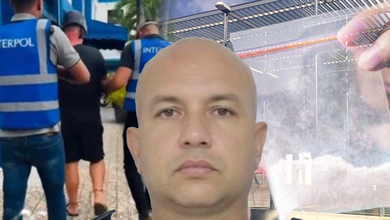



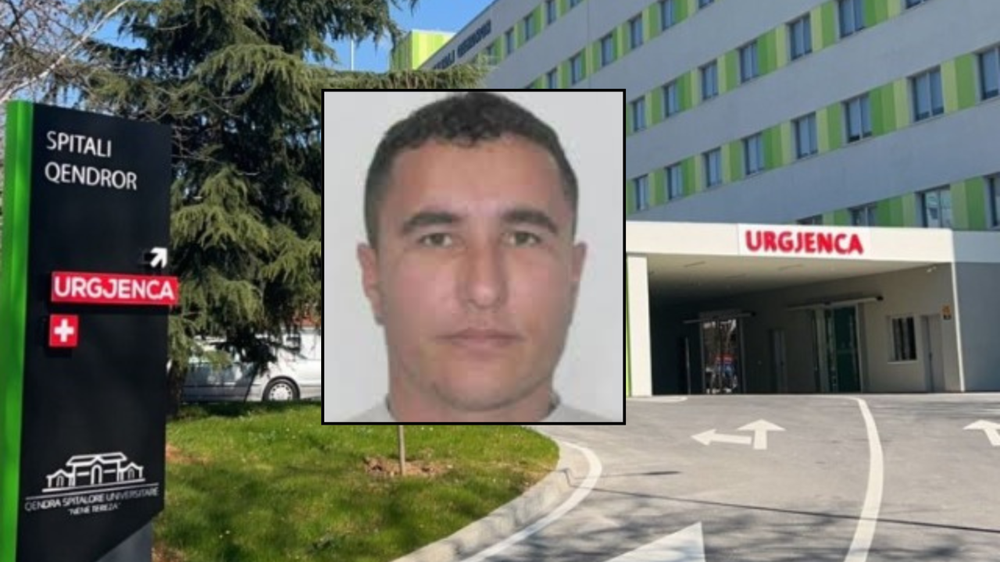
Yesterday's incident, where the repentant justice Nuredin Dumani was urgently hospitalized as a result of suspected food poisoning, received a lot of media coverage. Due to his status as a key witness in serious criminal cases, the news immediately raised speculation about the possibility of intentional poisoning.
VNA consulted with medical specialists in the field about the reported symptoms. The question that arises is: is this a case of intentional poisoning, or a food-related health problem?
The first steps of the examination
In such a case, when the patient exhibits loss of sensation for a relatively long time and problems with speech articulation (total aphasia), the first step is a neuroradiological examination. According to specialists, a cerebral TAC (scanner) is performed, and if the result is negative, it means that we are not dealing with an acute problem, neither hemorrhagic nor ischemic cerebral.
However, because cerebral ischemia takes time to appear on the image, it is recommended that the CT scan without contrast be repeated after 8 and 24 hours. If these checks are also negative, then a magnetic resonance imaging (MRI) is performed to look in more detail at the lower part of the brain, known as the pontine, which is not well seen on the CT scan.
Cardiac and neurological track
Another diagnostic step is to rule out arrhythmias or cardiac pauses through recording of heart activity (24–72 hour Holter). These conditions can lead to syncope and can often be confused with cerebral pathologies.
An EEG (electroencephalogram) is also performed to rule out a "silent" electrical disorder of the brain, which does not immediately appear in other examinations.
Poisoning track
Poisoning remains a very important clue to consider in such cases. Experts emphasize that poisoning does not always appear with obvious signs such as vomiting, stomach pain or muscle paralysis. There are poisonous substances that act gradually, affecting the heart rhythm or neuronal synapses.
For this reason, toxicological tests are crucial. In addition to blood, hair or other biological samples can also be examined to determine whether or not we are dealing with intentional poisoning.
The need for complete data
However, doctors warn that in order to make an accurate diagnosis, detailed data on the circumstances of the event are needed: the time of loss of consciousness, the preceding symptoms, the presence of vomiting or rigidity, the values of glycemia and oxygenation at the critical moment, as well as whether there was relaxation of the sphincters (urine or feces).
Only after summarizing this data, along with clinical and toxicological analyses, can it be determined whether Nuredin Dumani's case is related to intentional poisoning, food poisoning, or another health problem.