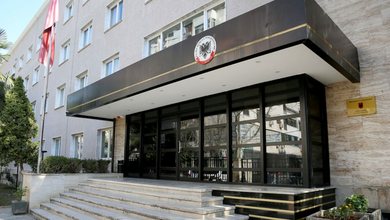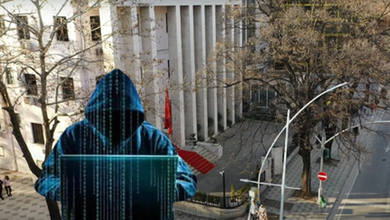



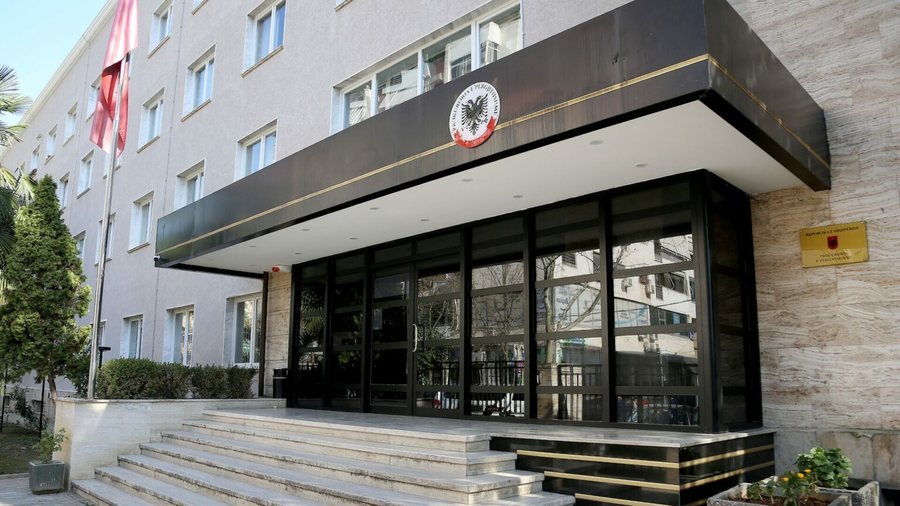
The Prosecutor's Offices of the General Jurisdiction have been left without a system after the alleged cyber attack by the group "Homeland Justice". According to reports, the prosecution bodies have been affected in their technological infrastructure, raising serious concerns about the security and normal functioning of key justice institutions.
It is worth noting that just a day ago, after the news was published by VNA, the relevant institution reacted by categorically denying the existence of a cyberattack. The General Prosecutor's Office based its position on verifications by IT security experts, who, according to the official statement, had not found any traces of compromise in the system. This categorical position contradicts today's developments, where it is acknowledged that an attack has occurred.
This sudden change in narrative raises questions: are we dealing with a reluctance to admit a cybersecurity failure, a phenomenon also encountered in other state institutions, or with the inability of IT experts to identify such an intrusion in time? In both cases, the situation remains worrying and requires full transparency.
Meanwhile, yesterday, VNA reported that the Iranian hacker group “Homeland Justice” had claimed responsibility for the attack, claiming to have infiltrated the systems of the Supreme Court and the General Prosecutor’s Office. Through messages and links distributed on the social network Telegram, they declared that “the cyber networks of the Albanian judicial system have been hacked” and that “all documents” are now in their possession.
The group in question presents this intervention as a reaction to the cooperation of the Albanian authorities with the Iranian organization People's Mujahedin of Iran (MEK), which it considers hostile. This gives the event a geopolitical dimension, beyond the technical aspect of security.
The Supreme Court also reacted to the case, and, in a similar vein to the Prosecutor's Office, denied that its system had been compromised. However, it remains to be seen whether this institution also lied in its response.