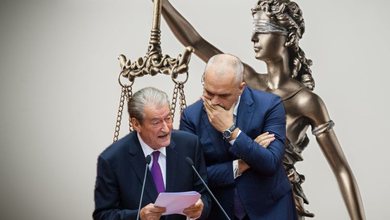




The latest chain of SPAK actions, from the arrest warrants for Ergys Agas and AKSHI officials, to the request for the lifting of immunity and security measures against Belinda Balluku, has highlighted not only a legal battle, but also an old political reflex, the protection of power over principle.
Investigations into the AKSHI, an institution symbolic of the digitalization and “modernization” of the state, show that technology has not been enough to eradicate clientelistic practices. On the contrary, suspicions of manipulated tenders and shady connections between business and administration prove that abuse has simply changed form, not content. When justice reaches people close to decision-making centers, the political reaction becomes nervous and this is the clearest signal that the investigation is touching sensitive areas.
The case of Belinda Balluku makes this nervousness even more visible. Political immunity, intended as an institutional guarantee, is once again being treated as a personal shield. Any attempt to present SPAK's request as a "political attack" is not a defense of the law, but a fear of precedent, the precedent that no one is untouchable.
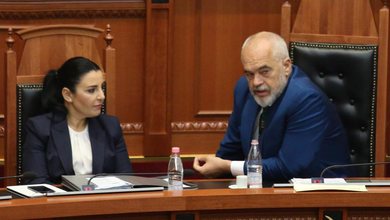
Parliament, in this process, is not a spectator. It must choose between two paths, either to act as a constitutional institution that does not obstruct justice, or to confirm its role as a political filter to save people in power. Silence, relativization or procrastination would be as significant as an open refusal.
The essence of this whole story is not the guilt or innocence of individuals, that is decided by the court. The essence is whether justice will be allowed to go to the end, or will it stop as soon as it touches the highest political levels. Albania no longer has a problem of laws, it has a problem of will.
If this time too, the government uses immunity, rhetoric, and political pressure to survive, the message will be clear: justice reform is only accepted when it does not bother the government. And this would be the greatest failure, not of justice, but of politics.