

By Muriel
Sali Berisha can defend principles, but he has no right to use the Democratic Party for Ilir Meta's political woes.
The Democratic Party is today faced with an important choice: to protect Democrats, or to bear the political costs of its leaders' personal alliances.
The issue is not whether Ilir Meta should have due process. Of course he does. Every citizen, regardless of their name and position, should be treated according to the law, with dignity, transparency and the right to protection.
But the legal process is one thing. Political advocacy is something else entirely. And here arises the question that democrats have the right to ask: why should the DP turn into a political shield for Ilir Meta?
Ilir Meta is not a product of the Democratic Party. He is a product of the Albanian left. His career was built within the Socialist Party, where he became prime minister, a central figure in power and one of the most important actors in the transition. He then created the LSI, a force that was not guided by right-wing principles, but by its weight in the power bargains.
In 2009, Meta entered the government with Sali Berisha because his mandates were crucial. The DP needed the LSI for a majority; Meta needed power to remain a factor. It was an alliance of numbers, not an alliance of values.
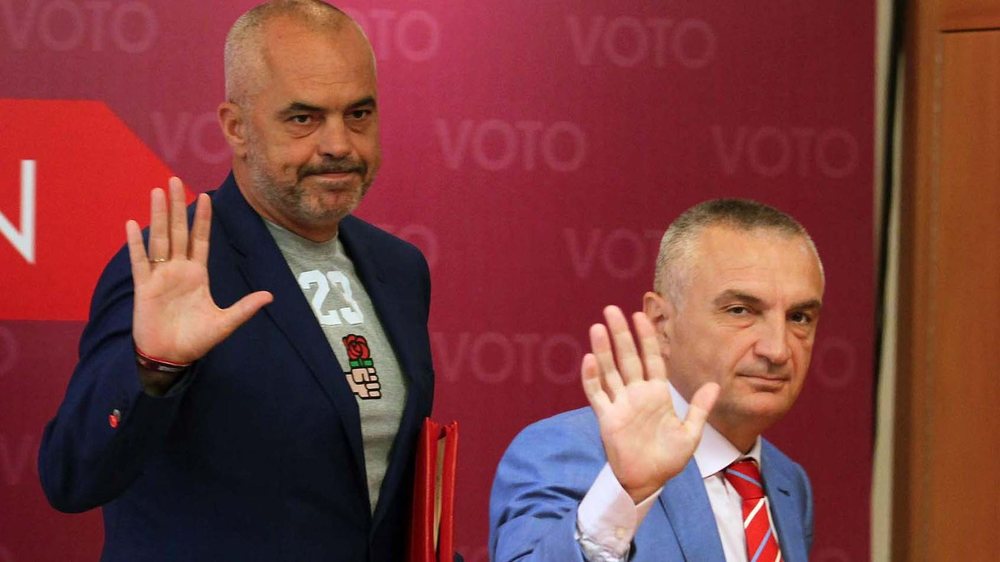
The clearest proof came in 2013. At the most crucial moment for the Democrats, Ilir Meta did not stay with the DP. He joined the votes with Edi Rama and helped the left come to power. This was the decision that cost the DP the loss of power and the Democrats long years of opposition.
This is not a matter of resentment. It is political memory.
Democrats cannot erase from memory that the man who today is being asked to politically protect himself by the DP, in 2013, chose Rama against the DP. At that moment, Meta did not think about the sacrifices of the Democrats, about the DP base, or about the citizens who had voted against the left. He thought about his own political interest.
Therefore, the question is simple: what political debt does the DP owe to Ilir Meta?
This question becomes even stronger when you see the silence of his historical friends and collaborators from the left. Meta started his career in the Socialist Party. He shared power, positions, agreements and political responsibilities with the Socialists. He joined them in 2013 to remove the DP from power.
So, why aren't they defending him politically? Why should Sali Berisha defend Ilir Meta, when the socialists with whom Meta built his career and power are not taking on this burden?
This is a fundamental question. Because if the political wing from which Meta emerged is not coming out to defend him politically, why should the Democratic Party do so? Why should the Democrats pay the moral and political cost of a figure who has never been part of them, who has used them when they needed them and abandoned them when they were interested?
The problem is not only that Sali Berisha comes out in defense of Ilir Meta. The biggest problem is when this defense is presented as the stance of the Democratic Party. Because the DP is not anyone's personal property. It is not a law firm. It is not a shelter for the political troubles of every old figure of the transition. The DP is a political party, with history, with voters, with sacrifices and with responsibility towards the democrats.
Sali Berisha can demand impartial justice. He can say that no one should be punished without evidence. He can demand that SPAK, the courts and every justice institution operate with equal standards for everyone. This is right. But Berisha should not turn the DP into Ilir Meta's personal shield.
Because a DP that seeks to come to power under the banner of anti-corruption cannot appear as a political defender of old figures facing justice. It cannot tell Albanians "we are the change," while being associated with the same names that have dominated Albanian politics for three decades.
This makes the message unreliable. It weakens the opposition. It alienates undecided citizens. It disappoints honest democrats. And it gives Edi Rama a political gift: the opportunity to present the opposition not as an alternative, but as a union of politicians who protect each other.
This is exactly what the DP should avoid.
The opposition does not defend itself by declaring every investigation against an ally a political attack. The opposition defends itself by defending principles: free elections, impartial justice, the fight against corruption, equality before the law and respect for citizens. In this distinction lies the future of the DP.
Defending the principle that Ilir Meta should have a fair trial is a democratic stance. Turning the Democratic Party into Ilir Meta's political shield is a political mistake.
Democrats don't need a party that defends Meta's troubles. They need a party that defends their interests: the economy, free voting, the exodus of young people, corruption, abuse of power, equal justice, and the restoration of hope.
If the DP is to rise again, it must break away from the politics of personal hostages. It must show that it is not tied to old figures, but to the citizens. It must show that it does not seek power to protect a few names, but to change the country.
Therefore, Sali Berisha must make a clear choice: either the DP will be a party of the Democrats, or it will remain hostage to personal alliances. Ilir Meta has the right to defend himself in court. But there is no reason for him to be politically protected by the Democrats.
The DP does not owe Ilir Meta any silence, no shield, no political cost. On the contrary, Ilir Meta owes the Democrats an explanation for 2013, when he chose Rama and not the DP.
Today, democrats must choose themselves, their party, and their future. Because a DP that protects Ilir Meta does not become stronger. It becomes more burdened. A DP that separates itself from old bargains, from unprincipled alliances, and from personal protections, can become hope again.
And this is what the Democrats deserve: not a party that protects Ilir Meta, but a party that protects the Democrats.