


By Muriel
In any normal democracy, limiting pre-trial detention would be good news. In any serious state, the fact that a court requires more justification for “prison arrest” would be seen as a step towards European standards. Because pre-trial detention is not a punishment. It is not a spectacle. It is not a press conference with handcuffs. It is an extraordinary measure, which should only be used when there are concrete reasons.
But Albania does not live in such normality. Albania lives in a reality where every court decision is read through doubt. And doubt was not born from popular fantasy. It was born from long years of impunity, from files that begin with noise and end in silence, from those in power who are overthrown in newspaper headlines but not always in final decisions, from the deep conviction that justice is strong with the weak and cautious with the powerful.
Therefore, the recent decision of the Supreme Court on the standard of “prison arrest” is not simply a legal issue. It is a political issue. It is a matter of trust. It is a test to understand whether Albania is truly building independent justice, or is sliding towards a reality where independent justice is replaced, slowly and with elegant language, by what the public increasingly perceives as the justice of power.
The Joint Panels of the Supreme Court have ruled that the most severe restriction of personal liberty requires a real consideration of alternatives, individualized reasoning, and concrete responsibility on the part of the prosecution to justify detention in prison. This is a fair standard in principle. It is even a necessary standard. The Supreme Court itself has presented this as a clarification of practice: detention in prison cannot be maintained with general formulas and without concrete argumentation.
But the Albanian problem is not just what is written in the decision. The Albanian problem is to whom the decision is applied.
In Europe, limiting pre-trial detention is a standard of the rule of law. In Albania, it risks becoming an exit door for the elites. Here is the big difference. Here begins the crisis. Because a legal principle can be right on paper, but unjust in life, if it is applied more quickly to people with money, power, connections and great lawyers, while the ordinary citizen continues to wait for months behind bars.
Albania has a real problem with pre-trial detention. There is a problem with the routine use of harsh measures. There is a problem with the fact that, for many people, pre-trial detention feels like a punishment before the verdict. In this sense, the intervention of the Supreme Court could be legally sound. It could serve to correct an old culture, where arrest has often been used as an automatic response to accusation.
But in a country with low trust in justice, even the healthiest standard can become suspect if it appears at the wrong moment, to the wrong people, in the most sensitive files, and with the most favorable political effect for those in power.
This is why the public is not just asking: “Is the standard fair?”
The public is asking: "Will this be the standard for everyone, or just for those who have weight?"
Lord Hewart, one of the most famous names in British jurisprudence, left a phrase that has become a fundamental principle of modern justice: “Justice must not only be done; it must also be seen to be done.” This is precisely where Albanian justice is failing. It can say that it is applying the law. It can say that it is following the European standard. It can talk about proportionality, individualization, procedural risk and alternative measures. But if the citizen sees that these words come to life mainly when powerful people are at play, then justice may have won the legal argument, but it has lost the public battle.
And a justice system that loses the public has gained nothing.
Because justice is not just a text. It is also a belief. It is not just a decision. It is also a perception. It is not just the article that is read in the hall, but also the message that goes out of it. If the message that society receives is that “prison arrest” is being mitigated precisely at the moment when the files affect officials, former officials, tenders, public money and people connected to power, then the problem is no longer technical. It is political.
This is where the biggest risk comes in: that a European standard is used as a cover for an Albanian practice.
Instead of looking like reform, it may look like a clean-up operation. Instead of looking like the protection of personal freedom, it may look like the salvation of the elite. Instead of looking like judicial independence, it may look like the adaptation of justice to the interests of power.
And this is much more serious than a single decision.
Because today, it is not simply a matter of security measures that are being discussed. It is being discussed whether the Supreme Court is becoming a guarantor of European standards or an institution that, with cold legal language, paves the way for the normalization of impunity. It is being discussed whether justice is becoming more independent, or more capable of justifying in professional terms what the citizen sees as a favor to the strong.
The irony is that it all sounds nice. “Individualized reasoning.” “Alternative measures.” “Proportionality.” “European standard.” Precise, elegant, modern words. But in Albania, beautiful words need solid evidence. Because this country has heard a lot of beautiful words. It has heard about historic reforms, about new justice, about the end of impunity, about equality before the law. And then it has seen the same old story: the little ones face the law, the big ones negotiate with the procedure.
Kjo është arsyeja pse ky moment është kaq delikat. Gjykata e Lartë nuk po vendos vetëm për paraburgimin. Ajo po vendos edhe për besimin. Po vendos nëse qytetari do të besojë se ky standard i ri do të vlejë për të gjithë, apo do ta shohë si një tjetër instrument që funksionon vetëm kur i duhet elitës.
Një gjë duhet thënë qartë: askush, asnjë njeri serioz, nuk duhet të kërkojë paraburgim automatik. Askush nuk duhet të kërkojë burg për të kënaqur zemërimin publik. Një shtet që burgos për opinion nuk është shtet ligjor. Por një shtet që e zbut ligjin vetëm kur preken njerëzit e pushtetit nuk është shtet ligjor gjithashtu. Është sistem me dy standarde.
Dhe sistemi me dy standarde është pikërisht ajo që shqiptarët dyshojnë se kanë përballë.
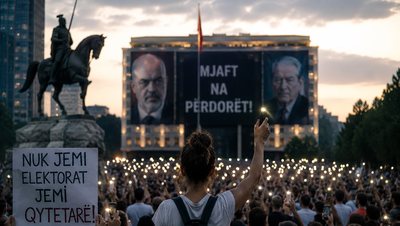
Në këtë pikë, debati nuk mund të shmangë politikën. Nuk mund të flasim për drejtësi sikur ajo jeton në vakum. Në muajt e fundit, përplasja mes pushtetit ekzekutiv dhe organeve të drejtësisë është bërë pjesë e hapur e jetës publike. Kur pushteti politik e sulmon drejtësinë kur ajo prek njerëzit e tij, por e lavdëron kur ajo godet kundërshtarët, publiku nuk sheh më institucione të pavarura. Sheh një fushë beteje. Dhe në atë fushë beteje, çdo vendim për masa sigurie lexohet si pjesë e lojës së madhe: kush mbrohet, kush sakrifikohet, kush mbahet në qeli dhe kush nxirret me standard europian.
Këtu fillon të humbasë termi “drejtësi e pavarur”. Jo sepse dikush e shpall zyrtarisht të vdekur. Jo sepse ndryshon emri në Kushtetutë. Por sepse publiku fillon ta zëvendësojë në mendjen e vet me një term tjetër, shumë më të hidhur: drejtësi e pushtetit. Në gjuhën e rrugës, kjo përkthehet edhe më thjeshtë: drejtësia e Ramës.
Kjo nuk është një akuzë që mund të trajtohet lehtë si fakt penal pa prova konkrete. Por është një perceptim politik që po rritet. Dhe në demokraci, perceptimi për kapjen e drejtësisë është po aq shkatërrues sa kapja vetë, sepse e bën qytetarin të mos besojë më as kur institucioni mund të ketë të drejtë.
Kjo është tragjedia e vërtetë. Kur besimi humbet, çdo vendim bëhet i dyshimtë. Edhe vendimi i drejtë. Edhe standardi i mirë. Edhe masa e arsyeshme. Sepse publiku nuk pyet më “çfarë thotë ligji”, por “kujt i shërben ky vendim?”
Nëse Gjykata e Lartë do që ky standard të mos duket si derë daljeje për elitat, duhet ta provojë me barazi. Jo me deklarata. Jo me gjuhë teknike. Jo me fraza të bukura. Me praktikë. Duhet të tregojë se i njëjti standard vlen për qytetarin pa emër, për të varfrin, për atë që nuk ka avokatë të shtrenjtë, për atë që nuk ka lidhje politike, për atë që nuk ka media, për atë që nuk ka kush t’i hapë derën.
Vetëm atëherë standardi europian do të duket europian. Ndryshe, do të duket si një tjetër shpikje shqiptare: ligj i përgjithshëm, përdorim i veçantë.
Kjo është prova e madhe e Gjykatës së Lartë. Jo nëse di të shkruajë bukur për proporcionalitetin. Por nëse di ta zbatojë atë pa parë emrin, postin, partinë, paranë apo lidhjen e njeriut që ka përballë.
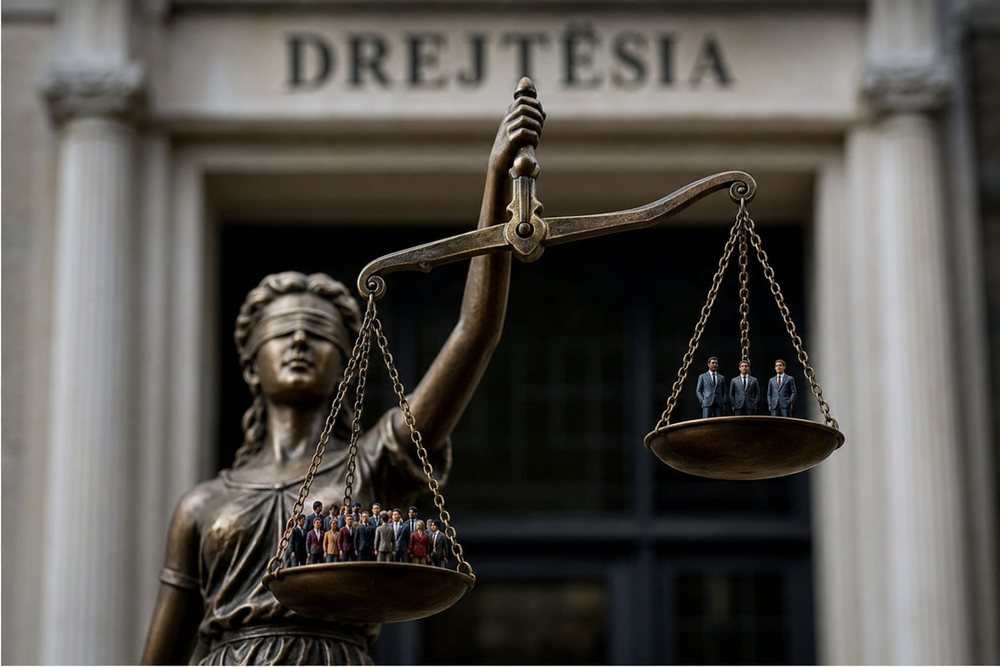
Because in the end, justice is not measured by the elegance of reasoning, but by the equality of weighing. It is not measured by the standards it cites, but by the citizens it convinces. It is not measured by the formulas it uses, but by whether the public manages to believe that the law is the same for everyone.
Today, this belief is in danger.
And if this new standard for “prison arrest” ends up easing the path for the elites, while the average citizen continues to face the same harshness, then we will not have reform. We will have a much more dangerous change: the transformation of independent justice into managed justice.
At that moment, the word "Europe" will remain in the decision.
But the spirit will be completely different.
And the Albanian citizen, even without a law degree, will understand it immediately.
Because when justice begins to seem like a standard for the weak and a way out for the strong, it is no longer justice. It is power in black.