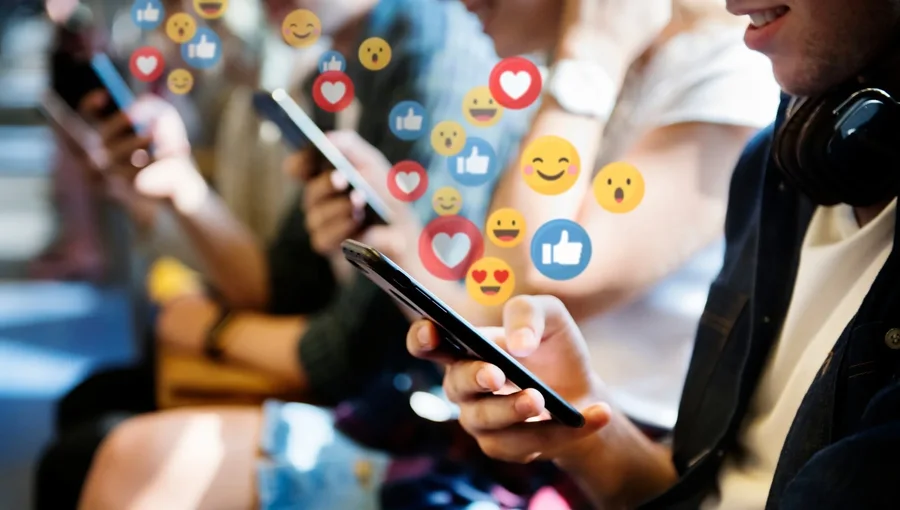
More frequent use of social networks and online games does not worsen the mental health of adolescents, despite widespread concerns.
This is the conclusion of a new study from the University of Manchester.
The research found no evidence that long periods of time spent on social media or online games cause increased anxiety, depression or other emotional difficulties in young people.
Researchers followed nearly 25,000 students aged 11-14 for three school years, analyzing their social media habits, gaming frequency, and emotional state. The young people reported how much time they spent on social media or gaming during typical school days, and answered questions about their mood and mental well-being.
The results were clear: for neither girls nor boys, more intense social media use or more frequent gaming did not lead to increased symptoms of anxiety or depression in the following year. Increased use from eighth to ninth grade, or from ninth to tenth, had no measurable negative effect on mental health. Even time spent gaming resulted in “zero” negative impact.
The research, published in the Journal of Public Health, also analyzed the way people used social media, chatting with friends, posting, passive browsing of content or “scrolling.” Neither of these forms of use were directly linked to worsening mental health.
The authors emphasize that this does not mean that online experiences are always harmless. Offensive messages, social pressure, or exposure to extreme content can have real consequences. However, focusing solely on the number of hours in front of a screen is not an effective strategy.
Researchers note that adolescents with anxiety or depression may turn to social media or gaming as a way of coping, and not necessarily that these technologies are the cause of the problems.
However, the WHO warns that the mental health of young people in Europe is deteriorating, with over one in five adolescents living with a mental disorder.