The major reconstruction project for the Gaza Strip will be based mainly on the Egyptian Arab-Islamic plan and does not envisage the transfer of the enclave's approximately two million residents to other territories.
The recently formed Palestinian technocratic committee for the interim administration of Gaza has begun work in Cairo. Jared Kushner, son-in-law of US President Donald Trump, also attended the first meeting.
Also present at the meeting was Bulgarian diplomat Nickolay Mladenov, who is expected to have a key role in the second phase of the American plan for Gaza.
Committee members are expected to meet again on Saturday.
"We hope to go to Gaza next week or the week after. Our work is there and that's where we need to be," the source told AFP.
According to diplomatic sources, the committee's headquarters will be in Cairo, from where members will be able to travel regularly to Gaza. The main priority will be the restoration of public services. "We will not get involved in politics," the committee member stressed.
The committee was formally formed on Wednesday, with the announcement of the start of the second phase of the US plan to end the war in Gaza. It is made up of 15 Palestinian technocrats and will temporarily administer the enclave under the supervision of a Peace Council, which will be chaired by President Donald Trump.
The committee's chairman, Ali Saath, an engineer and former deputy minister of the Palestinian Authority, told Egyptian television station Al-Qahera News that the reconstruction of Gaza will be based mainly on the Egyptian Arab-Islamic plan. This plan was approved in March 2025, with the support of European countries, as an alternative to a previous American proposal to place Gaza under US control and relocate its population.
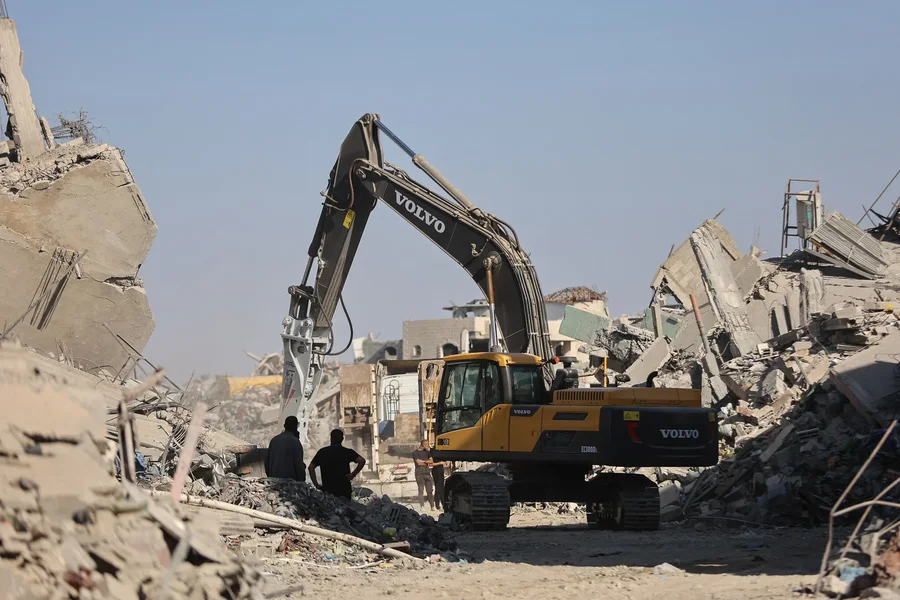
The Egyptian plan envisages the reconstruction of the enclave without evicting residents. “The issue of housing is crucial, as 85% of the houses have been destroyed,” Saath said, stressing the need to restore dignity to Palestinians currently living in tents.
To this end, about 200,000 prefabricated housing units will be imported to Gaza and distributed in organized camps to meet basic needs in education, health and security, said another member of the committee, Omar Shamali.