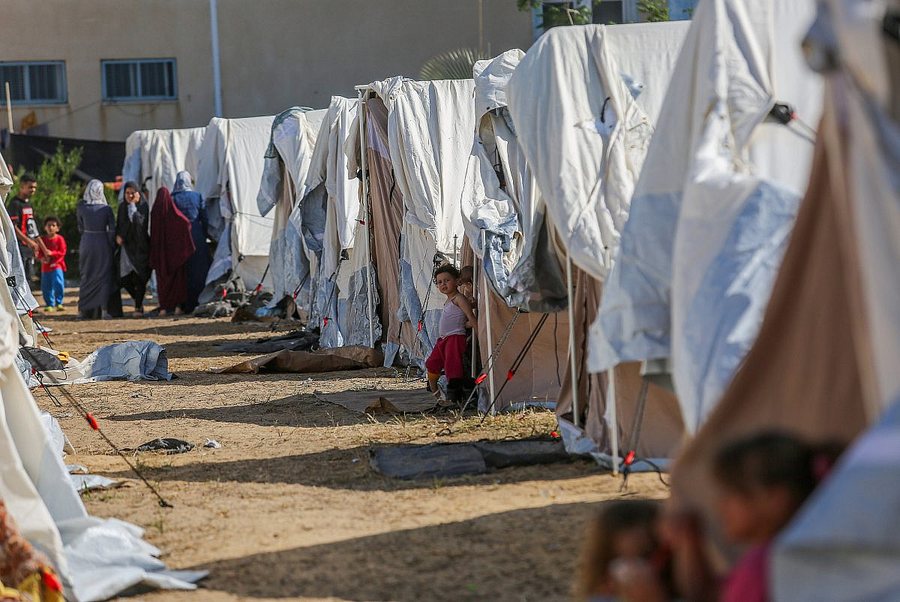
Rats, fleas and other parasites are spreading in camps housing displaced Palestinians in the Gaza Strip, due to poor conditions without water or adequate sanitation, adding to the misery of a population already suffering from more than two years of war, AFP reports.
Palestinians forced to live in makeshift shelters are reporting an invasion of parasites that aid groups say is a growing threat to public health as temperatures rise.
"I suffered a lot from weasels and rats. My children have bitten me. One of my sons was even bitten on the nose," said Mohammed al-Raqab, who lives in a tent near Khan Younis, in the southern part of the Palestinian enclave.
"I can't sleep at night because I have to constantly watch the children," the 32-year-old told AFP.
In camps set up near the sea, rodents could easily dig in the sand, crawl under tents, and enter kitchens and food storage areas that were made from whatever materials were available.
Almost the entire population of Gaza has been displaced due to the Israeli military's airstrikes during the war against Hamas and the evacuation orders it has issued from time to time.
According to the UN, 1.7 million Palestinians, out of a total of just over two million, still live in camps, unable to return to their homes or to areas that remain under Israeli military control, despite an October 2025 ceasefire.
In these camps, people are affected by "parasites and insects," the UN Office for the Coordination of Humanitarian Affairs (OCHA) said after conducting field visits in March.
At al-Aqsa Hospital in central Gaza, Hani al-Fleit, head of the pediatrics department, explained that his team sees daily cases of skin infections, including scabies.
These infections are made even more serious because "these children and their families live in deplorable conditions, without basic sanitation and access to drinking water," he told AFP. "Add to that the lack of adequate treatment."
Despite the ceasefire, Israel continues to control all entrances to Gaza, conducting strict inspections of humanitarian aid passing through the enclave, while often denying it entry, according to non-governmental organizations and the UN.
This situation causes shortages of many basic products, from medicines to fuel, clothing and food.
Furthermore, there are almost daily exchanges of fire between the Israeli army and, as it complains, Hamas fighters, as well as Israeli airstrikes.
According to Hamas's Health Ministry, at least 777 people have been killed by the Israeli military since the ceasefire went into effect. For its part, Israel has announced the deaths of five soldiers during the same period.