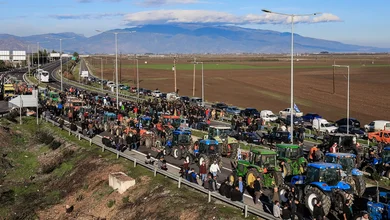



The government promised equalization of VAT for farmers, but from next year it will implement a compensation scheme with conditions that risk 'burning' the majority of farmers. With current data, over 90 thousand farmers do not meet the criteria for the 10% VAT compensation.
When introducing the new 10% value added tax compensation scheme for agricultural producers, Finance Minister Petrit Malaj said that the aim was to help small farmers.
"The scheme tries to help small farmers, who, being farmers based on a NIPT, receive some subsidies from the state and part of these subsidies is the VAT compensation scheme," Malaj said on November 17 in the parliamentary committee on Economy.
However, the new scheme has some limitations that risk excluding small farmers. The amendments to the law on value added tax that are being discussed in parliamentary committees, define as beneficiaries only farmers equipped with NIPT with the tax administration. The new scheme excludes those farmers who are registered with the National Business Center.
"This farmer who is registered with the Central Bank, is self-employed, his activity is in the agricultural or livestock sector, there is no way he is compensated 10% because he is the same as any other self-employed person," argued Arjana Dyrmishi, General Director of Tax Policies at the Ministry of Finance.
Restrictions that penalize farmers
Tax Administration data shows that in Albania there are 111,600 registered farmers with NIPT. But as of September, less than 10% of them are equipped with invoices. Specifically, only 10,149 farmers have actually sold their products to businesses. These are the only ones who benefit from the 10% compensation. Over 100 thousand other farmers risk receiving nothing.
Even more problematic is the other limitation in the new scheme.
The compensation is only granted if the production is sold to a VAT registered entity (collector, processor or certified agrotourism). With this formulation, the small farmer who sells on the market or at a regular point of sale is automatically exempt. So, to receive the compensation, he is not free to sell wherever he wants but must sell where the scheme instructs him.
"The above treatment, through the agricultural producers' compensation scheme, aims to contribute to strengthening the economy and formalizing the agricultural sector, by promoting compliance and enforcement by the parties involved in the transaction," the draft law argues.
To receive the 10% compensation, the farmer must submit the request to the tax authorities along with the invoices showing his NIPT and bank account number. The deadlines are divided into two six-month periods and the tax administration has 30 days to make the payment.
The promise that was broken
In July, at the Dialogue on Agriculture in Cërrik, Prime Minister Edi Rama made it clear that the VAT scheme needed to be “unified.” Unlike what is currently being discussed in parliament, the prime minister’s promise was not for compensation, but equalization of VAT on sales and purchases.
"Another very clear element to move on to something bigger is that we need to unify VAT," said Rama.
But just a few weeks later, in the "Albania 2030" program, the government changed its position.
"We are reviewing the VAT scheme for farmers based on EU best practices with a financial effect of about 1.5 billion lek/year in direct transfer to farmers," the program states.
The opposition and Socialist MP Erion Braçe proposed equalizing VAT during discussions in the parliamentary economy committee. But representatives of the finance ministry rejected it.
"Let's stick to the proposal that came from the Council of Ministers," said Deputy Minister of Finance Endrit Yzeiraj.
cONcluSiON
The government is reviewing the VAT scheme next year, but through direct compensation and not equalizing VAT on sales and purchases. Therefore, based on the information collected, we categorize Prime Minister Edi Rama's promise that VAT for farmers will be equalized as unfulfilled.