


International media outlets specializing in tourism are increasingly paying attention to Albania’s tourism boom, but this time not only as a success story. According to Travel and Tour World (TTW), a global media platform focused on the tourism and travel industry, the rapid growth of visitors is being accompanied by a wave of intensive construction, pressure on the coastline and serious environmental risks. Albania is being seen as a rapidly growing destination, but also as an example of the great challenge that new destinations face: how to manage success without paying for it at the cost of nature and the quality of development. Below is the full article:
In a remarkable transformation, Albania has experienced a tourism boom unlike any other country. The country, once little known to international travelers, has rapidly transformed into one of the fastest growing tourist destinations in Europe.
With its pristine coastline, affordable prices and rich cultural heritage, Albania has attracted millions of visitors. In 2024, the country welcomed an estimated 11.7 million foreign tourists – almost double the pre-pandemic figures. But as the tourism sector is growing rapidly, the environmental and social challenges that accompany this rapid development are also increasing.
What is happening with tourism in Albania?
Tourism growth in numbers
The tourism boom in Albania is clear from the numbers. In 2023, the country welcomed 10.1 million tourists. The following year, that number rose to 11.7 million. This represents an 82% increase compared to 6.4 million visitors in 2019, making Albania one of the fastest-growing tourist destinations in the world. The UN World Tourism Organization recently ranked Albania among the fastest-growing tourist destinations globally.
The rapidly expanding tourism sector has become a vital pillar of the Albanian economy, contributing around 26% of the Gross Domestic Product. In 2024 alone, the tourism industry generated around 5 billion euros in visitor spending, marking a significant financial milestone for the country. With projections showing that Albania will continue to attract more and more international travelers, the tourism boom shows no signs of slowing down.
Why is tourism growing so fast in Albania?
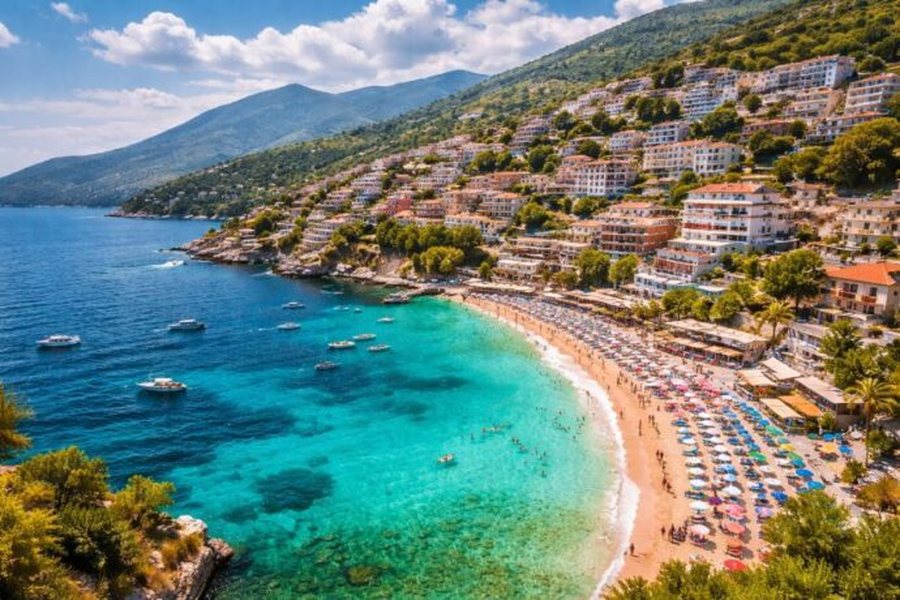
Several factors have contributed to Albania's notable rise on the global tourism map. First, the stunning beaches along the Ionian and Adriatic Seas have become increasingly attractive to travelers seeking less commercialized destinations, compared to traditional Mediterranean countries like Greece and Italy.
Also, affordable prices – especially for accommodation and food – have made Albania an attractive choice for tourists who want to experience Europe on a budget.
Furthermore, the country's rich cultural history, from UNESCO-protected cities like Berat and Gjirokastra to mountainous landscapes, has attracted travelers seeking a combination of natural beauty and cultural experience. This fusion of picturesque landscapes and historical significance has made Albania an important destination for a wide range of international tourists.
Where do the risks lie?
Environmental impact: the double side of growth
Despite the economic benefits that tourism has brought to the country, Albania is also facing increasingly visible environmental and social consequences from this rapid growth. With millions of visitors arriving each year, the pressure on infrastructure and natural resources has increased exponentially.
Coastal erosion and excessive construction
In coastal areas such as Golemi and Durrës, the rush to develop new hotels, beach bars and resorts has led to severe coastal erosion. Uncontrolled construction along the coastline has accelerated the destruction of beaches, while rising sea levels due to climate change threaten to wipe out entire segments of the country’s coastline. These developments, designed to accommodate the growing number of tourists, are causing irreversible environmental damage that will be difficult to reverse.
In the northern region of Velipoja, the sea is advancing rapidly, swallowing up protected pine forests. Also, the construction of villas near protected areas such as the Butrint National Park – which houses UNESCO-protected biodiversity and the Vjosa River Valley – poses a serious threat to the country’s fragile ecosystems.
Pressure on local communities
As tourists flock to coastal cities, the social fabric of many communities is coming under pressure. In cities like Tirana, Vlora, and Saranda, the explosion of short-term rentals through platforms like Airbnb has significantly increased housing prices, driving local residents out of their neighborhoods.
Mass tourism is also putting great pressure on public services, such as waste management, water supply and energy networks, especially during the summer season when tourist flows peak.
How is Albania addressing these risks?
Recognizing the urgent need to balance economic growth with environmental sustainability, the Albanian government has launched the "Touristic Albania 2030" initiative.
This plan aims to mitigate the negative impacts of rapid tourism growth through stricter building regulations and the promotion of sustainable development practices. In this new framework, ecologically sensitive areas, such as the Albanian Alps, will receive stronger protection to prevent further environmental degradation.
The government is also pushing for greater diversification of the tourism sector. Rather than relying solely on overcrowded coastal areas, it is encouraging exploration of inland destinations, especially outside the summer season. This includes promoting mountain tourism in areas like Thethi and encouraging year-round visits to UNESCO-protected cities like Berat and Gjirokastra.
Meanwhile, ecotourism initiatives are gaining ground, with boutique hotels and local tour operators adopting green practices. These efforts aim to reduce the environmental impact of tourism, focusing on low-impact experiences and keeping economic benefits within local communities, rather than focusing on multinational corporations.
What awaits Albanian tourism in the future?
As Albania looks to the future, its tourism sector is at a crossroads. While the economic benefits are undeniable, the country faces significant challenges in managing the impact of the tourism boom.
The government's push for sustainable tourism development will be essential to ensure that Albania maintains its appeal to international visitors, while simultaneously protecting its natural and cultural heritage.
The country’s ability to balance economic growth with environmental protection will be key to maintaining its status as one of the leading tourist destinations in the Mediterranean. As the tourism industry continues to expand, the pressure on infrastructure, the natural environment and local communities will only increase. The question remains: can Albania thrive economically without sacrificing its coastline, rich cultural heritage and natural landscapes?
The global shift towards sustainable tourism
The growth of tourism in Albania is part of a broader global trend towards ecotourism and sustainable travel. Around the world, travelers are increasingly seeking destinations that prioritize environmental conservation and offer authentic experiences connected to local communities.
Countries like Costa Rica, Bhutan, and Rwanda have led this approach by imposing strict limits on visitor numbers and implementing strong conservation initiatives. Now, Albania has the opportunity to learn from these global pioneers and chart a sustainable course for its tourism industry.
As ecotourism becomes a core part of the global travel landscape, the Albanian tourism industry will need to adapt to maintain its role as a driver of economic growth and environmental responsibility. By embracing sustainable practices and diversifying its offering, Albania can avoid the risks of overdevelopment and continue to attract travelers seeking adventure and sustainability.
cONcluSiON
Albania's tourism boom in 2024 is evidence of the country's growing influence on the global stage. However, the rapid increase in visitor numbers also brings numerous challenges, from environmental degradation to social pressure.
The government’s efforts to develop sustainable tourism, along with ecotourism initiatives, will play a crucial role in preserving Albania’s natural beauty and cultural heritage for future generations. As Albania stands at the crossroads between growth and conservation, the world will be watching closely to see how it navigates this crucial period in its tourism history./ Travel and Tour World (TTW)