


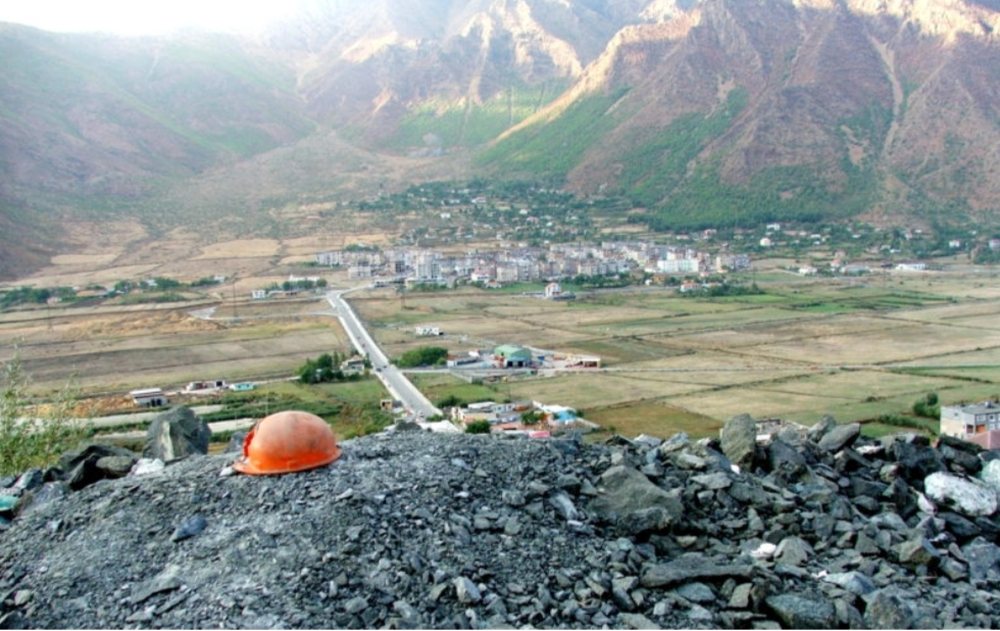
A number of mining areas exploited over the years and now out of activity located in different regions of the country need to be rehabilitated to increase environmental safety and public health.
The government acknowledges in the National Strategy for the Development of the Mining Sector 2026-2040 a series of challenges that this sector must face, including the rehabilitation of areas where mining activity was once quite intense.
"The historical legacy of mining activities, accumulated for decades without contemporary technical and environmental standards, has left behind a deep trace of pollution, especially in the areas of Bulqiza, Rubik, Kukës, Korça, Rehova, Pogradec, Has, Erseka, Munella, Mamëz, Mëzez, Memaliaj, Kurbnesh, etc., where deposits of mining waste, dams, tailings and drainage of acidic waters contaminated with heavy metals continue to pose a risk to the soil, groundwater and public health," the document issued for consultation states.
Likewise, referring to a World Bank study, the government admits that the cost of rehabilitating these regions could reach 100 million euros.
"According to World Bank estimates, taking into account the fact that the process of closing ineffective mines has not been carried out in accordance with European practice, the cost of rehabilitation and full recovery of these areas exceeds 100 million euros, which makes this intervention a national strategic priority for the period 2026–2040 and a key component of the Green Agenda for the Western Balkans, as well as the National Strategy for Climate Change and Sustainable Growth 2023–2030," the strategy highlights.
The same emphasizes the measures that need to be taken, as the legal improvements and institutional efforts, which have been taken earlier in the implementation of Directive 2006/21/EC on the management of waste from extractive industries, remain partial.
According to the document, many processing plants and historic mining deposits continue to operate with inadequate safety systems, without regular monitoring, without early warning systems and without certified emergency plans in case of flooding or structural collapse. This situation poses a constant risk not only to the environment, but also to the communities living in the vicinity of the industrial areas./ N.Maho/Monitor