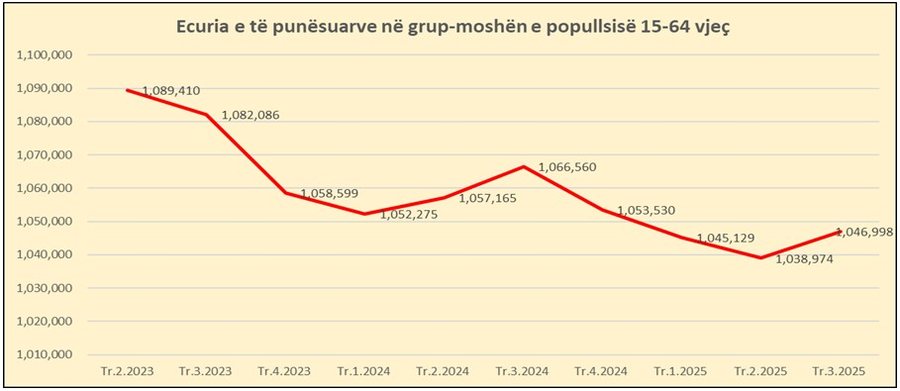




The country's economy expanded by 3.5 percent in the second quarter of this year, but the latest data from the INSTAT survey show that in June-September the number of employees in the 15-64 age group fell by 19,561 people compared to the same period in 2024.
As employment fell, unemployment remained unchanged from a year ago, signaling that the main problems are related not to the increase in people seeking work, but to the contraction of the labor force itself.
The rapid population decline is making it unclear how many jobs are actually being created by economic development.
Analyzing the data by age group, it is seen that the strongest contraction in the number of employed people is among young people aged 15–29, with over 11,000 fewer people employed than a year ago.
This group is the one that contributes the most to the overall decrease in employment and reflects that youth emigration continues at a high rate. The 30–64 age group has also suffered a decline of over 8,500 people, which suggests that not only young people, but also experienced workers are leaving the labor market, often towards emigration.
In addition to the demographic effect, employment is being affected by the crisis that has affected sectors with high labor intensity such as industry and agriculture. Many businesses, especially in sectors that employ large numbers of workers such as garment manufacturing, are laying off workers due to bankruptcies resulting from the decline in demand in international markets and exchange rate losses.
On the other hand, the construction, services and seasonal activities sub-sectors have reduced recruitment rates due to rising costs and wage pressure.
Demographic developments remain problematic. The working-age population is shrinking, the number of young people entering the labor market continues to decline, while emigration remains high.
In a labor market with less supply of workers, the decrease in employment reflects a contraction of the labor force. In the third quarter of 2025, the labor force aged 15-64 was 1,150,656 people or 20,344 people less than in the same period a year earlier, with a contraction of -1.7%.
In developed countries, a decrease in employment automatically leads to an increase in unemployment, but in Albania, a portion of those who lose their jobs are not registered as unemployed because they are willing to leave the country, or choose not to be active in the market until they find more favorable conditions./ Monitor.al