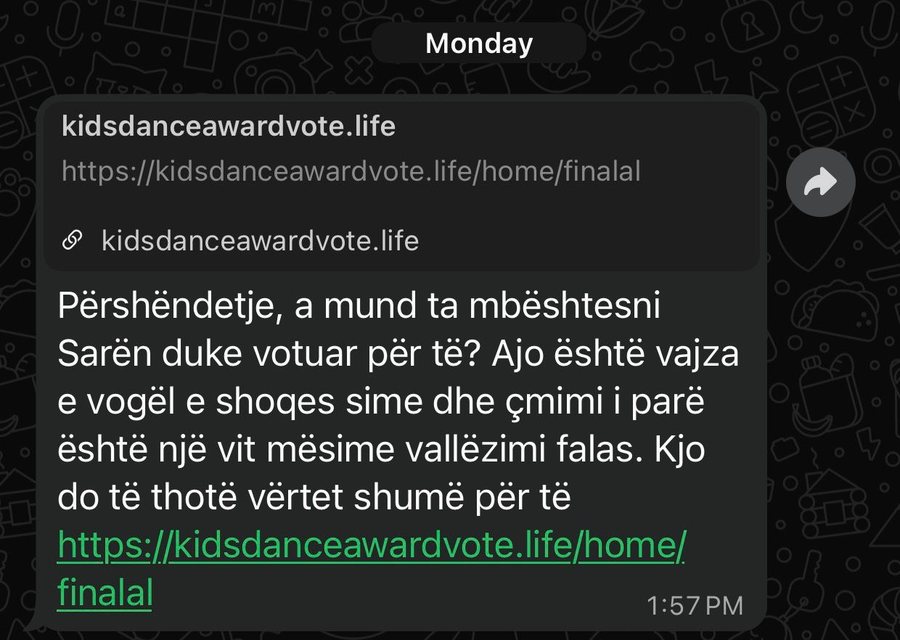



If you receive a message from a familiar friend, with whom you have had previous conversations, and asking for help with a "contest" or "vote", you should exercise extra caution.
In most cases, it's not your friend, but a hacker who has taken or is trying to take control of their profile. The scheme works by exploiting the fact that the message comes from a trusted contact and an existing conversation, which lowers the recipient's vigilance.
According to cybersecurity experts, the scammer acts and writes as your friend, referring to previous conversations and asking you for a “little help,” usually related to an online contest or vote. In reality, what is requested is a verification code to reset the password of the social media account.
The 6- or 8-digit code that comes to you via text message is, in fact, the key that gives the fraudster access to take full control of the account. Experts urge that these codes not be distributed under any circumstances, regardless of who requests them.
The most vulnerable to this type of fraud are the elderly, due to their lack of technical information and higher trust in the person writing to them. According to specialists, a large part of these attacks come from countries in Asia and Africa, where the use of fake accounts and online fraud schemes are more widespread.
Experts advise citizens to show maximum vigilance, as a wrong click or sending a code without thinking can lead to the loss of the account, access to personal data and their use for further fraud.