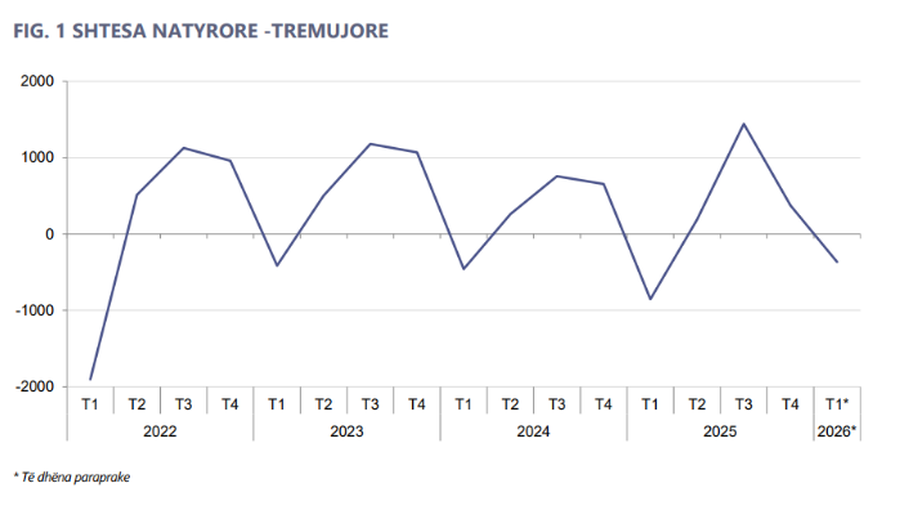



In Albania, in the first quarter of 2026 there were more deaths than births, according to data published by INSTAT.
This has caused the natural increase to return to negative, just like during the pandemic, when for the first time in the country the indicator was negative due to the high loss of life as a result of the pandemic.
According to INSTAT, in the first quarter of 2026, the natural increase of the population resulted negative with 368 more deaths than births. Generally, in recent years in the first quarter the natural increase is negative, due to higher deaths during the winter period.
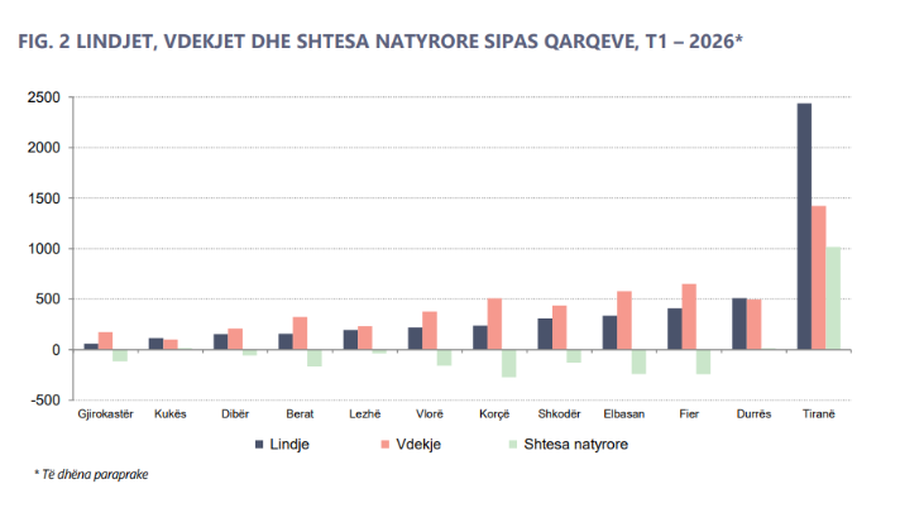
During the first trimester, 5,146 babies were born and 5,514 deaths were recorded.
In the first quarter of 2026, births increased by 1.0%, while deaths decreased by 7.4%, compared to the same quarter of 2025.
The region with the most births in the first quarter was Tirana, with 2,438, while the region with the fewest births was Gjirokastër (59).
Compared to Q1/2025, the results are: increase in 6 districts; 1 district unchanged; decrease in 5 districts.
The largest increase in births was in Berat (+ 14.5%) and the largest decrease in Gjirokastër (- 23.4%).
According to INSTAT, during 2025, the country recorded a positive natural increase of 1,147 more births than deaths, but decreasing compared to 2024. During 2025, 22,541 babies were born and 21,394 deaths were registered.
As emigration continues to be high and the country has no natural increase, Albania is expected to face a high population contraction in the future, with major effects on the economy, from the labor market to the pension and social care scheme for the elderly.
Recently, the International Organization for Migration, in its "World Migration Report 2026", warned that Albania is among the European countries where emigration could further affect population decline, due to the departure of people of reproductive age.
"In countries such as Albania, Lithuania, the Republic of Moldova and Bosnia and Herzegovina, where fertility rates are already below replacement levels, the emigration of people of reproductive age could contribute to a further population decline, due to the number of births lost after leaving the country," the report says./Monitor.al/