


The brain goes through five distinct stages over the course of a lifetime – with turning points at ages 9, 32, 66 and 83.
Researchers have discovered that the human brain goes through five distinct stages of development over the course of a lifetime, with significant changes at ages 9, 32, 66 and 83.
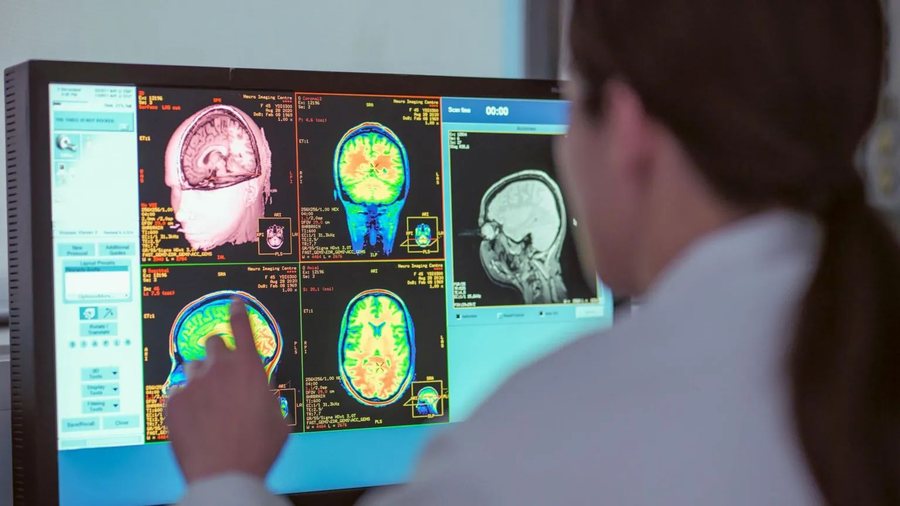
Around 4,000 people up to the age of 90 underwent brain scans to measure how nerve cells connect to each other.
Researchers at the University of Cambridge showed that the brain remains in the "adolescent" stage until the early thirties, precisely when its functions reach their peak.
They say the results help understand why the risk for mental health disorders and dementia varies throughout life.
The brain is an organ that constantly changes in response to experience and new knowledge – but research shows that these changes do not follow a straight line from birth to death.
Instead, the brain goes through five stages:
The five stages of the brain:
• Childhood – from birth to age 9
• Adolescence – from 9 to 32
• Adulthood – from 32 to 66
• Early aging – from 66 to 83
• Late aging – after age 83
"The brain is constantly rebuilding itself throughout life. It strengthens and weakens connections, and this doesn't happen evenly - there are fluctuations and different phases," Dr. Alexa Mousley told the BBC.
Some people may reach these stages earlier or later, but researchers describe it as "very striking" that these age differences are so obvious.
These patterns were only discovered thanks to the large number of scans used. The study is published in Nature Communications.
What happens at each stage?
1️⃣ Childhood (0–9 years old)
The brain grows rapidly and simultaneously removes unnecessary connections between neurons (synapses).
At this stage, the brain is not very efficient – it functions like a child wandering aimlessly in the park.
2️⃣ Adolescence (9–32 years old)
From the age of 9, the brain enters a rigorous phase of reorganization.
“It’s a tremendous change,” says Mousley.
This is the period:
• where the brain becomes most efficient throughout life,
• and when the risk of mental health disorders is highest.
It was once believed that adolescence ended at 18, then in the early 20s, but now it seems to last until around 32.
3️⃣ Adult age (32–66 years old)
This is the longest and most stable period.
Changes are slower, but brain efficiency begins to decline little by little.
According to researchers, this coincides with the "peak of intelligence and personality."
4️⃣ Early aging (66–83 years old)
It's not a sudden decline, but a change in the way brain areas work together.
Different regions start to work more independently of each other.
This is the age when: • the risk of dementia,
• high blood pressure,
• problems with blood flow to the brain begin to appear .
5️⃣ Late Aging (83+ years old)
There is less data because finding a healthy brain at this age is more difficult.
The changes are like those of early aging, but more pronounced.
Dr. Mousley says it's "stunning" how well these stages coincide with:
• puberty,
• the changes of adult life,
• and with the health problems of later life.
Expert reactions
Prof. Duncan Astle from Cambridge says that many neurological and mental health disorders are linked to the way neurons connect.
Prof. Tara Spires-Jones from the University of Edinburgh called the study "very interesting", but warned that not everyone experiences these stages at the same age.
Taken from BBC